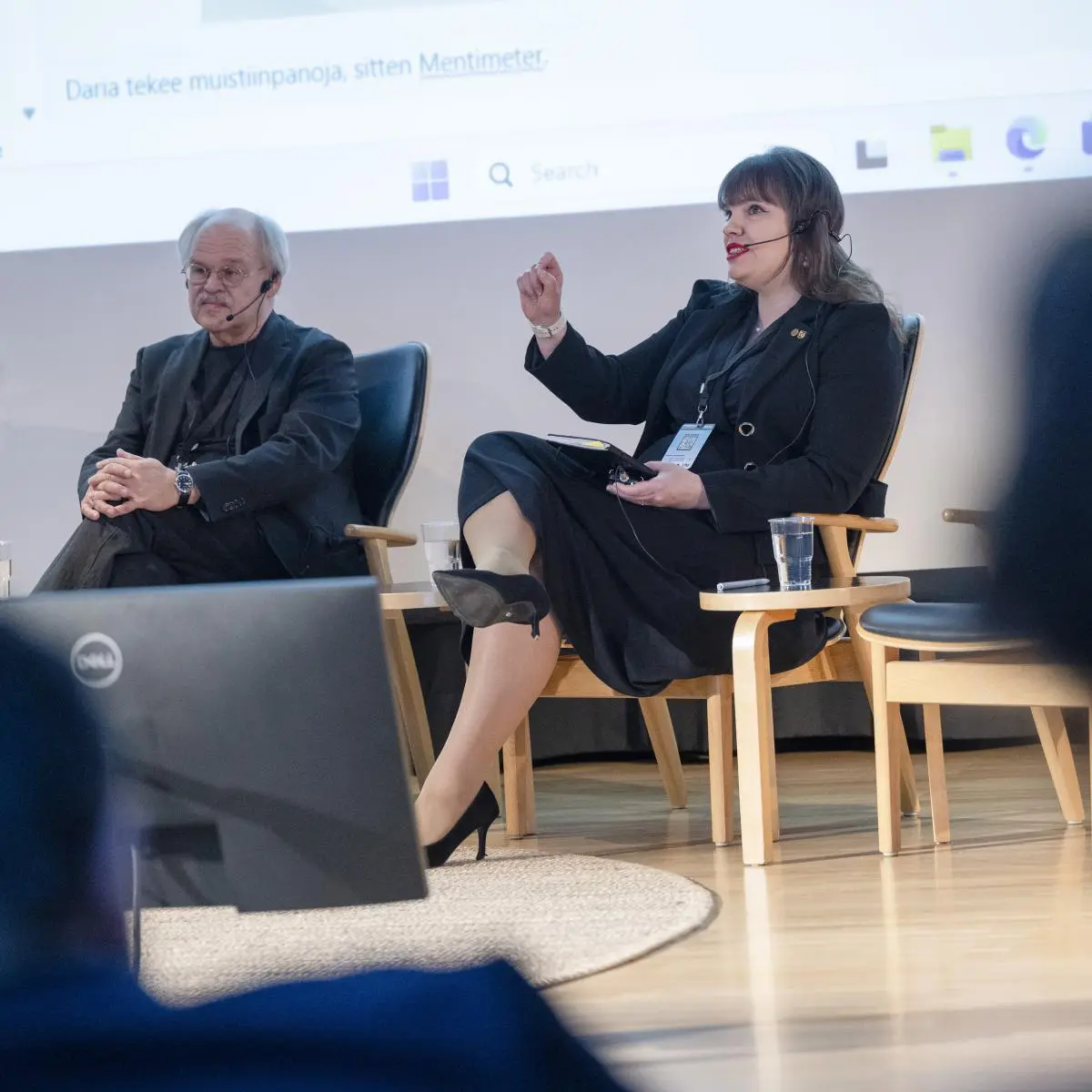
At Finnish Quantum Days 2026 in Jyväskylä, Finland, Dr. Mažena Mackoit-Sinkevičienė of the FTMC Department of Optoelectronics addressed a critical challenge: effectively introducing quantum physics. Lithuania was represented at the conference by Dr. Mackoit-Sinkevičienė, Mantas Skaržinskas, FTMC Innovation Manager and Žymantas Mozūraitis, Third Secretary at the Embassy of Lithuania in Finland, the company says. “Teaching quantum physics is important not only for educating future specialists in the field, but also for helping society better understand the scientific principles behind the promises of emerging technologies,” Mackoit-Sinkevičienė stated, outlining a need for accessible educational resources.
FTMC Physicist Presents Quantum Education Strategies at Finnish Quantum Days 2026
Dr. Mackoit-Sinkevičienė’s presentation focused on practical support needed by teachers to effectively introduce the subject, building on initiatives she pioneered in Lithuania. Her work with the European Quantum Week in Lithuania earned first place in the science communication competition and was subsequently highlighted in Europhysics News.
World Quantum Day celebrations, established in Lithuania since 2022, demonstrate a sustained effort to engage both students and the public with quantum mechanics through diverse educational activities. Mackoit-Sinkevičienė noted the growing integration of her educational resources into Lithuanian curricula, stating, “I am pleased that episodes from my YouTube channel Short Physics Lectures are already being shown in schools, referenced in the new Year 8 physics textbook and used by students preparing for academic competitions.” She further emphasized the importance of national strategies and teacher training, observing that the experience of colleagues in Finland and the Netherlands shows that the most consistent progress is achieved where quantum technology education is linked to national strategies and teacher training.
Beyond presenting her strategies, Mackoit-Sinkevičienė also contributed to the conference as a judge for the 3MT Competition Final, evaluating research communication skills among participants.
Teaching quantum physics is important not only for educating future specialists in the field, but also for helping society better understand the scientific principles behind the promises of emerging technologies.
Lithuanian Quantum Physics Outreach: School Programs and Recognition
The event brought together researchers, technology developers and education specialists, focusing on both advancing quantum technologies and cultivating a future workforce capable of innovating in the field. Mackoit-Sinkevičienė emphasized a gap in the Lithuanian school curriculum, noting that while foundational concepts like atomic structure and the double-slit experiment are introduced, dedicated quantum physics instruction remains limited. She reported that teachers are already using her prepared materials, including videos on IQM quantum computers, to supplement existing lessons and provide introductory context.
The physicist highlighted the importance of connecting theoretical concepts to tangible technologies, specifically citing the use of Lithuanian lasers in both terrestrial and space-based quantum computers as a relatable example for students. This work aligns with a broader effort to promote quantum literacy, as evidenced by her recognition as a laureate of the Baltic for Women in Science scholarship program in 2025.
She advocates for readily available, Lithuanian-language teaching materials, short videos, practical examples and clear explanations to enable immediate classroom implementation. This need for localized resources, she explained, was a key takeaway from discussions with colleagues from Finland and the Netherlands, where consistent progress in quantum education is linked to accessible, teacher-focused support. The discussion also highlighted the need to demonstrate how scientific discoveries translate into real-world applications, supporting student engagement and inspiring future innovation.
During the discussion in Finland, I emphasised that quantum physics is not yet part of the Lithuanian school curriculum. However, pupils are already introduced to the atom as a probabilistic electron cloud, and the double-slit experiment is also discussed.
Dr. Mažena Mackoit-Sinkevičienė, Physicist at FTMC Department of Optoelectronics
Skaržinskas emphasized that Lithuania can contribute meaningfully to international quantum projects by focusing on areas where existing expertise is strongest, such as materials development, measurement techniques and software solutions.
These topics help explain why the development of quantum and other advanced technologies requires researchers from many different disciplines. Some develop materials and investigate their properties, others design devices, improve measurement methods or create algorithms.
Mantas Skaržinskas, FTMC Innovation Manager
See today’s quantum computing news on Quantum Zeitgeist for the latest breakthroughs in qubits, hardware, algorithms, and industry deals.