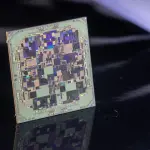
Researchers at Harvard University and the Massachusetts Institute of Technology have developed a quantum protocol that estimates many properties of a classical signal with shot noise suppressed below the vacuum level, a threshold previously limiting precision experiments. The work introduces Quantum Signal Learning (QSL), a framework extending metrology to a broader setting, and relies on two-mode squeezing, passive optics, and static homodyne measurements. The team demonstrates from all classical strategies that do not use entanglement, proving a quantum speedup for tasks like measuring electromagnetic correlations and controlling interferometric cavities.
Quantum Signal Learning Framework for Classical Fields
The new Quantum Signal Learning (QSL) protocol allows simultaneous estimation of multiple classical signal properties while suppressing shot noise to levels below that of the vacuum, a feat previously considered a fundamental limit in conventional readout. The framework extends metrology into a broader setting, moving beyond simple parameter estimation to a more comprehensive analysis of classical signals.
Researchers established that quantum sensors enhanced by quadrature squeezing and entangled quantum memory can extract properties of classical signals more efficiently than conventional sensors, demonstrating utility for tasks such as electromagnetic field sensing and interferometric feedback control. The work introduces a method for defining any property of the signal as a linear functional of the displacement distribution induced by the signal, allowing for a unified approach to property estimation.
This approach allows for the extraction of properties by selecting a function and convolving it with the classical density, effectively encoding the desired property within the sensor response. The team proved a quantum speedup for common classical sensing tasks, including measuring electromagnetic correlations, real-time feedback control of interferometric cavities, and Fourier-domain matched filtering. This speedup is demonstrated through separations from all entanglement-free strategies.
The researchers employed an optimal-transport conditioning method to establish these separations, a technique that quantifies the advantage gained through quantum enhancements. The ability to estimate multiple properties from a single dataset represents a significant efficiency gain, reducing the need for repeated measurements and streamlining the data analysis process.
The study shows that when squeezing is treated as a resource, a protocol using squeezed light can sense a structured classical background exponentially faster than any coherent classical probe. The researchers also demonstrate practical speedups over homodyne and heterodyne baselines.
Two-Mode Squeezing Enables Sub-Vacuum Noise Estimation
Conventional methods like heterodyne detection, while informationally complete, are inherently limited by irreducible vacuum noise that cannot be overcome with squeezed light. Conversely, homodyne measurement, capable of resolving sub-vacuum fluctuations along a single axis, only captures one-dimensional marginals of the underlying signal. This new protocol circumvents these limitations by employing entangled two-mode squeezed vacuum probes, with half the modes used for sensing and the other half stored for later analysis.
Beamsplitters and homodyne measurements then constitute a measurement in what the researchers term a “Bell basis,” enabling complete and sharp recovery of signal properties. The efficiency of this method extends beyond mere precision. The collected data is more feature-rich than that obtained through entanglement-free methods, opening avenues for subsequent machine learning applications. The protocol demands only constant-depth quantum information processing, achieved through two-mode entangled state preparation and passive beamsplitters.
It also avoids the need for real-time control or realignment of squeezing axes, simplifying experimental implementation and maintaining optimal uncertainty in all quadrature readouts. “While our estimators provide rigorous guarantees for property estimation, the dataset is more feature-rich than entanglement-free counterparts, and can be used as input to machine learning pipelines later on,” the researchers state. The protocol’s advantage is formally demonstrated through a separation in sample complexity, meaning it requires fewer measurements to achieve a given level of accuracy. Beyond direct signal sensing, the protocol has implications for real-time feedback control in interferometric cavities.
Exponential Speedup for Fourier-Domain Matched Filtering
This separation in performance is particularly evident when scoring a large bank of candidate templates, a process central to modern high-precision searches like those used in gravitational-wave detectors where the number of potential waveforms can be enormous. The protocol’s advantage stems from its ability to estimate a signal’s characteristics at multiple points with significantly fewer channel uses than entanglement-free approaches. To establish these separations, an optimal-transport conditioning method was introduced, and worst-case exponential separations from all entanglement-free strategies and practical speedups over homodyne and heterodyne baselines were shown.
The work extends beyond theoretical guarantees, providing examples of practical quantum advantage in learning field correlations and sensing correlated electromagnetic fields. These demonstrations solidify the protocol’s potential for real-world applications.
Optimal-Transport Conditioning Outperforms Homodyne Sensing
An optimal-transport conditioning method now distinguishes quantum sensing protocols from all classical, entanglement-free strategies, demonstrating an exponential advantage in specific scenarios. This new approach quantifies when restricted-angle homodyne measurements become unreliable for learning two-dimensional phase-space features, while the Bell Quantum Signal Learning (QSL) protocol maintains efficiency. The team’s findings extend to scenarios involving interferometric cavities, where the protocol can learn internal noise parameters that distort optical quadratures.
The researchers found that any strategy lacking squeezed probes requires an exponential number of homodyne measurements to differentiate between random and parity-constrained classical backgrounds, while a single squeezed probe with a logarithmic scaling factor achieves the same result with a constant number of measurements. This connection between accuracy and advantage highlights the potential for practical speedups in various sensing applications, including improved signal processing and enhanced classical sensing.
Bell QSL Achieves Polynomial Scaling for EM Field Covariance
Bell Quantum Signal Learning (QSL) achieves polynomial scaling in estimating electromagnetic field covariances, a feat previously inaccessible to classical sensing strategies. The protocol uses entangled probes and quantum memory to gather a classical record used for quantum-limited, informationally-complete estimation of the electromagnetic field distribution, moving beyond simple parameter measurement to a broader property-learning setting. Unlike heterodyne measurements which suffer a vacuum noise penalty, Bell QSL extracts covariance with optimal estimator variance regardless of the instance, using the empirical covariance calculated from collected data.
The core of the protocol involves preparing a two-mode squeezed vacuum, applying the unknown field to a sensing mode, and performing a Bell measurement of commuting EPR quadratures. This process yields a complex outcome representing a blurred snapshot of the field’s displacement, adhering to an additive-noise model where the noise level is dictated by the finite EPR correlations of the squeezed state.
This approach allows for the estimation of many multiparameter fields, stochastic signals and noise sources, subsuming the traditional single-parameter sensing setting where distributions are delta functions. This contrasts sharply with the minimum shot count required by any adaptive homodyne strategy, which necessitates at least Ω(e^(-4r)/Δ^2) shots under similar conditions, with Δ representing a symmetry-breaking parameter. The researchers proved a worst-case exponential separation from all entanglement-free data-collection strategies, including adaptive protocols with arbitrarily complex measurement bases.
Squeezed Probes Outpace Coherent Classical Sensing
The ability to discern subtle shifts in classical fields receives a boost from a new protocol that uses the unique properties of squeezed light, allowing for exponential speedups over classical sensing techniques. Homodyne measurements only resolve marginals that may not contain higher-dimensional properties. This means complex quantum analysis can be achieved without the need for detailed, dynamic measurement setups. The protocol’s effectiveness extends beyond simple field measurement, enabling the estimation of many properties from a single experimental dataset, a capability that surpasses traditional electromagnetic sensing.
The researchers demonstrate that strategies relying on squeezed probes can sense fluctuating classical fields exponentially faster than any coherent-state classical probe. While the protocol’s power is evident, the work also highlights that squeezing and entanglement represent distinct sources of quantum advantage in classical-field sensing, offering complementary pathways to enhanced precision.
👉 More information
🗞 Quantum Advantage for Sensing Properties of Classical Fields
✍️ Jordan Cotler, Daine L. Danielson and Ishaan Kannan
🧠 DOI: http://link.aps.org/doi/10.1103/6ps1-mw9l



See today’s quantum computing news on Quantum Zeitgeist for the latest breakthroughs in qubits, hardware, algorithms, and industry deals.