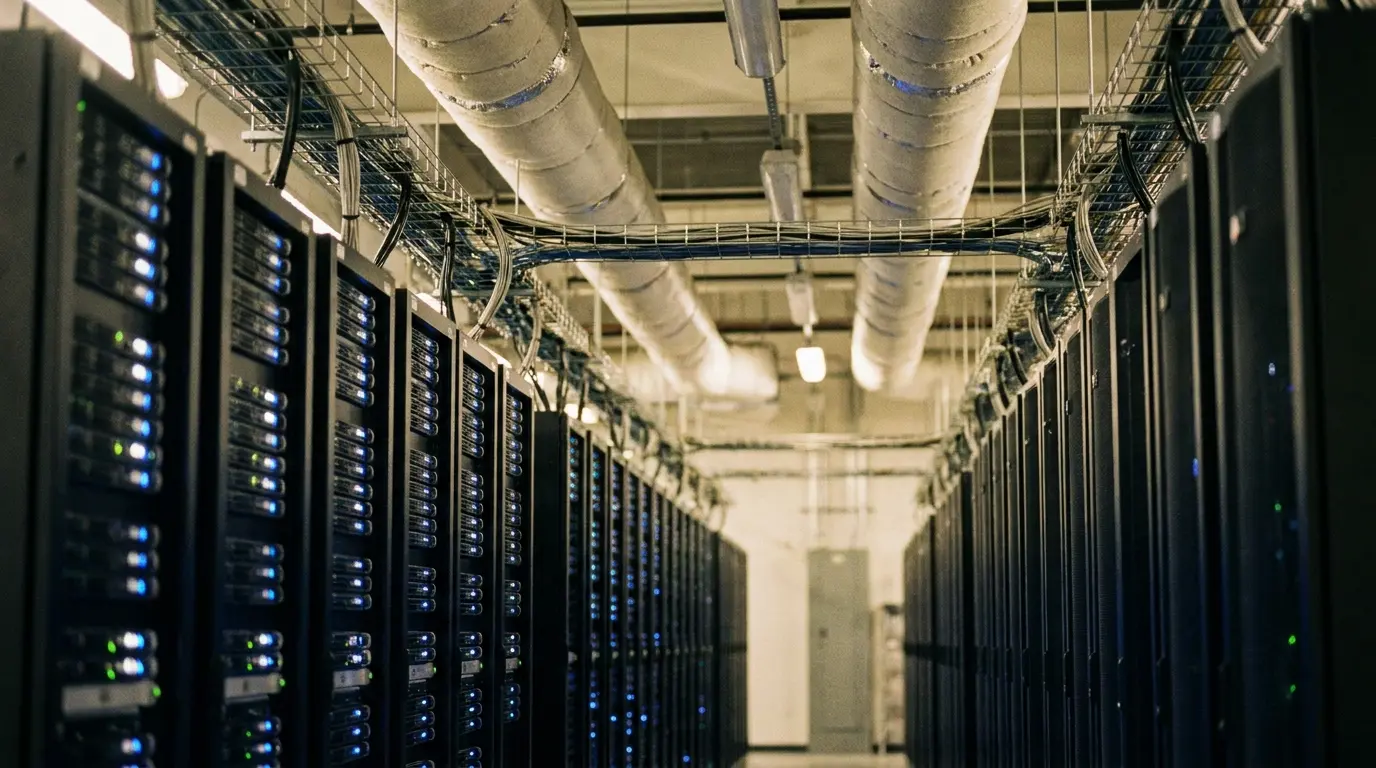
RIKEN Center for Computational Science will deploy a new supercomputer powered by 540 NVIDIA Blackwell GPUs, establishing a hybrid platform for quantum and high-performance computing. The system achieves ultra-high-speed communication at 3.2 terabits per second using NVIDIA Quantum-X800 InfiniBand networking, and delivers computational performance exceeding 21 petaflops in FP64 and 5 exaflops in FP8. This installation, part of a project commissioned by NEDO, aims to accelerate the integration of quantum computing with existing resources like the Fugaku supercomputer and quantum computers ibm_kobe and Reimei.
RIKEN Supercomputer Integrates NVIDIA GB200 NVL4 GPUs with Fugaku
The system’s architecture prioritizes a simulation environment for quantum computations, essential for developing algorithms and evaluating performance before physical implementation. This high bandwidth is critical for the demanding data exchange required by hybrid quantum-HPC applications, allowing for smooth collaboration between classical and quantum processors.
Mitsuhisa Sato, Director of RIKEN Center for Computational Science, Quantum-HPC Hybrid Platform Division, explains, “With the introduction of this NVIDIA GPU-based system, we can not only enhance the simulation environment for quantum computers, which is essential for quantum software development, but also expand computational resources to support quantum-HPC hybrid computing alongside Fugaku.” The project, supported by NEDO, falls under the “Research and Development of a Quantum-Supercomputer Hybrid Platform for Expanding Computational Frontiers” initiative.
The installation in Kobe is intended to broaden the scope of computational resources available for quantum-HPC hybrid computing, extending beyond the capabilities of Fugaku. “Integrating quantum and classical processors redefines the boundaries of what’s possible with computing,” states an NVIDIA representative. Giga Computing is contributing to the project by using its expertise in high-performance system design and manufacturing to accelerate time-to-market and contribute to Japan’s advancements in research. The company’s goal, according to their representatives, is to “empower scientific discovery through performance, efficiency, and sustainability, all hallmarks of next-gen computing.”
With the introduction of this NVIDIA GPU-based system, we can not only enhance the simulation environment for quantum computers, which is essential for quantum software development, but also expand computational resources to support quantum-HPC hybrid computing alongside Fugaku. We expect this will open new application areas such as quantum machine learning, combining quantum computers and GPUs.
Quantum-HPC Hybrid Platform Leverages NVIDIA Quantum-X800 Networking
Giga Computing Technology will manufacture the compute nodes for the new RIKEN supercomputer, using its expertise in high-performance system design and delivery of IT infrastructure. The company’s involvement extends to all phases of the project, a national-scale initiative led by DTS and Digital Technologies Corporation, bringing together specialized partner teams. “We are deeply grateful for being selected as part of this project,” said a company representative, emphasizing their role in ensuring the project’s success.
This collaboration highlights a broader push within Japan to advance both quantum and classical computing capabilities. DataDirect Networks is supplying a high-speed file system critical for managing the massive datasets generated by hybrid quantum-HPC workloads, while ScaleWorX is integrating all components into a cohesive system. The system’s architecture incorporates warm-water cooling servers, a departure from traditional compressor-based methods, and uses technology to reduce energy consumption.
This approach, combining ambient air and cooling towers, minimizes reliance on compressors, offering a more sustainable operational profile for the demanding computational tasks ahead. The integration is facilitated by the SQC Interface, an API developed under the JHPC Quantum project, enabling direct connection and data exchange between quantum computers and HPC systems. This API will be important for controlling jobs and transferring data between the two computing paradigms, unlocking new possibilities for scientific discovery.
By leveraging our expertise in high-performance system design and manufacturing, as well as our close collaboration with NVIDIA to accelerate time-to-market, Giga Computing is contributing to Japan’s continuous world-class advancements in research.
System Achieves 21 PFLOPS FP64 and 5 EFLOPS FP8 Performance
This level of performance is achieved through the deployment of 540 NVIDIA Blackwell GPUs, integrated within 135 compute nodes using the GB200 NVL4 platform. The architecture prioritizes not only speed but also energy efficiency, employing warm-water cooling technology for the compute nodes. The intention is to create a flexible environment for algorithm development, performance evaluation and the construction of integrated applications that use the strengths of both quantum and classical computing paradigms.
The project, formally titled “Project for Research and Development of Enhanced Infrastructures for Post 5G Information and Communications Systems,” is being led by DTS Corporation, responsible for building the system to RIKEN’s specifications. “In this project, we will apply our expertise at every phase and work as one team to ensure success,” said Masahiko Yamada, President & CEO of ScaleWorX. The system’s capabilities are expected to extend beyond Fugaku’s capacity, addressing advanced computational demands currently beyond its reach, and furthering the “Research and Development of a Quantum-Supercomputer Hybrid Platform for Expanding Computational Frontiers” initiative.
The system adopted by RIKEN brings together cutting-edge technologies – including NVIDIA’s latest platform, ultra-fast interconnects, and warm-water cooling – to deliver outstanding performance and energy efficiency.


See today’s quantum computing news on Quantum Zeitgeist for the latest breakthroughs in qubits, hardware, algorithms, and industry deals.