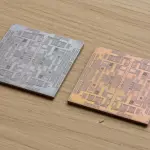
On September 10, 2026, Infleqtion and Cisco announced a collaboration to build networked quantum technology, linking Infleqtion’s neutral-atom quantum computers and sensors with Cisco’s networking infrastructure. This partnership aims to move beyond isolated quantum machines toward scalable, distributed quantum computing, using neutral atoms which interface naturally with the photons essential for quantum networks. “The next major breakthrough in quantum will not come from building bigger isolated machines, but from networking systems together,” said Ramana Kompella, VP and Head of Cisco Research, signaling a shift in focus toward collaborative quantum systems.
Infleqtion Neutral-Atom Systems Enable Quantum Networking Interfaces
Infleqtion’s neutral-atom qubits interface naturally with photons, a characteristic that positions the company’s systems as central to building quantum networks capable of linking disparate quantum devices. This inherent compatibility streamlines the transmission of quantum information, a critical hurdle in scaling quantum computing beyond isolated processors. Infleqtion combines this native quantum memory with multi-modal computing and sensing, creating hardware and optical interfaces designed for integration into broader networks, anticipating the need for interoperability as the field matures.
The collaboration with Cisco focuses on realizing a distributed quantum architecture, building on Cisco’s development of a quantum networking stack intended to dynamically distribute quantum entanglement between connected devices. Cisco’s Universal Quantum Switch, a research prototype, is designed to route quantum information while preserving it through a conversion engine, enabling interoperability between quantum systems.
This approach addresses a fundamental challenge: ensuring reliable information transfer across diverse quantum processors, memory, and sensors, which requires more than just faster hardware. Infleqtion’s systems, already deployed with organizations like the U.S. Department of Defense and NASA, provide a platform for testing and refining these networking protocols in real-world scenarios.
Pranav Gokhale, Chief Technology Officer at Infleqtion, emphasized the importance of this interconnectedness, stating, “Achieving the broadest applications of quantum computing will require many quantum systems working together. The path forward is connecting these systems together the same way the internet emerged from connecting many classical computers.” This vision extends beyond simply linking quantum computers; it encompasses integrating quantum sensors into the network, enabling distributed data acquisition and analysis.
Infleqtion and Cisco plan to explore architectures that orchestrate data transfer between these sensors and computational nodes, potentially unlocking new applications in fields like materials science and financial modeling. The companies will also investigate methods to convert quantum states held in Infleqtion’s neutral-atom quantum memory and quantum processing units (QPUs) into optical channels suitable for quantum networking. This process, known as optical transduction, is essential for transmitting quantum information over long distances, as photons experience minimal signal loss compared to other carriers.
They will evaluate opportunities to coordinate multi-modal quantum workloads across connected neutral-atom systems, optimizing performance and resource allocation in a distributed environment. Infleqtion’s 1,600-qubit lattice, demonstrating 99.73% gate fidelity as of December 2025, provides a robust foundation for these experiments, offering a substantial increase in qubit count and stability compared to earlier prototypes.
The partnership’s focus on networking reflects a broader shift in the quantum computing landscape, away from solely pursuing larger, more powerful isolated machines, the company says. Infleqtion, founded in Louisville, United States in 2007 and now publicly listed as INFQ on the NYSE, has secured over $550 million in funding. A non-binding letter of intent with the U.S. Department of Commerce CHIPS R&D Office exists for an additional $100 million contingent on development progress, but this amount is not included in the capital raised.
This financial backing, coupled with partnerships like the one with Cisco, positions the company as a key player in the emerging quantum networking ecosystem. Recent contracts, including a subcontract from Eaton to apply quantum computing to U.S. grid resilience and a project mapping Colorado minerals, demonstrate the growing commercial demand for Infleqtion’s technology, according to the company. The company’s Quantum Innovation Center in Colorado, opened in August, further solidifies its commitment to advancing quantum capabilities and fostering local industry growth.
The next major breakthrough in quantum will not come from building bigger isolated machines, but from networking systems together.
Ramana Kompella, VP and Head of Cisco Research
Cisco Universal Quantum Switch Advances Entanglement Distribution
This capability marks a critical step toward building interoperable quantum networks, moving beyond isolated quantum processors toward interconnected systems capable of tackling more complex problems. Infleqtion’s neutral-atom systems are particularly well-suited for this networking effort because of how these qubits interface naturally with photons, the particles of light used for data transmission. This inherent compatibility simplifies the process of establishing quantum links, a significant advantage as researchers strive to scale quantum networks beyond a few connected devices.
This integration could lead to advancements in areas like materials science, where real-time data from sensors can be processed by quantum computers to accelerate discovery. Infleqtion, in collaboration with NVIDIA, previously demonstrated the world’s first materials science application utilizing logical qubits, showcasing the potential of this combined approach, the firm reports. “Together, Infleqtion and Cisco are exploring how to connect quantum computers and sensors together into larger, more powerful quantum networks, which is a critical step toward unlocking distributed quantum,” stated a representative.
This perspective underscores the growing recognition that scalability and practical application of quantum computing rely on the ability to connect and coordinate multiple quantum systems. Cisco’s Universal Quantum Switch is intended to be a foundational component of this interconnected quantum infrastructure, enabling the creation of resilient and collaborative networks.
Representatives from both companies will present their collaborative work at the Quantum World Congress, College Park, Maryland, and at the virtual Cisco Quantum Summit this fall. These gatherings will provide a platform to share research findings and demonstrate the progress made in advancing networked quantum technology.
Infleqtion, headquartered in Louisville, United States, currently serves government and commercial customers in sectors including space, defense, energy, finance, and telecommunications, and operates facilities in the U.S., Europe, and Asia. The company’s headcount as of the record date is approximately 250 people, focused on delivering neutral-atom solutions for quantum computing, networking, sensing, and security, with a product portfolio that includes quantum computers, optical clocks, RF receivers, and inertial sensors.
Achieving the broadest applications of quantum computing will require many quantum systems working together.
Pranav Gokhale, Chief Technology Officer at Infleqtion

See today’s quantum computing news on Quantum Zeitgeist for the latest breakthroughs in qubits, hardware, algorithms, and industry deals.