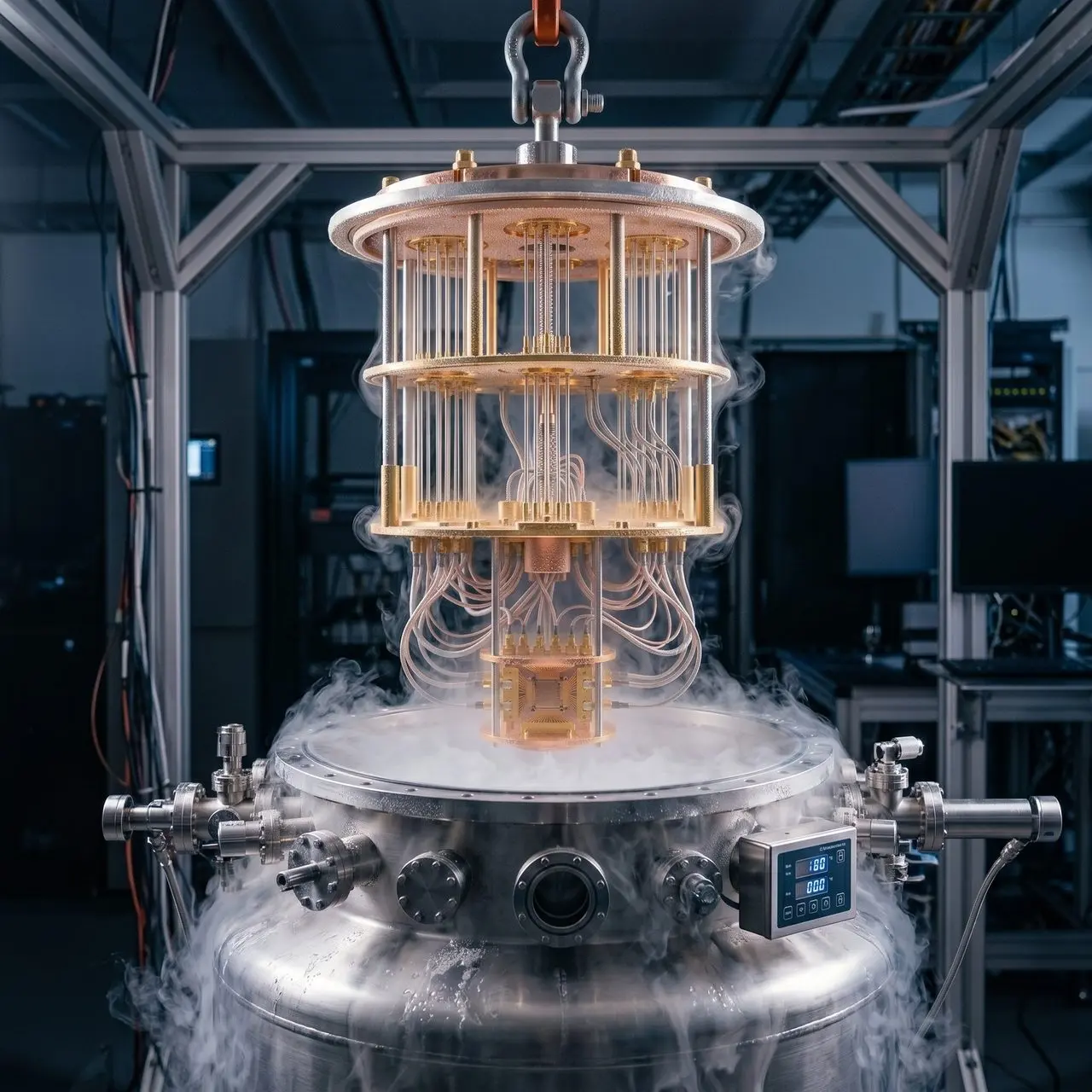
A future malicious actor could decrypt sensitive data acquired and stored years prior, according to a new report from the United States Government Accountability Office. The report warns that most industry experts believe a cryptographically relevant quantum computer, capable of undermining current federal encryption methods, could arrive in the 2030s. Such a computer could also “compromise systems that ensure the authenticity of system users,” granting access to sensitive information. The GAO found that 24 Chief Financial Officer Act agencies have not fully prepared for this threat, lacking cryptography expertise, comprehensive inventories, and funding plans.
Quantum Computers Threaten Current Federal Cryptography
The potential arrival of a cryptographically relevant quantum computer (CRQC) poses a significant threat to federal systems, with most industry experts predicting its development as early as the 2030s. This timeframe, while subject to uncertainty regarding qubit growth and required qubit numbers, emphasises the immediacy of the challenge facing federal agencies. Development estimates vary widely, yet the possibility of a CRQC within the next decade demands proactive preparation to safeguard sensitive data and critical infrastructure.
A future CRQC could allow malicious actors to exploit vulnerabilities beyond simple data breaches, potentially compromising the very systems that verify user identities. This extends the risk beyond decryption to encompass systemic breaches of trust and control, impacting operational integrity. The report details a concerning retroactive vulnerability. A future CRQC could decrypt data acquired and stored before its emergence, meaning archived information remains at risk even after systems are updated cryptography.
The GAO’s assessment of 24 Chief Financial Officer Act agencies revealed inconsistent preparedness for this looming threat. Federal guidance from the Office of Management and Budget (OMB) emphasizes the need for agencies to prioritize inventories of vulnerable cryptographic systems, conduct funding assessments for migration to cryptography (PQC), and rigorously test PQC implementations. However, the report indicates that agencies have not fully addressed these preparatory practices, leaving federal systems exposed.
Qubit Technology and the Rise of Cryptographically Relevant Quantum Computers
This projection, detailed in a recent report, acknowledges significant uncertainty in predicting the rate of qubit growth and the ultimate number of qubits required for a functional CRQC, but nonetheless establishes a concrete window for potential disruption. Development estimates vary widely, reflecting the complex engineering challenges inherent in building and scaling these machines. Quantum computers differ fundamentally from classical computers in how they process information; while classical computers rely on bits representing 0 or 1, quantum computers use qubits capable of representing any combination of both states simultaneously.
Scientists are actively pursuing various physical systems to create stable qubits, a necessary step toward realizing practical quantum computation. Beyond the technical challenges, the report details potential attack vectors a CRQC could enable, extending beyond simple data breaches.
Threat actors with access to a CRQC could forge code signatures, a technique used to verify the authenticity and integrity of software. A malicious actor could use a CRQC to compromise systems that ensure the authenticity of system users, thus allowing the actor to gain access to sensitive information, and decrypt (or unlock and view) data that the actor acquires and stores prior to the development of such a computer.
Projected Timeline for CRQC Development (by 2030s)
These estimates vary significantly, reflecting uncertainty surrounding the pace of technological advancement and the precise number of stable qubits required to break current encryption standards. The report details that while current quantum computers lack the capacity to compromise existing cryptography, a future CRQC poses a substantial threat to federal systems reliant on vulnerable algorithms. Beyond the immediate risk to encrypted data, the report highlights a particularly concerning scenario: the potential for retroactive decryption of previously acquired information.
Threat actors can currently exploit vulnerabilities to “harvest” or acquire data intended for future decryption once a sufficiently powerful quantum computer exists, even if that data is currently protected by symmetric cryptography. This means that information transmitted while secure under current standards could be compromised years later, emphasising the need for proactive mitigation strategies.
Specifically, a future computer could both compromise systems foundational for authenticating users, machines and software, and decrypt data acquired prior to its development. The report’s methodology involved a literature search for publicly available information on quantum computing and interviews with officials at the Cybersecurity and Infrastructure Security Agency and the, among others, to assess the timeline and potential impacts of CRQC development.
CRQC Exploitation: Compromising Authentication and Decrypting Data
Adversaries could retain currently encrypted data for future decryption, according to the report, potentially accessing information long after systems are updated to resist quantum attacks. This retroactive vulnerability stems from the possibility of “harvesting” data now and exploiting a cryptographically relevant quantum computer (CRQC) when one becomes available, allowing decryption of previously secure communications.
While a CRQC could decrypt stored data, the report notes that threat actors may face challenges processing large volumes due to the time required to break individual public keys, with estimates ranging from several hours to over 200 hours depending on the algorithm and key size. Specifically, a malicious actor could derive a server’s private key from its public key using a CRQC, then forge authentication certificates granting privileged network access. This capability extends beyond simple data breaches, allowing attackers to impersonate legitimate users and machines within a system.
The report highlights that frequent key rotation could mitigate this risk, though it does not eliminate the potential for widespread compromise. The scale of data collection required to make retroactive decryption viable may prove prohibitive for non-nation-state actors, given the exponential growth of internet traffic.
In 2016, Cisco reported 710 petabytes of daily internet traffic, projecting a rise to 2.1 exabytes by 2021; in 2023, the scientific community measured even greater volumes. Since 2021, the agency has emphasized the threat of quantum computers as part of its Ensuring the Cybersecurity of the Nation high-risk area, recognizing the long-term implications for federal security.
Post-Quantum Cryptography Needed to Secure Federal Systems
This relatively near-term projection emphasises the urgency for federal agencies to transition to post-quantum cryptography, a new generation of encryption designed to withstand attacks from these powerful machines. Beyond simply breaking current encryption, a future CRQC poses a unique threat by potentially allowing decryption of data acquired and stored before the computer’s emergence. This retroactive vulnerability means that even data archives, long considered secure, could be compromised once a CRQC becomes available.
“Once a CRQC is developed, its use could have devastating impacts to federal systems reliant on vulnerable cryptography,” the report states. The GAO reviewed ten agencies and found that while awareness of the quantum threat is growing, implementation of these preparatory practices remains incomplete. This report is a public version of a sensitive document issued in September 2025, with ten agencies designating certain information as requiring protection from public disclosure.
GAO Framework for Evaluating PQC Transition Practices
This framework centers on three key practices: developing prioritized inventories of vulnerable systems, assessing funding requirements for PQC transition, and testing PQC algorithms within agency environments. The incomplete implementation stems from deficiencies in three areas, according to the report. Agencies lack sufficient cryptography expertise to accurately assess vulnerabilities and plan for mitigation, and they have not established robust processes for creating comprehensive cryptography inventories. Many agencies have yet to determine the financial resources needed to effectively transition to PQC, hindering their ability to implement necessary upgrades and replacements.
The GAO’s framework, built upon prior work on IT system transition planning and relevant OMB guidance, provides a structured approach to address these shortcomings. To evaluate agency progress, the GAO examined planning documentation and conducted detailed reviews of systems at six agencies, selecting 15 systems for further scrutiny.
Agency officials were asked to provide documentation supporting the information contained in their inventories, allowing the GAO to verify the accuracy and completeness of their vulnerability assessments. The evaluation considered eight activities associated with the three core practices, including annual updates to inventories and funding assessments. “We then evaluated the 24 CFO Act agencies’ efforts to address these three preparatory practices and the associated activities,” the report states, outlining the scope of the assessment.
The report details that agencies have not consistently developed and updated prioritized inventories of systems with vulnerable cryptography. While some agencies have begun to identify vulnerable systems, many lack a comprehensive understanding of their cryptographic landscape. Similarly, assessments to determine the funding needed for PQC transition remain incomplete, leaving agencies uncertain about the financial implications of upgrading their systems. These findings emphasise the need for a coordinated and proactive approach to address the quantum computing threat and ensure the long-term security of federal information systems.
Agency Weaknesses in PQC Preparatory Practices
The 24 Chief Financial Officers Act agencies are not adequately preparing for the arrival of cryptographically relevant quantum computers, according to a new Government Accountability Office (GAO) assessment of their preparatory practices. The evaluation revealed shortcomings in consistently maintaining these inventories, with agencies often lacking a comprehensive understanding of the systems reliant on vulnerable cryptography. This uncertainty hinders proactive planning and could delay the implementation of necessary security upgrades as the timeframe for a functional quantum computer narrows.
Experts predict such a computer could arrive within the next 10 to 20 years, potentially undermining current federal encryption methods. The Department of Homeland Security is responsible for overseeing agency information security policies, including cryptographic procedures, in consultation with the OMB. This retroactive decryption risk is particularly concerning, as data acquired and stored prior to the widespread adoption of PQC would remain vulnerable. The report’s conclusions suggest that without improved preparation, agencies will be ill-equipped to defend against the potential impacts of quantum computing on sensitive information and systems.
Limited Agency Agreement with GAO’s Transition Recommendations
The Government Accountability Office found that agencies have not fully addressed preparatory practices for a potential quantum computing threat, specifically in the area of system inventories. To assess inventory accuracy, the GAO selected 15 systems across six agencies, then randomly chose three systems from five of those agencies’ prioritized lists. This lack of reliable data hinders effective planning for the eventual deployment of PQC, as agencies cannot accurately identify which systems require immediate attention.
Beyond inventory management, the report highlights the difficulty in determining the financial resources required for a full transition to PQC. The GAO framework outlines eight associated activities within the three core practices, providing a roadmap for agencies to follow. The report states, “GAO maintains that all recommendations are warranted,” highlighting the urgency of addressing these vulnerabilities before a powerful quantum computer becomes a reality and potentially compromises federal systems.




See today’s quantum computing news on Quantum Zeitgeist for the latest breakthroughs in qubits, hardware, algorithms, and industry deals.