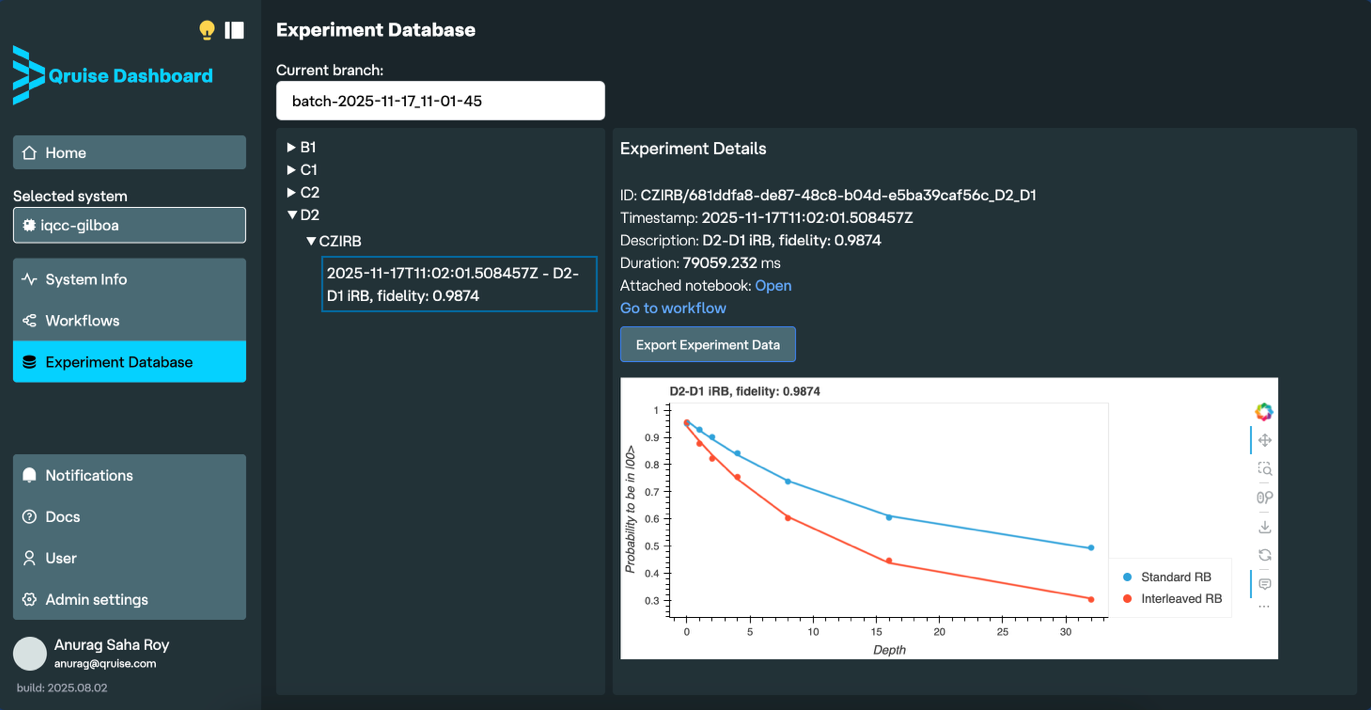
Qruise has demonstrated a significant reduction in quantum processing unit (QPU) bring-up time, now achieving full online operation of a 21-qubit QuantWare Contralto QPU in just 15 minutes through its automated software, QruiseOS. This advancement, realized at the Israeli Quantum Computing Center (IQCC), streamlines the often laborious process of calibrating and preparing quantum systems for use. More than 25 single- and two-qubit bring-up experiments have been fully automated within the QruiseOS system, showcasing a new level of standardization and scalability in quantum calibration workflows. “As we expand the IQCC testbed, we are proud to provide a platform where companies like Qruise can develop and validate their software on real, uncalibrated quantum systems,” said Nir Alfasi, General Manager at IQCC, highlighting the collaborative effort to accelerate quantum system readiness.
QruiseOS Integrates with IQCC’s Quantum Machines OPX1000 Stack
Fifteen minutes is now the time required to bring a 21-qubit QuantWare Contralto quantum processing unit (QPU) online, a substantial reduction enabled by Qruise’s QruiseOS software and its integration with the Israeli Quantum Computing Center’s (IQCC) infrastructure. This proof-of-concept deployment leverages Quantum Machines’ OPX1000 control system and Quantum Orchestration Platform (QOP) to deliver automated bring-up workflows and advanced data management within a multi-user environment. The combined setup facilitates real-time, low-latency hybrid control, fully integrated through QruiseOS and utilized by the IQCC team for multiplexed operations, moving beyond theoretical advancements to practical system readiness. Each experiment incorporates robust, fault-tolerant analysis and is integrated with the Qruise knowledge base, an advanced platform for data management and experiment tracking. This automation minimizes manual effort in routine calibration, allowing for experiment sequencing, scheduling, and data handling to be streamlined, and enabling on-demand or scheduled recalibration routines based on QPU performance thresholds.
The robustness of these automated workflows has been demonstrated through multiple thermal cycles at the IQCC, ensuring minimal downtime following maintenance. Anurag Saha Roy, Chief Product Officer at Qruise, noted that “QPU time is precious and we want to ensure minimal downtime after maintenance activities that can change the parameters of the QPU,” highlighting the operational benefits of the system. This initial success will drive continued collaboration between Qruise, Quantum Machines, and IQCC to refine workflows and provide a seamless experience for quantum algorithm development and benchmarking.
Qubit Contralto QPU Enables Automated Calibration Workflows
Current quantum computing relies heavily on painstaking manual calibration of individual qubits, a process that limits the scalability and practical readiness of quantum processors. Qruise has successfully demonstrated a proof-of-concept integration of its QruiseOS software, designed to automate the bring-up of quantum processing units. This deployment, built upon Quantum Machines’ OPX1000 and Quantum Orchestration Platform (QOP), now allows a 21-qubit QuantWare Contralto QPU to be fully operational in approximately 15 minutes, a substantial reduction in time previously required for calibration. The automated routines are not limited to initial calibration; they can be scheduled, triggered by performance thresholds, or run on demand, ensuring consistent operation even after maintenance. Yonatan Cohen, CTO and co-founder of Quantum Machines, explained that “Integrating control systems like the OPX1000 with automated software layers enables faster calibration cycles, more reproducible workflows, and ultimately more scalable quantum-classical operation.”
As we expand the IQCC testbed, we are proud to provide a platform where companies like Qruise can develop and validate their software on real, uncalibrated quantum systems, while benefiting from the support of our expert team.
Nir Alfasi, General Manager at IQCC
This accelerated bring-up time is not simply a matter of speed; it represents a critical step toward practical quantum system readiness, allowing researchers to spend more time running experiments and less time on initial calibration. The automated routines extend beyond initial calibration, offering scheduled recalibration triggered by QPU performance thresholds, and supporting more efficient operations for research teams.
QPU time is precious and we want to ensure minimal downtime after maintenance activities that can change the parameters of the QPU.
Anurag Saha Roy, Chief Product Officer at Qruise


See today’s quantum computing news on Quantum Zeitgeist for the latest breakthroughs in qubits, hardware, algorithms, and industry deals.