Quantum Neural Networks (QNNs) achieved 98% accuracy in detecting pneumatic leaks, according to new joint research from the Washington Institute for STEM, Entrepreneurship and Research (WISER) and the Fraunhofer Institute for Industrial Mathematics ITWM. The collaboration focused on applying emerging quantum computing methods to anomaly detection in manufacturing, aiming to improve quality control and reduce downtime in complex production systems. Researchers evaluated QNN performance using NASA bearing fault datasets, demonstrating the potential of these models for real-world engineering challenges. “Quantum Neural Networks hold promise for integrating quantum principles into machine learning,” said Vardaan Sahgal of WISER, “However, a critical gap exists in understanding the practical limitations of QNNs regarding trainability and approximation capabilities.” The study identified binary and exponential encodings as effective strategies for balancing model performance and feasibility.
Quantum Neural Networks for Industrial Anomaly Detection
Researchers analyzed sensor data from industrial equipment to identify irregularities early, potentially improving predictive maintenance strategies. The team’s systematic evaluation of QNNs demonstrated competitive performance against conventional machine learning approaches, achieving 98% accuracy in detecting pneumatic leaks. This success extended beyond a single application; QNNs also exhibited strong ROC-AUC performance when tested against NASA bearing fault datasets, indicating the potential for broader applicability in aerospace engineering and beyond.
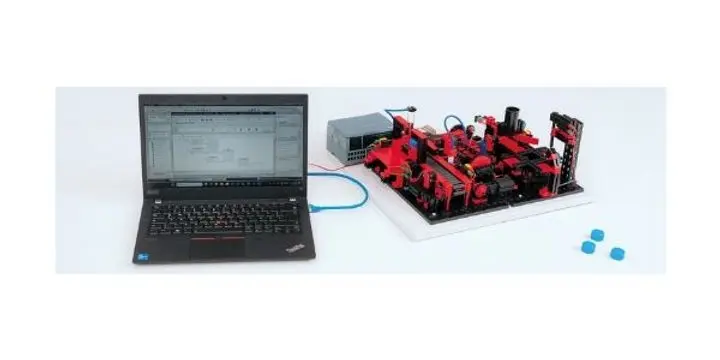
A key aspect of the study involved optimizing QNN design, with researchers identifying binary and exponential encodings as effective trade-offs between a model’s ability to represent complex data and the feasibility of training it on current quantum hardware. “This work demonstrates how quantum machine learning can be applied to real industrial problems today, while highlighting its potential to improve the quality of decision support in complex production environments as quantum hardware continues to evolve,” explained Dr. Pascal Halffmann, Fraunhofer ITWM. The collaboration leveraged a Fischertechnik factory model, intentionally introducing artificial leaks to provide realistic sensor data for evaluating the QNNs in a controlled environment, solidifying the practical focus of the research.
Data Encoding Strategies and QNN Trainability
The pursuit of practical quantum machine learning algorithms is increasingly focused on optimizing performance within the constraints of near-term quantum hardware. Researchers are concentrating on how to build QNNs that can effectively learn from real-world industrial data, as evidenced by the team’s application of QNNs to challenges like detecting pneumatic leaks and identifying faults in rotating machinery, utilizing sensor data to assess performance in practical settings. The study achieved 98% accuracy in identifying pneumatic leaks using QNNs, demonstrating the potential for high-performance anomaly detection in manufacturing processes. This level of precision is compelling given the complexity of industrial systems and the need for reliable fault diagnosis. Dr.
Quantum Neural Networks (QNNs), holds promise for integrating quantum principles into machine learning. However, a critical gap exists in understanding the practical limitations of QNNs regarding trainability and approximation capabilities. Our work provides a roadmap for selecting ansatzes that balance expressivity across both synthetic and real-world datasets, while using limited qubit count to address any noise issues.
Vardaan Sahgal, WISER




See today’s quantum computing news on Quantum Zeitgeist for the latest breakthroughs in qubits, hardware, algorithms, and industry deals.