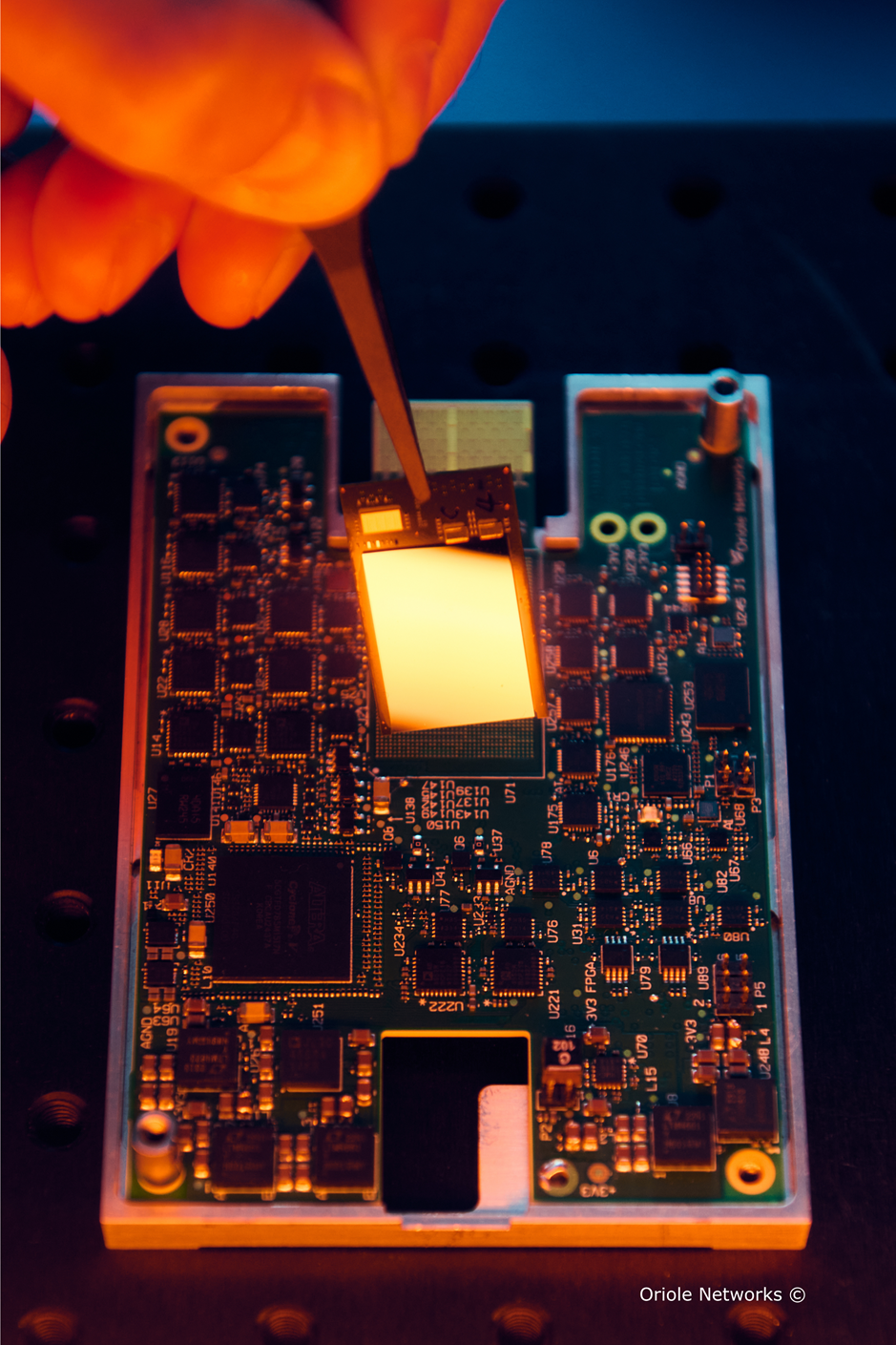
A £50 million ($68 million) investment is driving the creation of a new AI inference testbed in the UK, built around pure photonic networking. Oriole Networks is deploying the first large-scale AI system leveraging this approach, integrating its PRISM photonic network with AMD Instinct GPUs and AMD EPYC CPUs as part of the UK ARIA Scaling Inference Lab. The system aims to overcome limitations in current AI infrastructure by replacing traditional electronic switches with nanosecond-scale optical circuit switching, a fundamentally different way to connect accelerators at scale, according to AMD corporate vice president Madhu Rangarajan. “A year ago, we were proving the physics; today, we’re proving the business,” says Oriole CEO James Regan, as the collaboration demonstrates a ten-fold increase in inference throughput and interactivity.
AMD & Oriole Advance AI with UK’s ARIA Scaling Inference Lab
An order of magnitude increase in AI processing speed is now possible, thanks to a collaboration between Oriole Networks and AMD, deployed as part of the UK’s Advanced Research & Invention Agency (ARIA) Scaling Inference Lab. This system represents a significant shift from traditional electronic data networks, which have struggled to keep pace with the demands of increasingly complex AI workloads. This advancement also promises to lessen reliance on complex supply chains and reduce water usage through minimized cooling requirements, offering both performance and sustainability benefits. The £50 million ($68 million) ARIA Scaling Inference Lab serves as a testbed for this technology, backed by the UK Department for Science, Innovation, and Technology.
PRISM Photonic Networking Replaces Electronic Switching for AI
Conventional data center networks, reliant on electrical switches for decades, are increasingly strained by the demands of artificial intelligence; these systems are inherently inefficient, power-hungry, and generate substantial heat as chips exchange data at unprecedented rates. Oriole Networks is addressing this limitation with PRISM, a networking platform that transmits data as photons instead of electrical signals, effectively eliminating the need for electronic switches in the network core. This shift utilizes nanosecond-scale optical circuit switching, reducing core power consumption by 81 percent and decreasing GPU idle time from a current average of 60 percent to less than 1 percent. These benefits extend beyond energy savings; PRISM’s direct chip-to-chip photonic pathways minimize hardware dependency, potentially easing reliance on complex and vulnerable supply chains. This technology is currently being deployed in collaboration with AMD, integrating AMD Instinct GPUs and EPYC CPUs within the UK’s ARIA Scaling Inference Lab, a £50 million ($68 million) testbed designed to tackle AI workload bottlenecks. PRISM is designed to be agnostic, functioning across any accelerator platform, offering a pathway to enhanced system-wide performance without vendor lock-in.
Oriole’s AI backend networking with nanosecond optical circuit switching represents a fundamentally different way to connect accelerators at scale.
Madhu Rangarajan, corporate vice president, Compute and Enterprise AI business, AMD
Oriole’s PRISM Achieves 81% Power Reduction & Lower GPU Idle Times
Oriole Networks is demonstrating the practical benefits of its PRISM photonic networking solution through a collaboration with AMD, achieving substantial gains in energy efficiency and AI processing speed. This shift addresses a critical bottleneck in modern AI infrastructure, where data exchange between thousands of chips generates significant heat and demands considerable energy. Beyond power savings, Oriole’s PRISM platform dramatically reduces GPU idle time, dropping it from 60% to under 1%. This performance boost translates to serving more users simultaneously from the same hardware and processing a greater volume of data.
Meeting the demands for modern AI requires rapidly identifying ways to improve the performance and cost-efficiency of large-scale AI clusters.
Suraj Bramhavar, Program Director at ARIA
Source: https://oriolenetworks.com/



See today’s quantum computing news on Quantum Zeitgeist for the latest breakthroughs in qubits, hardware, algorithms, and industry deals.