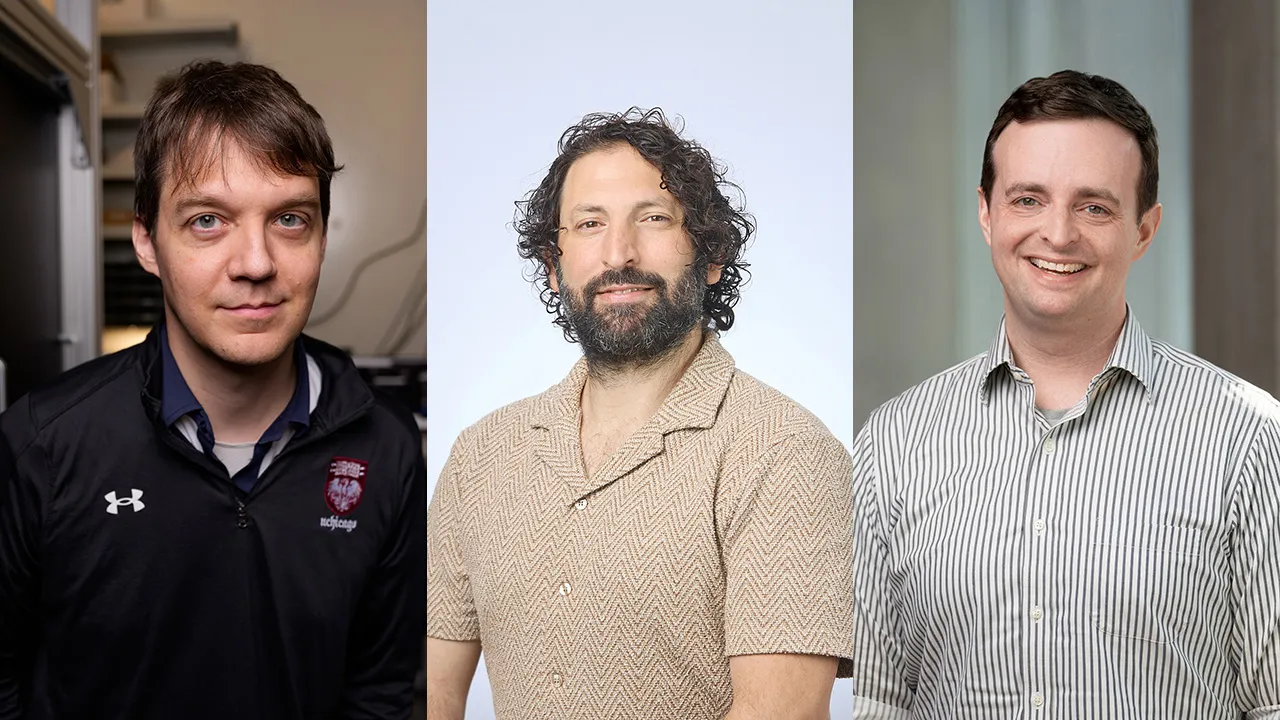
University of Chicago Pritzker School of Molecular Engineering and University of Iowa researchers challenged a key assumption limiting the effectiveness of diamond-based biosensors. The team initially sought to reduce sensor toxicity within living cells, but instead discovered the source of performance-limiting energy level shifts known as zero-field splitting (ZFS). According to UChicago PME Assoc. Peter Maurer, the research resolves a longstanding discussion, demonstrating these shifts are caused not by cellular temperature, but by a surface effect on the diamond itself. This greater understanding promises more detailed readings of cellular activity.
Silica Coating Stabilizes Diamond Quantum Sensors
Diamond-based quantum sensors, encased in a silica coating, now provide a more stable signal within living cells, resolving a long-standing debate about the origin of performance-limiting energy shifts. Peter Maurer, co-corresponding author of the published work.
“So when people observed ZFS shifts they assumed that these were caused by local temperature changes, i.e., caused by cellular activities.” Coating the sensors with silica not only lessened cellular stress but also dispersed electrons, effectively eliminating performance-hindering “spin noise.” This electron loss altered the charge within the diamond, prompting a re-evaluation of the underlying physics. Crucially, the silica coating suppressed the ZFS shifts, demonstrating the surface was the primary culprit; the cell’s temperature remained consistent regardless of the coating.
Experimental data confirmed the unexpected finding. “We were measuring a 5-degree change over 30 minutes inside of the cell. It’s just not thermodynamically feasible,” said Uri Zvi, first author of the paper published in Advanced Materials.
This discovery allows for more precise cellular readings, potentially enabling detailed monitoring of cellular processes, such as tracking a T cell’s differentiation or identifying cancerous changes. Zvi stated that scientists could potentially follow whether a T cell is becoming a regulatory T cell or a killer T cell, or whether a cell becomes a cancer cell or remains healthy, highlighting the expanded possibilities for biological investigation.
ZFS of qubits in diamond is known to be impacted by temperature. So when people observed ZFS shifts they assumed that these were caused by local temperature changes, i.e., caused by cellular activities.
Peter Maurer, Assoc. UChicago PME
Zero-Field Splitting Origin Shifts from Temperature to Surface Effects
Diamond-based quantum sensors, increasingly utilized to monitor cellular activity, previously presented a puzzle regarding energy level shifts known as zero-field splitting (ZFS). Their work, published in Advanced Materials on February 4, 2026, reveals the origin of ZFS lies not in cellular thermogenesis, but in interactions at the sensor’s surface. Initially focused on reducing cellular stress caused by the sensors, the team uncovered this unexpected finding while experimenting with a silica coating.
This coating, intended to improve biocompatibility, also stabilized the sensors and allowed for controlled experimentation. They discovered the silica dispersed electrons, altering the diamond’s internal charge and, crucially, suppressing the ZFS shifts. This observation led them to question the prevailing assumption about temperature as the primary driver of ZFS.
Further analysis confirmed the surface effect; measurements showed a cellular temperature variation of only 5 degrees Celsius over 30 minutes, a change Zvi deemed “just not thermodynamically feasible” to account for the observed ZFS shifts. Theorist Candido added that he is far from an expert in biology, but a sudden cellular temperature variation of 4 to 5 degrees Celsius is very unexpected.
Earlier studies had interpreted similar zero-field splitting shifts as evidence of intracellular temperature changes of 1 to 10 degrees.
Qubit Resonance Reveals Cellular Activity Proxy Potential
This new understanding allows for more precise interpretation of cellular signals, potentially transforming how scientists monitor cellular “vitals.” According to Professor Peter Maurer, this paper makes two major advancements and opens the door to distinguishing between electric field signals and temperature variations within cells. Maurer explained that scientists can think of it as an EKG for a single cell, a way to capture everything happening inside at once, in real time, envisioning applications ranging from tracking immune cell behavior to identifying cancerous transformations.
Think of it as an EKG for a single cell – a way to capture everything happening inside at once, in real time.
Prof. Peter Maurer, University of Chicago Pritzker School of Molecular Engineering


See today’s quantum computing news on Quantum Zeitgeist for the latest breakthroughs in qubits, hardware, algorithms, and industry deals.