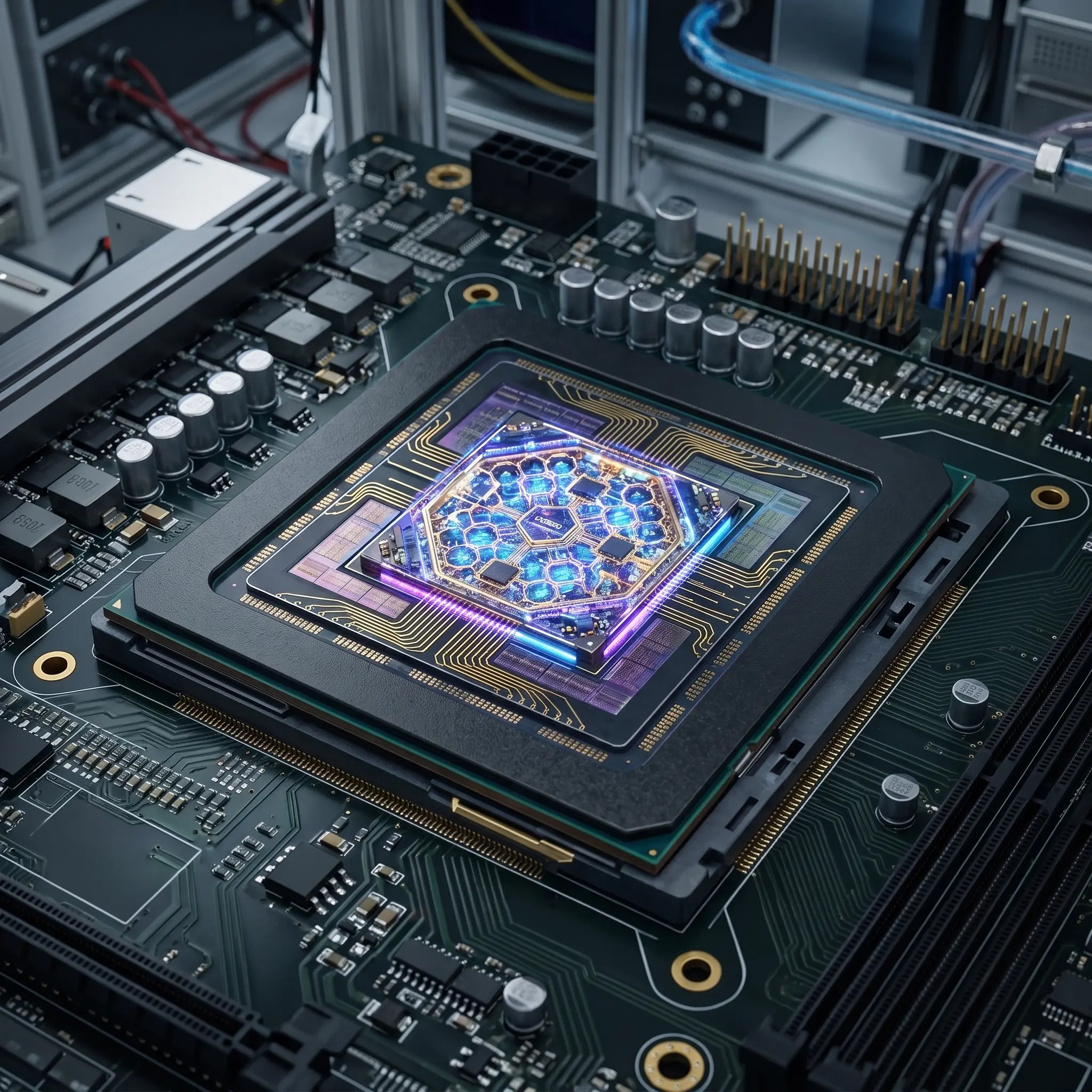
Samsung SDS, the Samsung Group’s systems integration affiliate, is leading research to embed quantum computing into a crucial step of chip manufacturing, with a planned proof-of-concept beginning in the second half of this year. The project targets photolithography, the process of using light to draw circuits onto wafers, considered a key process that determines the quality of the finished semiconductor. Samsung SDS is developing an algorithm that utilizes quantum computers for core calculations, paired with classical computers to process the resulting information, and employs artificial intelligence to correct errors during quantum computation. The company has reportedly secured some algorithms and intends to verify their effectiveness through the upcoming proof-of-concept, aiming to streamline semiconductor processes and improve integration density. If successful, Samsung will acquire the capability to utilize computing resources for chip design.
This initiative aims to significantly enhance semiconductor integration density and yield by leveraging advanced information technology. This strategy addresses the limitations of both technologies; quantum computers handle large-scale simulations without bottlenecks, while classical computers manage the subsequent data processing. Artificial intelligence (AI) is being deployed to proactively detect and correct errors that inevitably arise during quantum computation, ensuring the reliability of the simulations. This technology isn’t intended as a standalone product; instead, Samsung SDS plans to share the advancements with Samsung Electronics’ Semiconductor R&D Center, which has been developing process simulation technology for over a decade. The R&D Center currently divides research departments by semiconductor product and process, focusing on tailored optimization technologies.
Samsung SDS Integrates AI for Quantum Error Correction
Samsung SDS, the systems integration arm of the Samsung Group, is actively pursuing a novel approach to chip manufacturing, leveraging the power of quantum computing to refine the critical photolithography process. Unlike conventional methods, the company is not aiming to create standalone software; instead, the intention is to integrate this technology directly into Samsung Electronics’ existing semiconductor research and development infrastructure to enhance integration density and efficiency. This initiative departs from traditional simulation techniques by employing a hybrid computational model. Samsung SDS utilizes quantum computers to perform the intensive core calculations required for photolithography simulation, while classical computers handle the subsequent processing of the generated data. This pairing addresses the inherent limitations of each technology; quantum computers excel at complex calculations but are prone to errors, and classical computers, while reliable, struggle with the scale needed for advanced simulations.
To mitigate these quantum errors, Samsung SDS is deploying artificial intelligence (AI) to proactively detect and correct them during computation. The potential benefits extend beyond mere speed improvements. By streamlining the photolithography process, which involves using light to draw circuits onto silicon wafers, Samsung anticipates a reduction in both the time and cost associated with semiconductor pattern design and etching.
Source: https://en.sedaily.com/news/2026/07/01/samsung-to-embed-quantum-computing-in-chip-manufacturing




See today’s quantum computing news on Quantum Zeitgeist for the latest breakthroughs in qubits, hardware, algorithms, and industry deals.