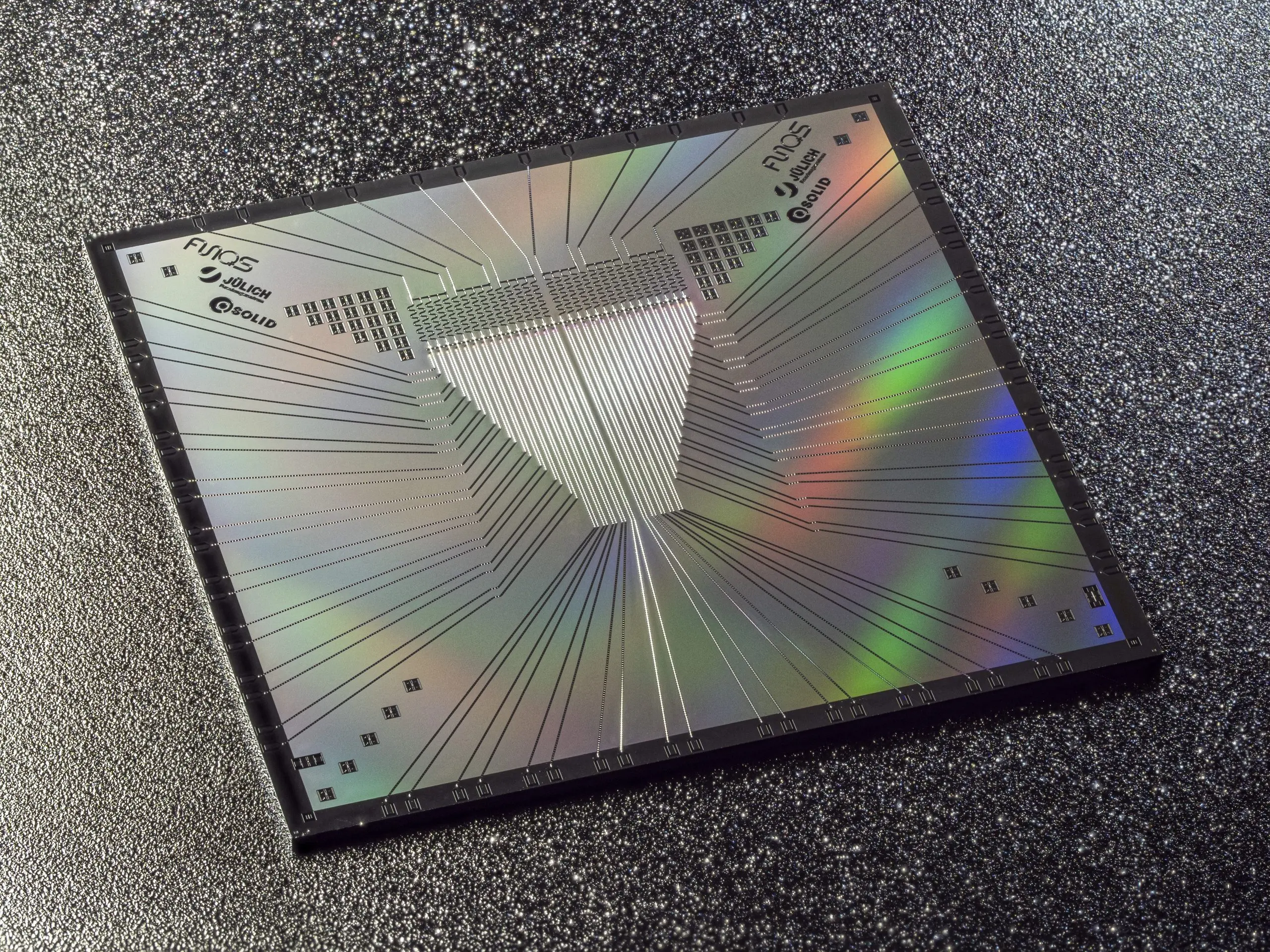
A quantum operation now takes just 6.8 nanoseconds at the Peter Grünberg Institute, a speed researchers say is tens of nanoseconds faster than typical superconducting quantum computers. The team achieved this record alongside 99.98 percent accuracy, demonstrating that rapid processing needn’t sacrifice reliability. Researchers found that strong, rapid microwave pulses can not only push information one floor beyond its intended destination but also set it two or three floors higher through so-called multiphoton transitions, an effect that had previously been overlooked. The team has developed a method to suppress these unwanted transitions.
8 Nanosecond Gate Achieves 99.98% Accuracy with Transmon Qubit
A 6.8 nanosecond quantum operation, performed on a superconducting transmon qubit, has yielded 99.981% accuracy at the Peter Grünberg Institute for Functional Quantum Systems (PGI-13) and Quantum Control (PGI-8), establishing a new benchmark for gate speed in quantum computing. This result, published in Nature Communications, significantly surpasses typical superconducting quantum computer operation times, which often require several tens of nanoseconds to complete a similar task.
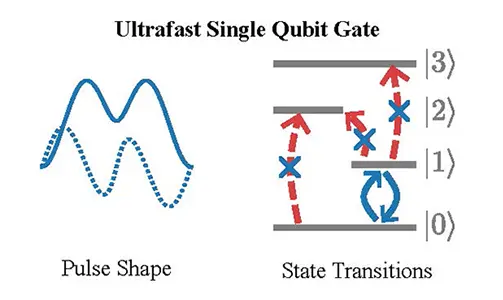
The achievement hinges on a newly refined method for suppressing unwanted qubit excitation during these ultra-fast operations. The team’s success addresses a fundamental challenge in scaling quantum computers; faster switching speeds demand stronger microwave pulses, which inadvertently increase the risk of qubits transitioning to unintended, higher energy levels. Superconducting qubits, unlike their classical counterparts, possess multiple energy states beyond the two used for computation, making them susceptible to these transitions.
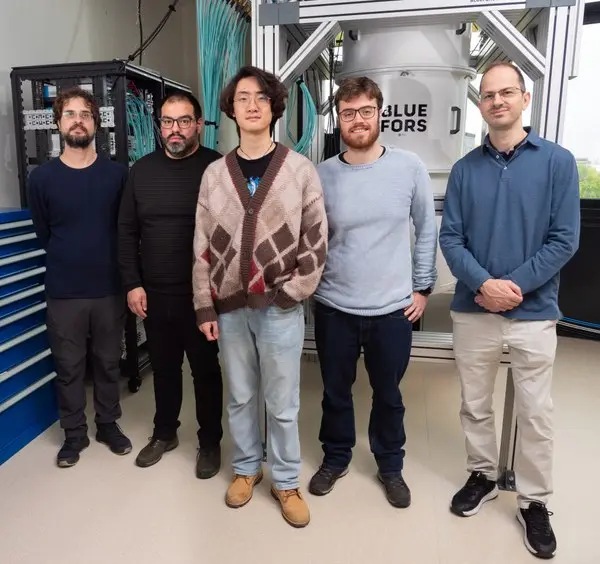
As the researchers explain, these transitions are particularly problematic because they can persist through multiple computational steps and degrade the accuracy of quantum error correction. To mitigate this issue, researchers led by Yuan Gao and Prof. Rami Barends (PGI-13), in collaboration with the theoretical group of José da Costa Jesus, Dr. Francisco Cárdenas-López and Prof. Felix Motzoi (PGI-8), developed a technique called R2D. This method builds upon the established DRAG technique, a standard correction method used for over a decade to control qubits, but enhances its precision.

R2D shapes the control pulses with exceptional accuracy, suppressing specific frequency components to minimize excitation to higher energy states. The result is a method that allows for the desired computational operation to occur while simultaneously reducing the probability of unwanted multiphoton transitions by a factor of more than 20.
The team demonstrated the R2D method on a single superconducting transmon qubit fabricated at the Helmholtz Nano Facility. Two fundamental quantum operations were performed using microwave pulses lasting only 6.8 nanoseconds, achieving measured accuracies of 99.981% and 99.989% respectively. The probability of the qubit transitioning to a higher energy state remained below 0.002% per operation, demonstrating that the increased speed did not compromise reliability. This work was conducted as part of the large-scale collaborative project QSOLID.
While the current results are promising, researchers acknowledge that further testing is necessary to determine the method’s efficacy in larger quantum processors and during operations involving multiple qubits. The team’s next steps will focus on scaling the technique to more complex systems and assessing its performance in realistic quantum computing scenarios. The implications of this advance extend beyond simply setting a new speed record.
The ability to perform quantum operations with both high speed and high fidelity is critical for complex algorithms and resource-intensive error correction, both of which are essential for building practical quantum computers. The researchers believe that their findings will provide valuable insights for further improvements to quantum systems and accelerate the development of fault-tolerant quantum computation.



See today’s quantum computing news on Quantum Zeitgeist for the latest breakthroughs in qubits, hardware, algorithms, and industry deals.