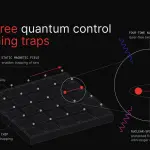
New York City will award New York University $29.2 million in exchange for board seats at a new Quantum Fabrication Facility, QFab and a stake in the technologies developed there. This first-of-its-kind agreement allows the city to influence the direction of quantum technology and ensure public benefit, backed by a total of $284 million in public and private funding.
QFab is projected to support over 100 companies and reach 35,000 New Yorkers within its first decade of operation. “We want those technologies, investments and jobs to be created here in New York City,” said Mayor Zohran Kwame Mamdani, “and we want New Yorkers to have a say and a share in their success.”
$284 Million Investment Launches NYC Quantum Fabrication Facility
The city’s $29.2 million investment in QFab is structured as an equity exchange, granting New York City board representation and a financial stake in technologies originating from the facility, a novel arrangement designed to directly influence the trajectory of quantum development and ensure public benefit. This unique agreement distinguishes QFab from other quantum research centers, positioning the city not merely as a funder, but as an active partner in innovation and value creation.

Dr. Juan de Pablo, NYU’s Executive Vice President for Global Science and Technology, emphasized that “Quantum won’t be built by any one institution working alone,” highlighting the collaborative intent behind the facility’s design. This scale of engagement extends beyond the traditional academic sphere, with a deliberate focus on cultivating a skilled workforce and encouraging entrepreneurial ventures.
QFab will drive economic growth by helping create new companies, good-paying jobs and career pathways while ensuring the public shares in the intellectual property and economic value it generates, according to city officials. The facility’s design prioritizes accessibility for both established firms and emerging start-ups, providing fabrication resources often unavailable elsewhere. The investment extends into the city’s public education system, with CUNY and NYCPS students gaining access to QFab’s advanced laboratories, specialized training programs, and summer workshops.
This initiative directly addresses the growing demand for a skilled quantum workforce, creating a pipeline of talent from within New York City. “Through our partnership with the City, thousands of CUNY students will train alongside our NYU students on cutting-edge equipment and build their research careers in one of the fastest growing scientific fields,” said NYU President Linda Mills.
By expanding access to quantum facilities, training programs and research opportunities, we are ensuring that the benefits of this technological revolution reach communities across New York City. The administration views this investment as a strategic move to capture a share of the projected $2.7 trillion in economic value the quantum industry is expected to generate by 2035.
“This is our chance to make sure that as the quantum industry takes shape, it takes shape here, so the NYU and CUNY students training in our labs today can forge careers right here in New York, tomorrow,” said Dr. de Pablo. The city’s commitment, coupled with NYU’s $255 million contribution, signals a long-term vision for establishing New York as a leading hub for quantum technology.
Right now, at subatomic levels that we can only glimpse, new technologies are being developed that will transform how we fight disease, store energy, and exchange information. We want those technologies, investments and jobs to be created here in New York City – and we want New Yorkers to have a say and a share in their success.
Mayor Zohran Kwame Mamdani
City-NYU Partnership Secures Stake in Emerging Quantum Technologies
NYU’s QFab is backed by an additional $255 million investment from NYU spanning construction and 10 years of operations. Beyond the financial commitment, the partnership prioritizes workforce development through expanded access to quantum technologies for students at the City University of New York (CUNY) and New York City public schools. CUNY Chancellor Félix V. highlighted that the initiative complements existing efforts to integrate emerging technologies into curricula and connect students with high-growth career paths.
Specifically, students will gain access to QFab’s labs, new certificate programs and summer workshops, supporting a pipeline of skilled professionals within the city. “This initiative builds on CUNY’s ongoing efforts to bring emerging technologies into the classroom and connect our students to high-growth careers,” said Chancellor Félix V., emphasizing the collaborative nature of the project.
This focus on accessibility is intended to support innovation and accelerate the commercialization of quantum technologies. “Technology is not something that just happens to us. We are excited to work with NYU to create good jobs for New Yorkers to the benefit of New Yorkers,” explained Deputy Mayor Su. NYU’s QFab is positioned as a key driver of economic development, bringing together government, universities and industry to translate research into real-world opportunities, and “This is going to be the launchpad for an entire new industry with enormous opportunities for New Yorkers.”
The New York City region is home to one of the largest concentrations of quantum scientists and engineers in the world.
Linda Mills, NYU President


See today’s quantum computing news on Quantum Zeitgeist for the latest breakthroughs in qubits, hardware, algorithms, and industry deals.