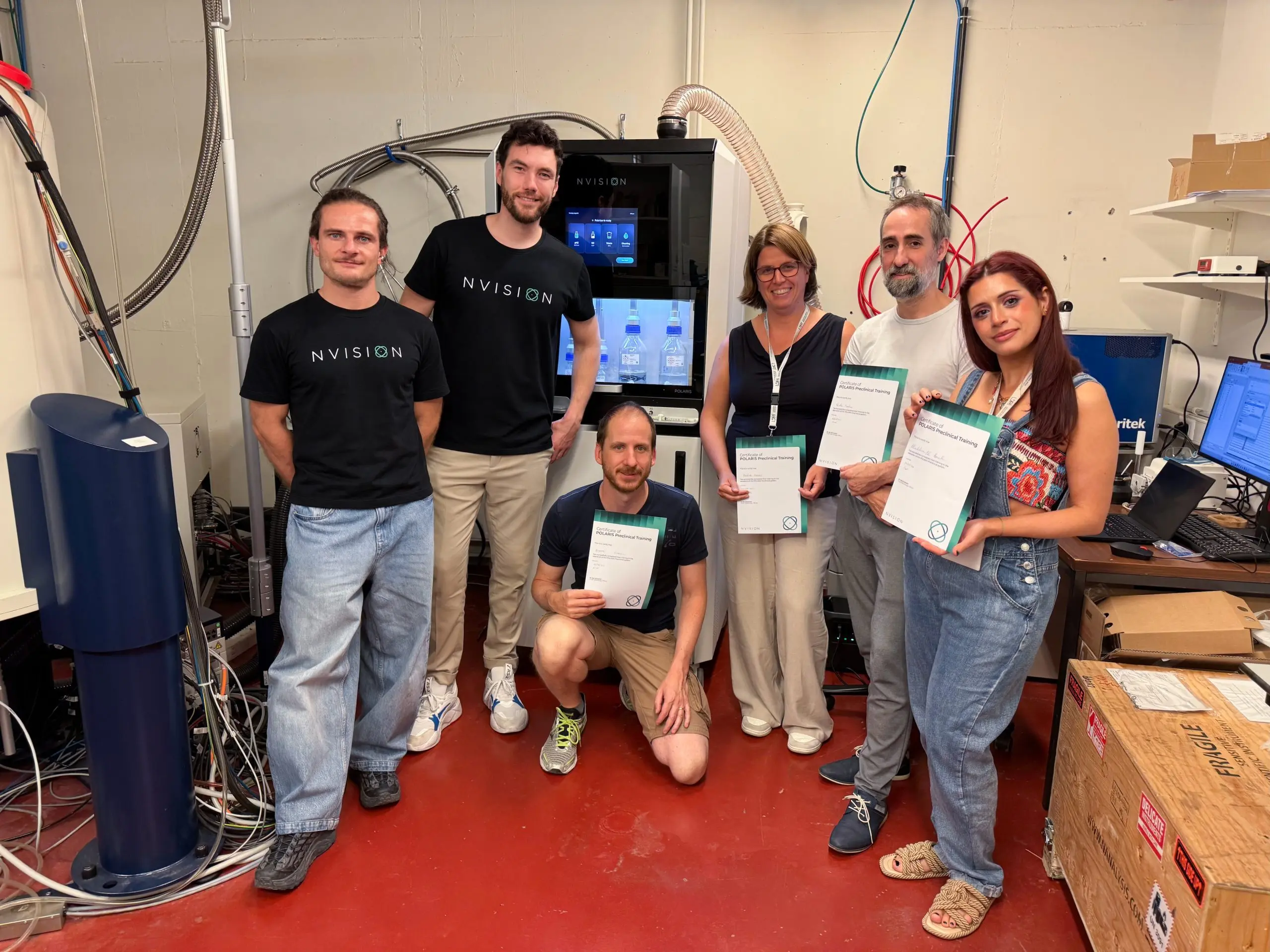
Researchers at UCLouvain will now study how cancer cells adapt to therapy using a new quantum-enhanced MRI platform, POLARIS, deployed by NVision Quantum Technologies GmbH. The system will focus on metabolic changes linked to treatment resistance in preclinical models of melanoma, triple-negative breast cancer and metastatic disease, going beyond simple disease identification.
“UCLouvain brings together the scientific expertise and infrastructure that can advance metabolic imaging into new areas of cancer research,” said Prof. Myriam Chaumeil, Head of Research at NVision. This installation is part of a rapid expansion, with NVision targeting approximately 20 POLARIS systems across Europe, North America and Asia by early next year.
POLARIS Deployment at UCLouvain Targets Cancer Metabolism
The German Federal Ministry of Research, Technology and Space extended funding for the QuE-MRT project to August 2028, allocating nearly €20 million to continue development of quantum-enhanced MRI technology. This sustained investment highlights the growing recognition of quantum sensing as a valuable tool for biomedical research and supports the wider deployment of systems like POLARIS. Initial studies will assess metabolic shifts as potential early indicators of therapeutic efficacy and identify vulnerabilities within tumor metabolism that could be targeted by new therapies.
UCLouvain’s Nuclear and Electron Spin Technologies (NEST) imaging platform will combine POLARIS with existing magnetic resonance capabilities, enabling a comprehensive investigation of tumor metabolism alongside other characteristics of the tumor microenvironment. “The future of cancer monitoring may depend on our ability to capture the biology behind treatment response, revealing changes in tumor metabolism beyond glucose uptake and the microenvironment before conventional imaging can detect them,” said Prof. Bénédicte Jordan of UCLouvain and Academic Lead of the NEST platform.
This integrated approach aims to reveal metabolic biomarkers that offer earlier insights into treatment outcomes than currently available methods. Researchers across this network are currently applying POLARIS to investigate disease biology in diverse fields including oncology, cardiology, neurology and immunology, demonstrating the technology’s versatility and its potential to address a wide range of medical challenges.
Our goal with POLARIS is to make quantum-enhanced MRI accessible to leading research teams so they can focus on the biological questions that matter.
PHIP Automation with POLARIS Enhances Metabolic Imaging Signals
POLARIS automates parahydrogen-induced polarization, or PHIP, a signal-boosting technique that amplifies MRI signals of metabolic molecules by over 10,000 times; this standardization represents a shift from manual hyperpolarization methods previously used in metabolic imaging. The system generates hyperpolarized metabolic imaging agents in approximately three minutes, allowing researchers to observe metabolic processes in real time using conventional MRI hardware. This speed is critical for capturing dynamic changes in tumor metabolism, a process often missed by slower imaging techniques.
The UCLouvain installation is part of a broader expansion strategy for NVision, with new POLARIS systems recently deployed at IBEC in Barcelona and the University of Antwerp through the Q-AID initiative, and at Hokkaido University in Japan. This expansion coincides with ongoing European research programs focused on advancing quantum-enhanced metabolic imaging for both research and clinical applications.


See today’s quantum computing news on Quantum Zeitgeist for the latest breakthroughs in qubits, hardware, algorithms, and industry deals.