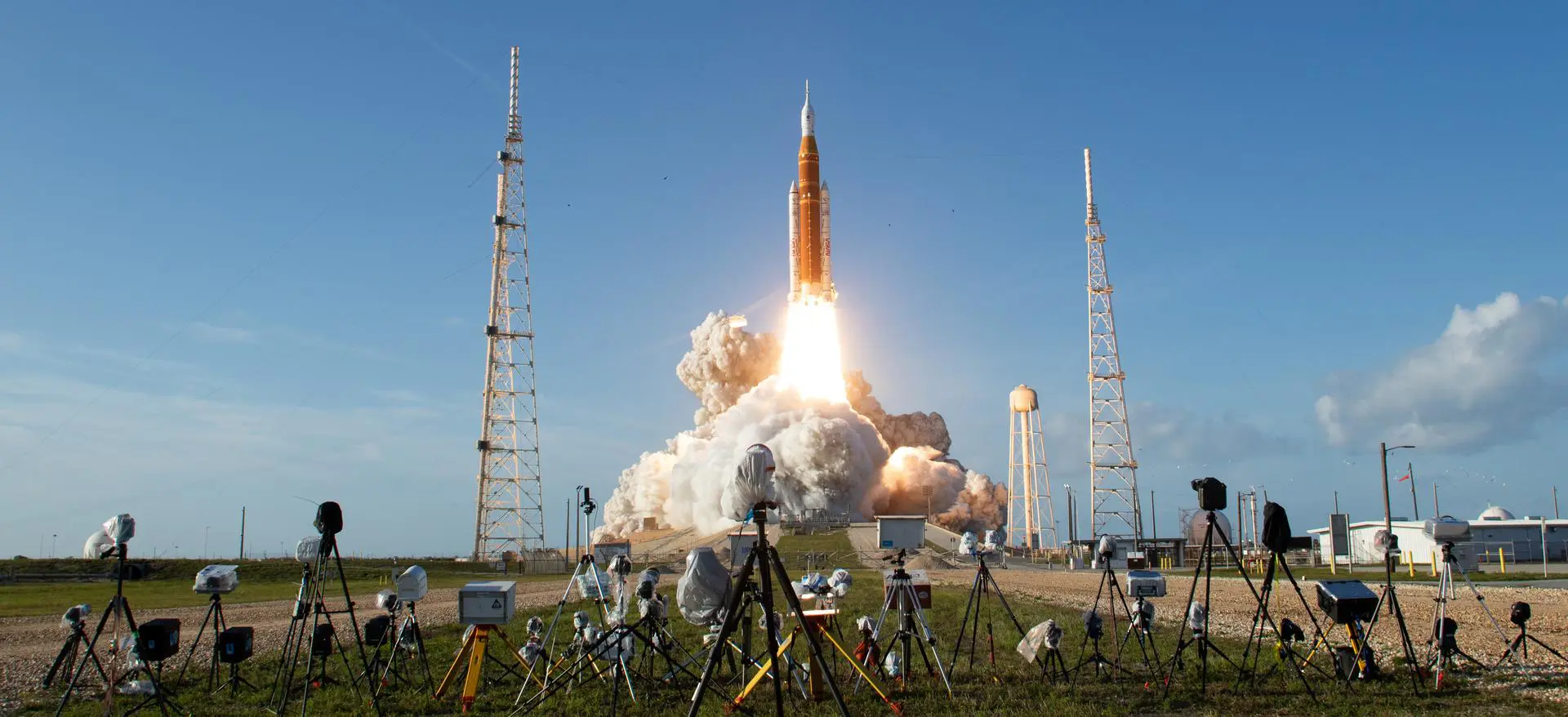
NASA’s coverage of the Artemis II mission, which sent astronauts Reid Wiseman, Victor Glover, Christina Koch, and Jeremy Hansen on the first crewed lunar flight in over half a century, has been honored with four Telly Awards. The agency’s continuous 24/7 livestream was a combined science storytelling experience integrating visuals, real-time data, and expert analysis for an international audience. “President Trump’s leadership in establishing the Artemis program reignited America’s bold vision for space exploration and set our nation on a course back to the Moon,” said Will Boyington, associate administrator, Office of Communications, NASA Headquarters. This approach reached nearly 290 million views across NASA’s platforms, expanding the mission’s impact to hundreds of millions more globally through commercial streaming partners.
Artemis II Mission Coverage Wins Telly Awards
This achievement extends beyond simply transmitting video; NASA integrated real-time mission data and expert commentary into a continuous, 24/7 livestream designed to make the complexities of spaceflight accessible to a global audience. The agency’s efforts culminated in its largest streaming audience ever, achieving nearly 290 million combined views across its platforms and extending reach further through commercial streaming partners. The scope of the Artemis II coverage wasn’t limited to the launch and flight itself; NASA also documented the intensive geology training undertaken by the astronauts and support teams on Earth, preparing them for future lunar missions. This training footage earned a science and technology storytelling award, highlighting the agency’s commitment to showcasing the scientific rigor behind its ambitious goals. A documentary focusing on the Hubble, James Webb, and Nancy Grace Roman Space Telescopes, narrated by actor John Rhys-Davies, received a screenwriting award, demonstrating NASA’s ability to communicate the impact of its astronomical endeavors through compelling narratives.
NASA’s Telescopes Documented in Award-Winning Screenplay
This documentary, narrated by actor John Rhys-Davies, secured a bronze award in the category, acknowledging the skillful construction of its narrative around decades of astronomical discovery. The film highlights how these telescopes, each designed to observe the universe in different wavelengths, have collectively reshaped our understanding of cosmic origins and planetary systems. This award acknowledges a deliberate effort to translate complex scientific data into an accessible and compelling story for a broad audience, moving beyond purely technical presentations of astronomical findings.
NASA received both a gold and silver award for “NASA’s Artemis II: Humanity’s Return to the Moon,” recognizing the mission’s coverage in the “Live Events and Experiences” categories respectively. Brittany Brown, director, Office of Communications Digital and Technology Division, NASA Headquarters in Washington, said, “By following NASA’s Artemis II coverage in real time on multiple platforms, millions of viewers around the world were able to experience the mission inside the Orion spacecraft and alongside the crew, from lunar flyby to splashdown.” NASA’s commitment to preparing for future lunar missions was also honored; a video documenting astronauts and support teams undergoing geology training on Earth received a silver Telly Award in the category.
President Trump’s leadership in establishing the Artemis program reignited America’s bold vision for space exploration and set our nation on a course back to the Moon.
Will Boyington, associate administrator, Office of Communications, NASA Headquarters
See today’s quantum computing news on Quantum Zeitgeist for the latest breakthroughs in qubits, hardware, algorithms, and industry deals.