Researchers have achieved a new level of detail in dynamic security patterning, creating multi-color hydrogel films with a minimum line width of 15 μm, significantly increasing the potential for information density. Published in Nano-Micro Letters, the work details a method for fabricating these “smart” hydrogels using a “film formation first, then patterning” approach, allowing for complex, responsive designs. Beyond vibrant, fade-resistant color, the team discovered that ultraviolet radiation not only strengthens the material and reduces swelling but also alters its color, shifting it toward blue or causing it to disappear, offering a built-in erasing function. These structural color hydrogels demonstrate stable performance through more than 100 cycles of stimuli response, opening possibilities for applications ranging from ink-free printing to advanced anti-counterfeiting measures.
Anti-Opal Hydrogel Design for Dynamic Structural Color
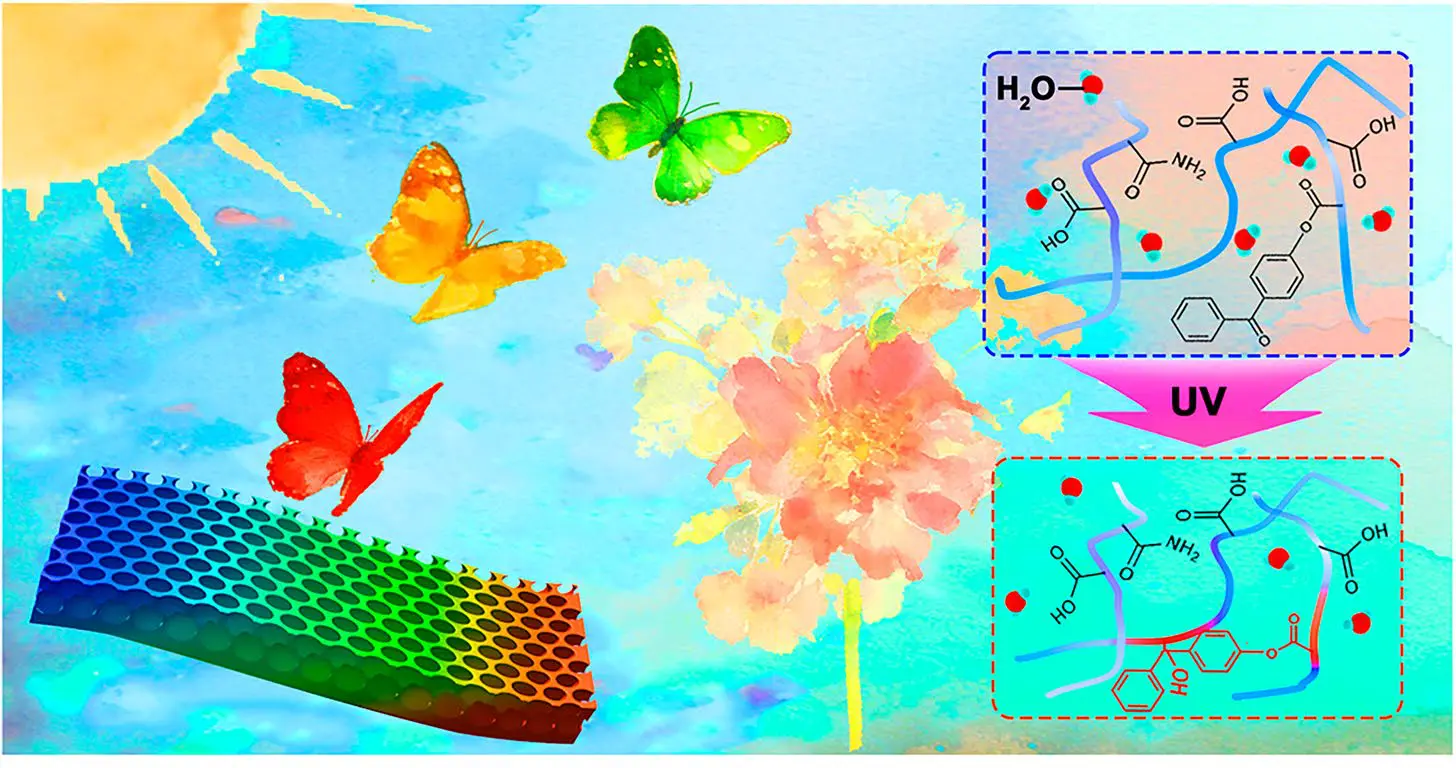
A new approach to information security leverages the shifting colors of hydrogels, creating patterns down to 15 μm in width. Researchers have developed a method for encoding data within materials using light to manipulate the structure of anti-opal hydrogels, offering a potential leap forward in anti-counterfeiting and secure data storage. Unlike traditional methods reliant on pigments, this technique generates color through the physical arrangement of nanostructures, resulting in vibrant, fade-resistant displays. The core of the innovation lies in the anti-opal structural color hydrogel (ASCH), a responsive material whose color changes as its internal structure swells or shrinks in response to environmental cues. The researchers created an ordered porous network within a poly(acrylamide-co-acrylic acid) hydrogel using a silica opal template; this allows the reflected structural color to shift across the visible spectrum.
Critically, ultraviolet radiation doesn’t simply illuminate the pattern, but actively alters the material itself, increasing cross-linking, inhibiting swelling, enhancing tensile strength, and causing the color of the inverse opal structure to shift toward blue or even disappear. “By introducing light-initiated crosslinking molecules into anti-opal hydrogels, we developed a film that can be further regulated by photo-curing,” explained the research team. This multi-stimuli responsiveness, to stress, temperature, and solvents, allows for dynamic information display and exceptional stability, with the hydrogels able to cycle stably for more than 100 times. This capability enables a strategy where information is revealed only under specific conditions, suggesting applications ranging from secure packaging to identity documents.
Light-Induced Crosslinking Enables Photo-Patterning
Beyond conventional methods of creating patterned color, a new technique leverages light to directly modify hydrogel structures, offering enhanced control and data density. Researchers have successfully demonstrated multi-color patterning with a resolution reaching 15 μm, a significant leap in the amount of information that can be encoded within a given area. This innovation doesn’t stop at simply creating images; the application of ultraviolet radiation serves a dual purpose. This color change, induced by the light itself, introduces a built-in mechanism for erasure or a layer of security, as patterns can be selectively removed or altered. This repeatability is essential for practical security applications, ensuring that encoded information remains reliable over time, with the hydrogels able to cycle stably for more than 100 times. As described in Nano-Micro Letters, information can be concealed and revealed only when exposed to a specific sequence of environmental triggers, creating a sophisticated barrier against counterfeiting and unauthorized access.
Multi-Stimuli Responsiveness for Layered Information Encryption
Researchers are increasingly turning to dynamic materials for advanced information security, and a team led by Professor Bingtao Tang has developed a novel approach utilizing multi-stimuli responsive hydrogels to create layered encryption systems. The innovation centers on anti-opal structural color hydrogels (ASCH), where the arrangement of air voids within a poly(acrylamide-co-acrylic acid) matrix generates color that shifts with environmental changes; this allows for information to be encoded and revealed only under specific conditions. The method diverges from traditional photonic crystal fabrication by prioritizing “film formation first, then patterning,” simplifying production and enabling customized designs through UV light exposure. This dual functionality, structural reinforcement alongside color alteration, expands the potential applications beyond simple visual coding. The research highlights the potential for complex, multi-layered security. Demonstrating robust performance, the ASCH films can cycle through stimulus responses for more than 100 times, ensuring reliability for practical applications. The team envisions applications ranging from high-end packaging and identity documents to secure data storage, where a single film could display different information layers based on external stimuli, such as a brand logo under normal light, a serial number when wetted, and a hidden warning code with a pH change.
Photonic crystals, which produce vibrant structural colors through the periodic arrangement of nanostructures rather than chemical pigments, have emerged as a powerful alternative.



See today’s quantum computing news on Quantum Zeitgeist for the latest breakthroughs in qubits, hardware, algorithms, and industry deals.