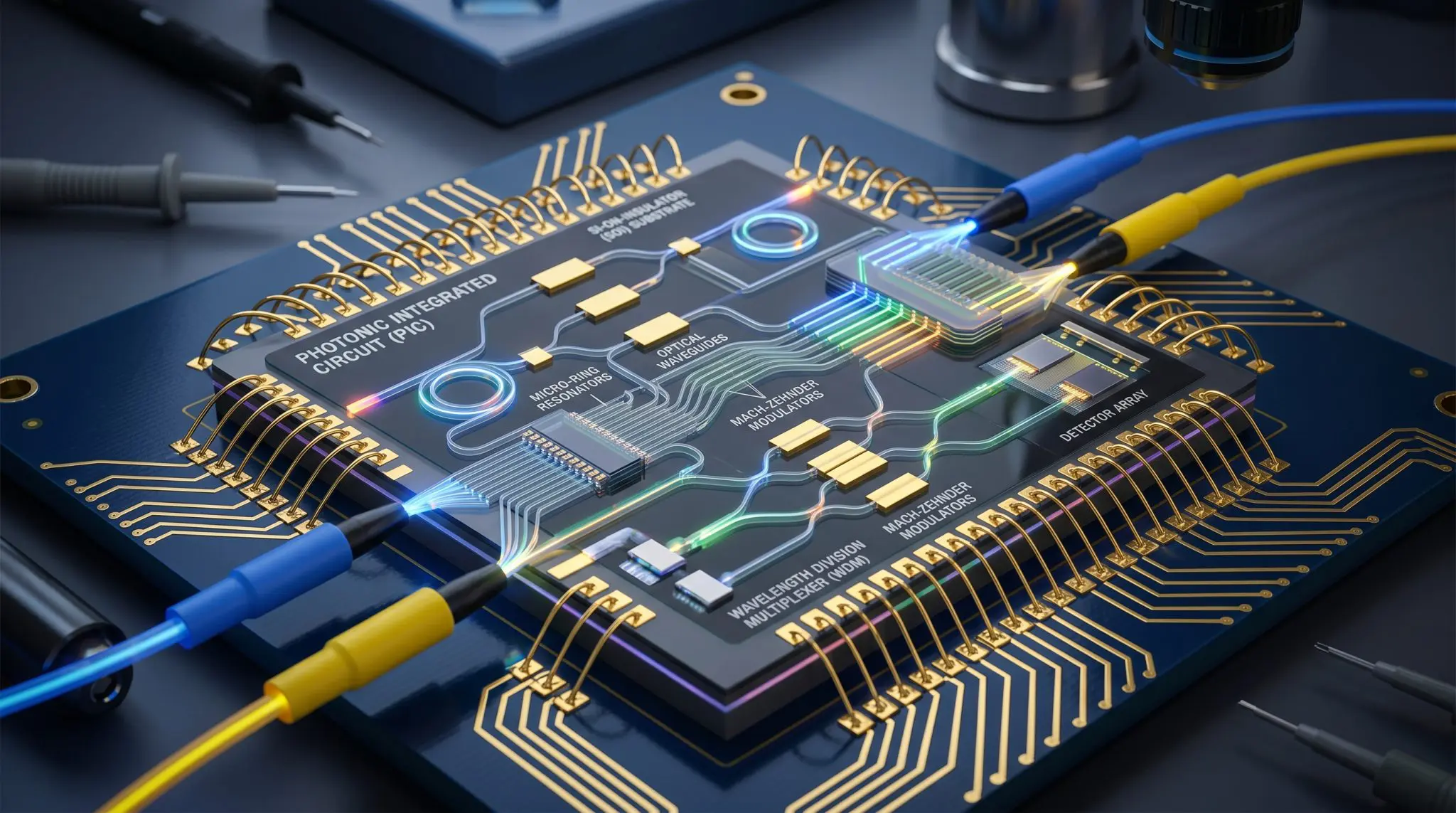
A NIS 150 million investment from the Israel Innovation Authority and the Directorate of Defense Research & Development will establish new national infrastructure dedicated to the complete development cycle of integrated photonic chips. This initiative aims to support everything from initial design and simulation to prototype creation, testing, packaging, and volume manufacturing, both within Israel and internationally. According to Dror Bin, CEO of the Israel Innovation Authority, “Integrated photonics is expected to become one of the core technologies of the semiconductor industry in the coming years,” and this funding is designed to accelerate the translation of research into marketable products. The new infrastructure will strengthen Israel’s position in the rapidly expanding semiconductor industry and shorten the path from innovation to commercial availability.
NIS 150 Million Initiative for Integrated Photonics R&D
The new infrastructure will be open to both industrial corporations and academic institutions, requiring applicants to demonstrate a robust technology plan, a viable business model, and a framework for broad accessibility. Selected entities will face stringent requirements, including rapid turnaround times and support for diverse materials, with a mandate to begin offering partial R&D services within 12 months of approval. Brig. Daniel Gold, Head of DDR&D (MAFAT), emphasized that integrated photonics “opens new possibilities for developing advanced, high-performance systems” and will establish a lasting national capability for research, industry, and defense.
Integrated photonics opens new possibilities for developing advanced, high-performance systems across a wide range of applications.
Brig. Daniel Gold, Head of DDR&D (MAFAT) at the Ministry of Defense
Infrastructure Requirements for Industrial Standards & Access
Integrated photonics research and development in Israel currently has strong academic foundations and early-stage innovation, but lacks late-stage infrastructure. Companies frequently face challenges transitioning from successful prototypes to commercially viable products due to limited access to facilities for advanced manufacturing, testing, and packaging. This substantial investment signals a strategic prioritization of a technology expected to see significant growth within the semiconductor industry. The planned infrastructure will encompass the entire development lifecycle, from initial design and simulation through prototype development, characterization, testing, packaging, and support for transition to volume manufacturing. Applicants for funding will be evaluated on their ability to deliver a sustainable operating model, ensuring long-term accessibility for both industrial and academic users, and to meet stringent industrial standards regarding turnaround times and service availability. Applicants for the funding, which will be awarded to industrial corporations or consortiums, must demonstrate a robust plan for technological advancement, business viability, and broad accessibility for both academic and industry users.
Integrated photonics is expected to become one of the core technologies of the semiconductor industry in the coming years.
Dror Bin, CEO of the Israel Innovation Authority




See today’s quantum computing news on Quantum Zeitgeist for the latest breakthroughs in qubits, hardware, algorithms, and industry deals.