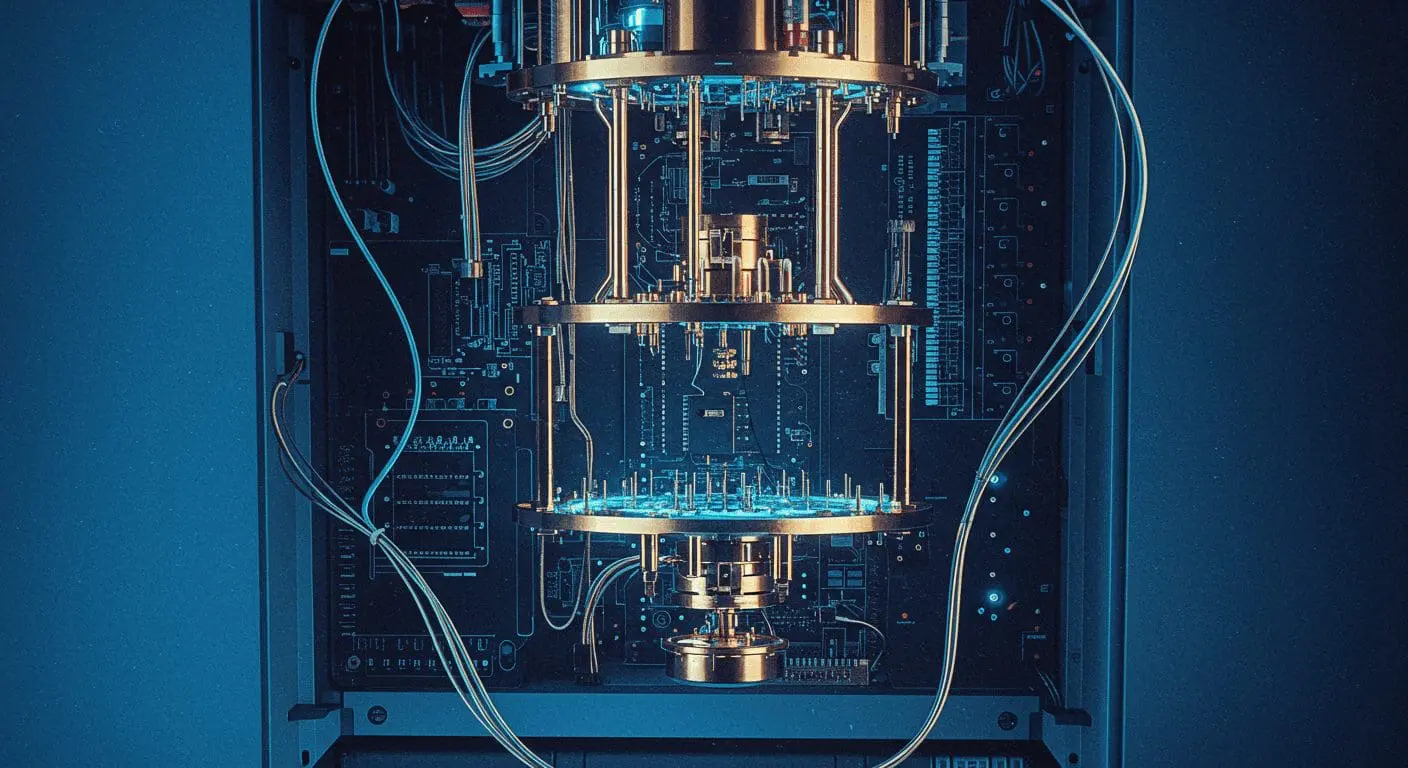
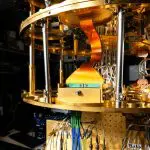
Researchers at MIT Lincoln Laboratory have prototyped flexible cryogenic cables capable of operating within the extremely narrow temperature range of 5 to 10 millikelvin, colder than the temperatures encountered in space, a crucial advancement for stabilizing qubits and minimizing thermal noise in quantum computing research. These ribbon-like cables address a key challenge in building dilution refrigerators, the specialized equipment needed to create the ultra-cold environments essential for quantum systems, by simultaneously supporting high-speed data transmission and direct current power. Maybell Quantum, a Colorado-based company supplying hardware for quantum systems, has licensed the design and plans to integrate the wiring, dubbed LF CryoTrace, into its dilution refrigerators. Lasse Nielsen, strategy and operations lead at Maybell Quantum, anticipates use for thermometry, heaters, and sensors, and notes that further functionality is under study.
Stripline Cable Design for Cryogenic Environments
Operating at temperatures colder than outer space, a new wiring system is expected to accelerate progress in quantum computing hardware. These cables address a critical need for efficient power delivery and high-speed data transmission within these extremely cold environments. Conventional coaxial cables, while functional, generate significant heat loads and become increasingly impractical as quantum systems scale up in complexity; the increasing number of qubits demands more cables, creating a physical bottleneck within the dilution refrigerator. The Laboratory team opted for a stripline cable configuration, layering conductive materials between flexible polymer shields to minimize electromagnetic interference and signal loss across a broad range of frequencies.
This design not only enhances performance but also allows for easier integration with existing commercial circuit-board manufacturing processes, a key factor in scalability. “The main innovation is that the laboratory’s cables can be fabricated by a traditional printed-circuit-board manufacturer. They’re cheaper to fabricate and easier to install than traditional coaxial cables,” explains John Cummings, a principal investigator in the project. Initial applications will focus on low-frequency services like thermometry and sensor connections, with plans to expand functionality following qualification testing. Beyond simplified installation and increased durability, the ribbon format is mechanically robust, reducing breakage, and the cables promise to significantly accelerate assembly times, reducing tasks that previously took days to mere hours, ultimately enabling a more scalable and cost-effective quantum computing infrastructure.
We’re planning to integrate Maybell LF CryoTrace, the ribbon wiring system transferred from MIT Lincoln Laboratory, across all thermal stages of our dilution refrigerators. Initially, the cables will be used for LF services, such as thermometry, heaters, and sensors, with feasibility studies planned for additional functions.
Lasse Nielsen, strategy and operations lead at Maybell Quantum
Maybell Quantum’s Integration of LF CryoTrace Cables
Existing cryogenic systems rely heavily on dilution refrigerators, complex devices that maintain near-absolute-zero temperatures, but conventional wiring presents significant limitations. Traditional coaxial cables, while functional, generate substantial heat loads within these delicate environments and become increasingly unwieldy as qubit counts rise, hindering the scalability of quantum processors. Researchers at MIT Lincoln Laboratory addressed these challenges by prototyping flexible, low-frequency cables designed to operate efficiently within dilution refrigerators. Maybell Quantum, recognizing the potential of this innovation, licensed the design and is now integrating the cables, branded as LF CryoTrace, into their dilution refrigerator systems. A key advantage lies in the manufacturing process; this compatibility with existing manufacturing techniques promises to reduce both fabrication costs and installation complexity. “Over time, we think ribbonized, quantum-specific internal wiring can reshape manufacturing norms: faster and more consistent builds, easier field service, and more modular upgrades,” Nielsen adds, suggesting a broader shift in how quantum hardware is produced and maintained.
The main innovation is that the laboratory’s cables can be fabricated by a traditional printed-circuit-board manufacturer. They’re cheaper to fabricate and easier to install than traditional coaxial cables,” says John Cummings, a principal investigator in the flexible cables project of the Lincoln Laboratory Quantum-Enabled Computation Group .
John Cummings, a principal investigator in the flexible cables project of the Lincoln Laboratory Quantum-Enabled Computation Group
Scalability of Flexible Cables for Quantum Systems
This move addresses a key bottleneck in scaling quantum systems; conventional coaxial cables, while functional, present limitations in density and ease of installation as qubit counts increase. The Laboratory’s flexible, ribbon-like cables offer a solution by minimizing heat loads and enabling denser packing within the refrigerator’s thermal stages. Unlike rigid coaxial cables, these LF CryoTrace cables are fabricated using standard printed-circuit-board manufacturing techniques, significantly reducing production costs and streamlining the installation process. Beyond immediate cost and time savings, Maybell Quantum envisions a broader impact on the quantum computing manufacturing landscape. The company anticipates that widespread adoption of this ribbonized wiring system will foster faster, more consistent builds, simplified field service, and easier modular upgrades. Kyle Thompson, founder and chief technology officer of Maybell Quantum, emphasizes the importance of scalability for the future of quantum computing, asserting, “If you want to scale to hundreds of chips, you need interconnects that can handle more signals more reliably. That’s why the Lincoln Laboratory cables are so exciting for us — they enable true scalability.”
If you want to scale to hundreds of chips, you need interconnects that can handle more signals more reliably. That’s why the Lincoln Laboratory cables are so exciting for us – they enable true scalability,” says Kyle Thompson, founder and chief technology officer of Maybell Quantum.
Kyle Thompson, founder and chief technology officer of Maybell Quantum
See today’s quantum computing news on Quantum Zeitgeist for the latest breakthroughs in qubits, hardware, algorithms, and industry deals.