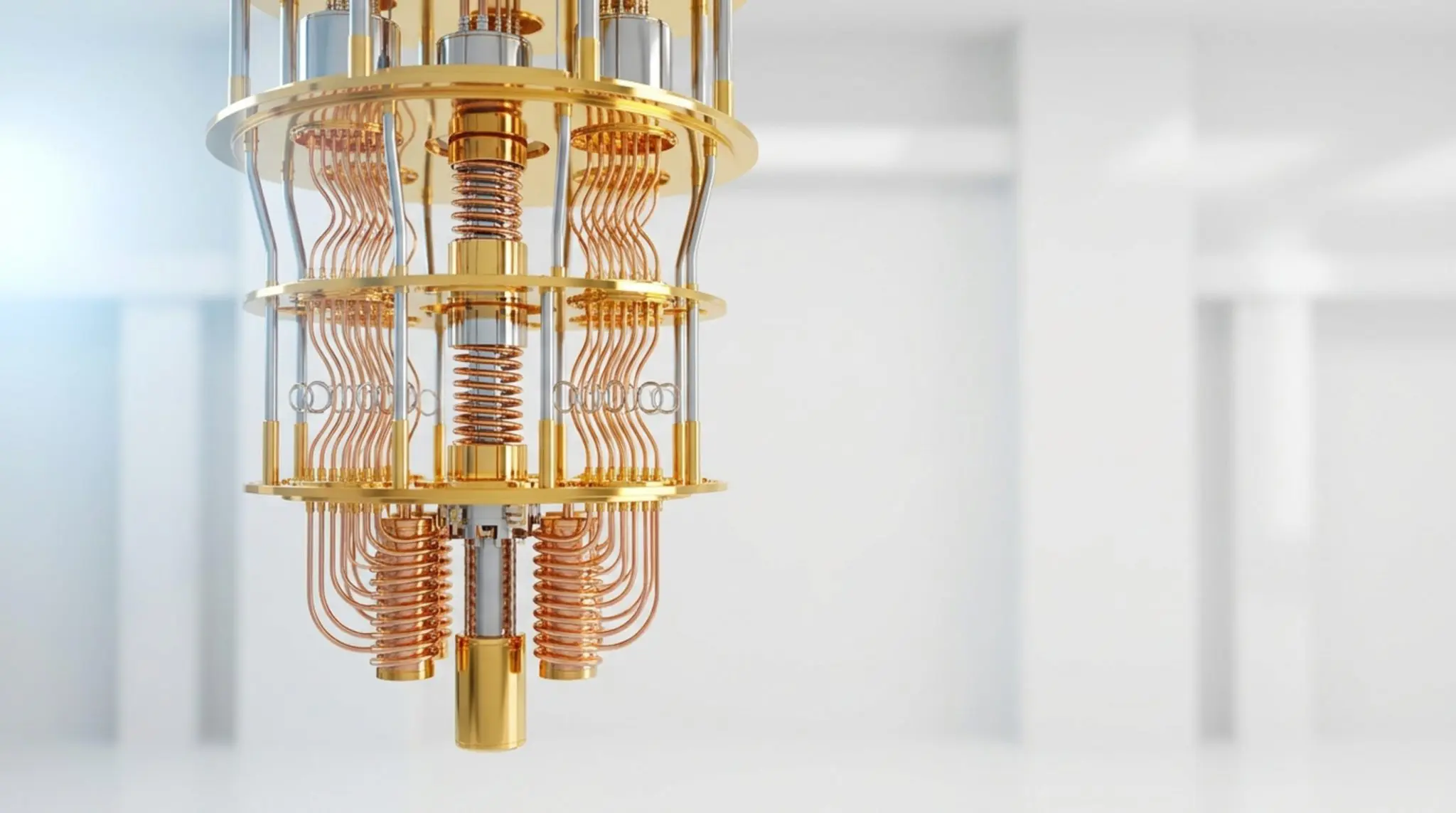
Europe’s push for quantum computing leadership gained momentum as IQM Quantum Computers (Nasdaq: IQMX) outlined a staged deployment of a logical-qubit-capable system at the LUMI AI Factory in Finland. The LUMI-IQ computer will begin installation in 2027 with 150 physical qubits and early error correction, scaling to be capable of encoding up to 9 logical qubits by 2029 with distance 3 surface and colour codes. This phased approach aims to deliver increasingly stable and reliable qubits essential for complex, real-world applications.
IQM’s Staged Delivery of LUMI-IQ Superconducting System
IQM plans to encode logical qubits up to distance 11 with surface code and distance 9 with color code, capable of up to 9 logical qubits by 2029, indicating a trajectory toward increased error correction capabilities. This advanced encoding potential demonstrates the system’s capacity to move beyond immediate computational goals and explore more robust quantum processing techniques. The LUMI-IQ computer, destined for the LUMI AI Factory in Kajaani, Finland, will be delivered in stages, beginning in 2027 with a 150-physical qubit system featuring early quantum error correction, the company says.
This phased approach allows for continuous integration with existing compute infrastructure, offering a capital-efficient pathway for benefiting from IQM’s error correction roadmap. The delivery schedule is structured around three key upgrades, with the 2028 installation focused on lowering logical error rates and enabling real-time error correction.
This progression is designed to support research and development efforts toward fault-tolerant quantum computing and advancements in hybrid computing environments. CSC, IT Center for Science, leading the LUMI AI Factory initiative, jointly funds the project alongside contributions from EuroHPC and participating countries including Finland, Czechia, Norway, and Poland, according to the company. The integration of LUMI-IQ into the LUMI-AI computing environment will establish a leading hybrid platform, combining high-performance computing, artificial intelligence, and quantum computing resources.
“That’s what lets a real ecosystem grow: researchers building on infrastructure they control, inside one of the most capable computing environments anywhere,” said a representative. This ownership model is intended to foster local expertise and allow Europe to shape the direction of quantum computing development. The ability to sustain logical qubits through fast, real-time feedback after the final 2029 upgrade will enable full logical operations, including lattice surgery and T-gate teleportation, complex processes essential for advanced quantum algorithms.
Logical qubits, created by combining multiple physical qubits through quantum error correction, are more stable and reliable than physical qubits alone, a necessity for running complex calculations. “The greatest potential lies in combining the complementary strengths of AI, high-performance computing, and quantum computing,” said Kimmo Koski, CEO of CSC, IT Center for Science.
“Logical qubits make quantum calculations more reliable, while AI and HPC provide the scale, data processing and orchestration needed around them.” The LUMI AI Factory allows European researchers to develop innovative hybrid approaches in a computing environment, the firm reports. This integrated approach is expected to unlock new scientific workloads that combine traditional simulation, machine learning, and quantum algorithms, opening research avenues for European end-users.
IQM, founded in 2018 and now publicly listed on Nasdaq as IQMX, has already demonstrated its commitment to superconducting qubit technology with the delivery of a 20-qubit Pathfinder system to Oak Ridge National Laboratory in June 2026 and a 54-qubit system to Galaxy Systemy Informatyczne in Poland earlier in the year. The company’s Halocene product line, launched in 2026, focuses on-premises systems with a particular emphasis on quantum error correction, specifying up to five logical qubits and 99.7% two-qubit fidelity.
Owning an upgradeable quantum computer let´s CSC and the LUMI AI Factory integrate the system into their own AI and HPC infrastructure.
Jan Goetz, CEO and Co-founder of IQM Quantum Computers


See today’s quantum computing news on Quantum Zeitgeist for the latest breakthroughs in qubits, hardware, algorithms, and industry deals.