A fidelity exceeding eighty per cent across multiple devices was achieved using only approximately SI{0.3}{mW} of power, previously typical operating levels required roughly ten times more. An indium content of sixty per cent within high-electron-mobility transistors provides peak performance for assigning qubits correctly, despite similar noise temperatures to seventy per cent counterparts measured by standard methods. A new method evaluates amplifiers key for reading information from qubits, directly assessing how well these devices perform within a quantum system than in isolation.
The approach revealed that an indium content of sixty per cent in high-electron-mobility transistors delivers peak performance exhibiting noise levels comparable to alternatives with seventy per cent indium. Methods are being refined to accurately assess amplifiers vital for reading information from superconducting qubits; these devices function much like a sensitive microphone preamplifier boosting faint signals without excessive interference. The team developed a new benchmarking technique evaluating amplifier performance *within* an actual quantum system, rather than testing them in isolation as has been standard practice until now.
While seventy per cent indium versions boast higher gain, sixty per cent variants deliver peak accuracy in identifying whether a qubit represents a ‘0’ or a ‘1’. This assignment fidelity is akin to checking for errors when retrieving data from a hard drive. Achieving over eighty per cent fidelity with just SI{0.3}{mW} of power suggests sharp potential for reducing energy demands in future quantum processors.
Sixty percent indium HEMTs optimise quantum processor readout efficiency at minimal power
Readout fidelity exceeded eighty per cent across all tested devices using approximately SI{0.3}{mW} of power; previously comparable performance typically required around ten times more consumption. This substantial reduction unlocks possibilities for designing quantum processors with sharply lower energy demands and reduced cooling requirements at the important four Kelvin temperature stage. An indium content of sixty per cent in high-electron-mobility transistors delivers peak assignment fidelity, despite exhibiting similar noise temperatures to seventy per cent variants, a finding revealed by a new benchmarking method employing single-shot qubit readouts instead of traditional noise measurements.
Across four high-electron-mobility transistor (HEMT) low-noise amplifiers, readout fidelity consistently surpassed eighty per cent while consuming as little as approximately SI{0.3}{mW}. Specifically, these transistors yielded peak assignment fidelity when containing sixty per cent indium; standard Y-factor measurements showed they exhibited comparable noise temperatures to those with seventy per cent indium.
Maintaining over eighty-five percent fidelity required roughly one milliwatt for the best performing device and detailed mapping indicated that performance declined above certain power levels, well below typical operating points. This new benchmarking method directly links amplifier characteristics to actual readout errors but currently does not account for effects like thermal photon emission impacting qubit coherence or interactions between amplifier noise and resonator dynamics, areas vital for scaling towards larger processors.
Linking cryogenic amplifier characteristics to demonstrable qubit readout accuracy
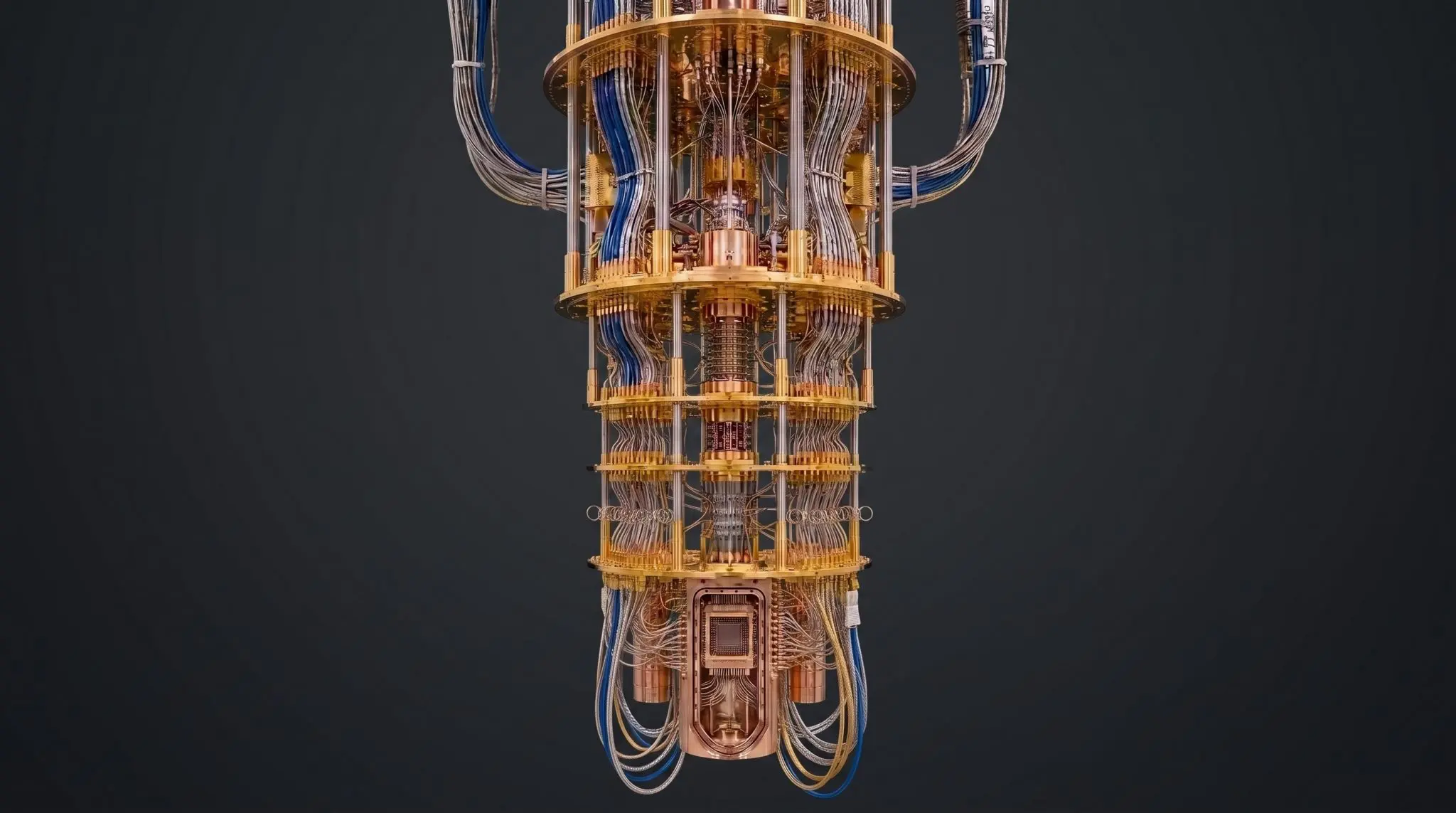
Innovation in cryogenic amplifier design is driven by the pursuit of stable qubit readings; these devices boost incredibly weak signals from superconducting circuits before they are lost to noise. Conventional methods evaluating amplifier performance, measuring ‘noise temperature’ independently of quantum behaviour, may overlook important details regarding how well an amplifier truly functions within a functioning processor. While assessing true amplifier performance inside a quantum processor remains complex due to conventional measurement limitations, this method offers valuable practical insight for developers building larger systems.
This approach provides actionable guidance on selecting amplifiers and optimising their operation in multi-qubit setups where minimising energy use is vital. Direct measurement of qubit assignment fidelity assesses amplifier performance, a contrast with techniques focused solely on noise temperature independent of quantum behaviour. Utilising the IQ histogram, a visual representation of qubit state identification, this ‘qubit-in-the-loop’ approach benchmarks amplifiers within a functioning quantum system rather than isolating them as has been standard practice. The key components boosting signals from delicate quantum circuits are now subject to a new benchmarking technique.
The research demonstrated that assessing cryogenic low-noise amplifiers using single-shot qubit readout provides a more accurate measure of performance than traditional methods based on noise temperature alone. This is important because it directly links amplifier characteristics to errors in reading information from qubits, which are fundamental units of quantum computers.
Researchers tested three indium phosphide high-electron-mobility transistor (HEMT) LNAs with varying indium content and found the device containing sixty percent indium achieved the highest fidelity, over eighty-five percent, with approximately one milliwatt of power consumption. The authors note this method does not yet account for all factors impacting qubit coherence as systems scale up.
👉 More information
🗞 Qubit-Based Benchmarking of InP HEMT LNAs: Readout Fidelity Versus Power Consumption
✍️ Junjie Li
🧠 ArXiv: https://arxiv.org/abs/2609.07250


See today’s quantum computing news on Quantum Zeitgeist for the latest breakthroughs in qubits, hardware, algorithms, and industry deals.