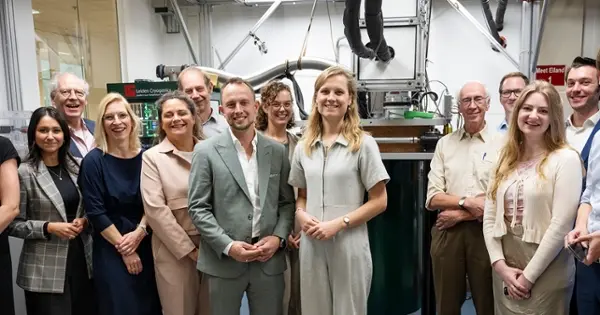
Dutch Parliament members visited Leiden University on October 2nd to learn about the rapidly developing field of quantum technology and its broader societal impact, specifically requesting a briefing from Julia Cramer, Assistant Professor at the Leiden Institute of Physics. Cramer’s research focuses on the integration of quantum technology into society, prompting discussion on promising applications, ethical questions and the Netherlands’ position in the international field.
The visit concluded with a direct challenge to policymakers: “How can the Netherlands maintain its societal and economic lead in quantum technology, and what political choices lie ahead?” Cramer noted the MPs’ preparedness, adding that perhaps, a few decades from now, today’s children will look back in amazement and say, “Did you really live without a quantum computer?”
Dutch National Quantum Strategy Addresses Societal Impact
Evert van Nieuwenburg detailed the convergence of quantum computing with artificial intelligence and complex systems during the parliamentary visit, illustrating a broadening scope for quantum applications beyond traditional cryptography and materials science. This presentation highlighted an intersection of fields, demonstrating how quantum advancements could influence areas like machine learning and the modeling of complex networks.
This inquiry framed the discussion not merely as scientific progress, but as an immediate policy challenge requiring strategic decisions to ensure continued national leadership. The committee’s focus on political choices signals a proactive approach to governing the development and deployment of quantum technologies, acknowledging the need for deliberate policy interventions, and Leiden University researchers contributed to a broader conversation about the choices facing the Netherlands as the technology rapidly evolves.
The Ministry of Economic Affairs and Climate Policy is spearheading the development of a National Quantum Strategy, collaborating with seven other ministries, BZ, BZK, DEF, FIN, IenW, JenV and VWS, to ensure a unified and adaptive approach to quantum technology. This multi-ministerial effort recognizes the strategic importance of quantum technology, as well as the associated security risks, demanding a coordinated response across various government departments. The launch reception for the National Quantum Strategy is scheduled for November 4, 2026, signaling a commitment to maintaining the Netherlands’ leading position in the field while bolstering national resilience.



See today’s quantum computing news on Quantum Zeitgeist for the latest breakthroughs in qubits, hardware, algorithms, and industry deals.