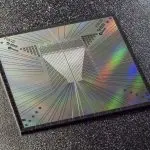
Chinese scientists have achieved a new milestone in quantum computing with the development of Jiuzhang 4.0, a photonic processor incorporating an 8,176-mode circuit and 1,024 squeezed states to improve the scale and efficiency of Gaussian boson sampling. The processor created by a Chinese team now demonstrates 51% efficiency, a substantial improvement over previous designs, and successfully detected quantum states of up to 3,050 photons. This represents an order-of-magnitude increase in scale, enabling sampling within a Hilbert space of approximately 102,461 dimensions and pushing the experimental frontier beyond classical computational limits. “This means that the most complex data sample generated by ‘Jiuzhang 4.0’ takes only 25 microseconds to produce, shorter than the blink of an eye,” said Lu Chaoyang, a professor at USTC. “In contrast, the world’s most powerful supercomputer would require more than 10 to the 42nd years to calculate the same result.”
Jiuzhang 4.0 Demonstrates Scalable Gaussian Boson Sampling
The Jiuzhang 4.0 processor achieves a scale previously unattainable in Gaussian boson sampling, incorporating 1,024 squeezed states within a single hybrid spatial, temporal encoded circuit boasting 8,176 modes. This represents a substantial increase in complexity over earlier iterations and a critical step toward more powerful quantum processors. Achieving 92% source efficiency alongside an overall system efficiency of 51% allowed the processor to generate samples containing up to 3,050 photons, an order-of-magnitude improvement over previous demonstrations and directly addressing the challenge of photon loss that has historically limited scalability. Led by the University of Science and Technology of China (USTC), the team demonstrated the processor’s capabilities by solving the Gaussian boson sampling problem at a speed exceeding the world’s most powerful supercomputer by a factor of 10 to the 54th power, according to a study published in Nature.
The ability to manipulate thousands of photons in a programmable, low-loss system offers new possibilities for constructing “trillion-qubit-mode three-dimensional cluster states” and ultimately, fault-tolerant optical quantum computing hardware. Lu noted that the results from ‘Jiuzhang 4.0’ represent a major leap in the scale and complexity of low-loss photonic quantum processors, highlighting the potential for future advancements in the field and the ongoing pursuit of robust, scalable quantum computation.
High-Efficiency Photonic Circuit with 1,024 Squeezed States
The pursuit of scalable quantum processors currently focuses on several distinct technologies, including superconducting circuits, trapped ions, and photonic systems; however, maintaining quantum information fidelity as systems grow remains a central challenge across all platforms. This architecture addresses a key limitation of Gaussian boson sampling, photon loss, which has historically constrained scalability by employing high-efficiency squeezed states to preserve quantum information during complex calculations. The Jiuzhang 4.0 realizes a cubic scaling of connectivity (163 = 4,096), enabling complex quantum computations. Researchers rigorously validated the experimental results against existing classical simulation methods, including recent matrix product state algorithms designed to account for photon loss, confirming the processor’s ability to operate beyond the reach of conventional computing.


See today’s quantum computing news on Quantum Zeitgeist for the latest breakthroughs in qubits, hardware, algorithms, and industry deals.