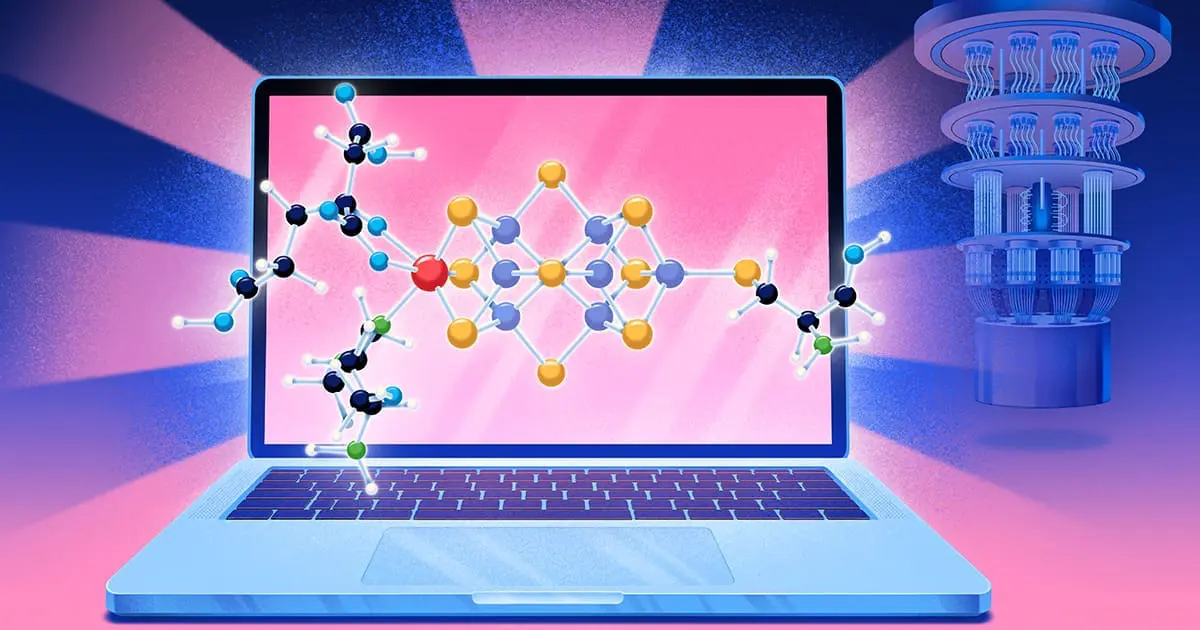
A decades-long quest to understand the enzyme nitrogenase, essential for converting atmospheric nitrogen into life-sustaining ammonia, has yielded to the power of classical computers, challenging expectations within the rapidly advancing field of quantum computing. Researchers at the California Institute of Technology recently reached a key milestone in deciphering nitrogenase, a system many believed required the unique capabilities of quantum machines due to the complex interplay of quantum entanglement among numerous electrons. Garnet Chan, a central figure in the debate over classical versus quantum computing for chemistry, asserts, “My main interest is in solving chemical problems. If classical computers are the right tool to do it, we should.” This result demonstrates that, contrary to popular belief, some of chemistry’s biggest questions can be answered without waiting for the development of fault-tolerant quantum computers, as Chan believes, stating, “I don’t see why we should wait for a fault-tolerant quantum computer to be built.”
Nitrogenase Enzyme Breaks Atmospheric Nitrogen for Life
The enzyme nitrogenase, responsible for converting atmospheric nitrogen into ammonia, has long been considered a prime candidate for solving with quantum computers, but recent work demonstrates the surprising capability of classical computation to unravel its complexities. For billions of years, life’s access to usable nitrogen was limited by the inertness of the diatomic nitrogen molecule (N2), requiring reliance on rare, high-energy events like lightning strikes. The evolution of nitrogenase within early prokaryotes fundamentally altered this, breaking the triple bond of N2 and creating biologically accessible ammonia, a feat that now, decades later, has been modeled successfully using conventional computing methods. This achievement, spearheaded by Garnet Chan and colleagues at the California Institute of Technology, marks a pivotal moment not just for understanding a crucial biochemical process, but also for the ongoing debate surrounding the necessity of quantum computers for tackling complex chemical problems.
The enzyme’s active site, a cluster of iron and molybdenum atoms called FeMo-co, presents a significant challenge due to the correlated behavior of its numerous electrons. FeMo-co is one of the most correlated systems in all of biology, and a prime example of what’s known as the electron correlation problem. Researchers initially hypothesized that the explosive growth in possible electron configurations would necessitate the power of a quantum machine to decipher the system, but Chan’s team proved otherwise. The team focused on determining the ground-state energy of FeMo-co, the lowest-energy electronic configuration that serves as the foundation for understanding the entire reaction.
Despite the computational demands, Chan asserts, “I think it’s important to clarify that this is not an impossible task where you have to first build a quantum computer to say anything about the problem.” While acknowledging the potential of quantum computers in the future, he firmly believes that researchers shouldn’t be held back by waiting for fault-tolerant quantum computers to become a reality. James Whitfield, a quantum computing theorist at Dartmouth College, points out that the extensive time investment, spanning years in this case, shouldn’t be overlooked. “If we pick any optimization problem and you put 20 years into it, you can figure out that one system,” Whitfield said, questioning whether the solution is broadly applicable. Nevertheless, each step towards fully understanding nitrogenase’s chemistry, regardless of the computational method employed, diminishes the hypothetical nature of the quantum versus classical debate, and provides valuable insight into the processes that sustain life on Earth.
Electron Correlation Challenges in the FeMo-co Active Site
For decades, researchers believed that the extreme quantum entanglement within the enzyme’s active site, FeMo-co, would necessitate the power of a fault-tolerant quantum computer to fully decipher its behavior. However, recent work challenges this assumption, demonstrating the surprising capability of classical computing methods to tackle this notoriously complex system. This shift is particularly notable given that researchers identified nitrogenase as an ideal target for demonstrating quantum computing capabilities. Garnet Chan of the California Institute of Technology, a chemist with decades of experience in biochemical processes, spearheaded the effort, succeeding with purely classical methods despite the difficulty. This electron correlation problem has long been a major hurdle in accurately modeling the enzyme’s behavior. While acknowledging the eventual role of quantum computers, Chan believes that focusing solely on waiting for their development is a misstep.
He suggests that while classical methods can address specific instances, quantum computers are still needed to tackle these kinds of problems at scale and to determine if the solutions are transferable. Despite these differing perspectives, the progress made in understanding nitrogenase is undeniably significant, pushing the boundaries of both classical and potentially, future quantum computational chemistry.
I think it’s important to clarify that this is not an impossible task where you have to first build a quantum computer to say anything about the problem.
Classical Methods Decipher Complex Nitrogenase Chemistry
This success challenges the prevailing expectation that such a complex biochemical process would require the power of a quantum computer for full elucidation, marking a notable shift in the debate surrounding the necessity of quantum computing for tackling challenging chemical problems. For decades, Chan has dedicated his career to unraveling the intricacies of biochemical processes, a pursuit that unexpectedly positioned him at the forefront of this computational debate. Researchers had long hypothesized that the entangled nature of electrons within FeMo-co would necessitate a quantum computer to accurately model its behavior, given the exponential growth of computational demands with increasing system complexity. However, Chan’s group demonstrated that classical methods, refined over years of development, were sufficient to achieve a precise determination of the enzyme’s ground state.
This achievement carries implications beyond simply understanding nitrogenase; it questions the assumption that quantum computers are essential for addressing all complex chemical challenges. Chan argues that questions like that won’t be answered by solving one instance of one molecular system. Despite differing perspectives, the successful classical computation of nitrogenase’s ground state undeniably advances the field, moving the debate from theoretical possibility to demonstrable reality.
My main interest is in solving chemical problems. If classical computers are the right tool to do it, we should.
Quantum Computing Debate: Speedup vs. Scalability
The pursuit of understanding complex chemical reactions has unexpectedly become a battleground in the debate over quantum versus classical computing, with recent results suggesting that conventional machines may be sufficient for tackling problems once thought exclusively within the reach of quantum processors. Chan, whose work spans decades of biochemical investigation, initially became a central figure in this debate while seeking solutions to fundamental chemical processes. This success, achieved without relying on the still-developing field of fault-tolerant quantum computing, has sparked renewed discussion about the necessity of quantum machines for certain chemical investigations.
The implications extend beyond simply solving one complex problem; Chan argues that the reliance on future quantum technology should not impede current progress. This stance directly counters the expectation held by many in the quantum computing community that nitrogenase would remain intractable until sufficiently powerful quantum computers become available. “But whether that solution is transferable?” Each step toward a complete understanding of nitrogenase, regardless of the computational method employed, ultimately refines the debate and brings the field closer to a clearer picture of the role quantum computers will ultimately play in unraveling the complexities of the natural world.
I don’t see why we should wait for a fault-tolerant quantum computer to be built.
Haber-Bosch Process Historically Enabled Nitrogen Fixation
Nitrogen, comprising approximately 80 percent of the atmosphere, ironically presented a significant barrier to early life. This limitation drastically restricted biomass production until the emergence of nitrogenase, an enzyme capable of breaking the inert diatomic nitrogen molecule (N₂) and converting it into biologically available ammonia. Daniel Suess, a chemist at the Massachusetts Institute of Technology who studies nitrogenase, explains that early organisms were “literally waiting for lightning to strike” to obtain necessary nitrogen. The evolution of nitrogenase, around three billion years ago in early prokaryotes, fundamentally altered the planet’s biochemical landscape. However, replicating this natural process on an industrial scale remained a challenge for centuries, with guano deposits from islands off the coast of Peru serving as a resource so valuable and rare that nations went to war over it.
The Haber-Bosch process, developed by German chemists Fritz Haber and Carl Bosch in 1909 and 1913, ultimately provided a solution, enabling the large-scale production of ammonia for fertilizer and diminishing the practical need to fully understand the intricacies of the biological nitrogenase enzyme. This industrial triumph, while solving a critical agricultural problem, inadvertently sidelined fundamental scientific inquiry into the enzyme’s mechanism for decades. FeMo-co’s numerous correlated electrons, each influencing the others, created a challenge that pushed the limits of classical computing methods. Researchers hypothesized that a quantum computer, leveraging the principles of superposition and entanglement, would be essential to decipher the enzyme’s behavior. This achievement, the result of decades of work, challenges the prevailing assumption that quantum computers are necessary to tackle complex chemical problems.
If we pick any optimization problem and you put 20 years into it, you can figure out that one system.



See today’s quantum computing news on Quantum Zeitgeist for the latest breakthroughs in qubits, hardware, algorithms, and industry deals.