IBM Quantum has added Orbit, a new error suppression tool from Quantum Elements, to its Qiskit Functions Catalog, marking the platform’s first new software function in over a year. Tests demonstrate Orbit more than doubles the number of qubits usable for a successful quantum Fourier transform, a critical operation for quantum computing. The function provides IBM Quantum Network members with a new method to improve circuit performance while reducing the time and cost associated with error mitigation. “Quantum computing performance gains need to be practical, accessible, and cost-conscious,” said Izhar Medalsy, CEO of Quantum Elements. “Orbit was built to give users practical access to advanced error suppression without complicating the workflow.”
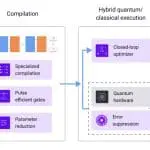
Orbit, developed by Quantum Elements, translates decades of research into dynamical decoupling into a readily accessible function for IBM Quantum Network members. This approach addresses a critical need for practical, cost-effective improvements in quantum circuit performance, particularly as users push the boundaries of qubit counts and circuit complexity. The function’s compatibility with mid-circuit measurements and dynamic circuits distinguishes it from traditional static-circuit error mitigation methods; Orbit applies dynamical decoupling to these complex workflows, suppressing noise in scenarios where other techniques fall short. Daniel Lidar, Quantum Elements’ Chief Science Officer, leveraged his foundational work in dynamical decoupling to create Orbit, bridging the gap between theoretical research and practical application. By integrating Orbit into the Qiskit Functions Catalog, IBM Quantum aims to streamline the adoption of advanced error suppression capabilities for a broad range of users, from academic researchers to enterprise teams exploring quantum applications.
Quantum computing performance gains need to be practical, accessible and cost-conscious.
Izhar Medalsy, CEO of Quantum Elements
Real-world testing demonstrates a substantial performance increase, with Orbit more than doubling the number of usable qubits when implementing a quantum Fourier transform, a foundational operation within the field. Quantum Elements co-founder and Chief Science Officer Daniel Lidar contributed to the theoretical and practical foundations of these error suppression methods, now available to a broader audience. Scott Crowder, Vice President, IBM Quantum Adoption and Business Development, stated that by making Orbit available, “we are making advanced error suppression easier to access, test, and integrate into real quantum workflows for our global community of IBM Quantum Network members.” This integration streamlines the incorporation of Quantum Elements’ capabilities into existing workflows for researchers, developers, and enterprise teams.
By making Quantum Element’s Orbit available in the Qiskit Functions Catalog, we are making advanced error suppression easier to access, test, and integrate into real quantum workflows for our global community of IBM Quantum Network members.
Scott Crowder, Vice President, IBM Quantum Adoption and Business Development
Orbit directly addresses a key challenge in quantum computing: maximizing usable qubits for complex operations. This performance boost is particularly significant given the ongoing limitations in qubit scalability and coherence. The function’s launch extends beyond simply adding another tool to the Qiskit Functions Catalog; it leverages dynamical decoupling, a technique originally developed for nuclear magnetic resonance, to actively suppress noise impacting quantum states. This accessibility is crucial, as it allows researchers and developers to experiment more efficiently and extract greater value from limited quantum computing resources.
Source: https://quantumelements.ai/

See today’s quantum computing news on Quantum Zeitgeist for the latest breakthroughs in qubits, hardware, algorithms, and industry deals.