Why Ireland is an emerging quantum nation
Ireland was a relatively late entrant to commercial quantum computing, but it has built quickly on two existing strengths. The first is a strong research base in physics and photonics across its universities and the Tyndall National Institute, and the second is its long-established position as a European base for major technology multinationals, which gives the country deep semiconductor and software expertise. The ireland quantum computing companies have grown out of that combination.
The turning point came with a clear national strategy and the rise of Equal1 as a credible quantum-hardware company. Ireland does not yet have a large number of quantum startups, and several of the most important organisations in its ecosystem are research institutes and universities rather than companies. But the trajectory is clear, and the ireland quantum computing companies now span silicon quantum hardware, photonics, quantum software, and a deep university research base, with a national strategy steering the effort.
The Quantum 2030 strategy and funding
Ireland set out its first national quantum strategy, called Quantum 2030, in late 2023. The strategy sets the goal of making Ireland an internationally competitive quantum hub by 2030, and it is organised around pillars covering research, talent and skills, collaboration, and innovation and enterprise, with a further focus on raising quantum awareness. It gives the ireland quantum computing companies a coordinating framework and a clear national ambition.
On funding, Ireland restructured its research-funding system in 2024, merging two existing bodies into Research Ireland, which supports quantum research alongside Enterprise Ireland and the inward-investment agency. Specific quantum projects have drawn significant funding, including a Disruptive Technologies Innovation Fund grant to an Equal1-led project and a roughly EUR 100M government-approved expansion of the Tyndall National Institute. Ireland’s quantum funding is more modest than that of the largest European nations, but it is enough to support a focused set of the ireland quantum computing companies and a strong research base.
The top ireland quantum computing companies
10 organisations define the ireland quantum computing companies covered in this guide. One builds quantum-computing hardware (Equal1 on silicon qubits), and two build photonics relevant to quantum technology (Mbryonics on satellite optics, Pilot Photonics on photonic chips). One is a quantum-software company with Dublin operations (Horizon Quantum Computing), and one is a multinational research lab (IBM Research Europe). The remaining five are research institutions central to the ecosystem: the Tyndall National Institute and the universities of Trinity College Dublin, University College Dublin, Galway, and Dublin City University. The Quantum 2030 strategy sets the national framework for the ireland quantum computing companies.
Independent directories of the ireland quantum computing companies list a similar shortlist of names. The profiles below cover the leading organisations in depth.




What the lineup reveals
The first pattern is that Ireland has one standout company and a supporting cast. Equal1 is a genuinely credible silicon-qubit hardware company, with real funding, a working quantum server, and a European Space Agency selection, and it is far ahead of any other Irish quantum company in scale and visibility. The rest of the Ireland quantum companies are smaller or are research institutions, so the ecosystem is concentrated rather than broad.
Research institutions carry the ecosystem
The second pattern is the central role of universities and institutes. The Tyndall National Institute and four universities are listed here as core parts of the ecosystem because, in a young quantum nation, the research base is where most of the activity, the talent, and the spin-out potential sit. Any honest account of the Ireland quantum companies has to treat these institutions as central rather than peripheral.
Photonics and software fill out the picture
The third pattern is a useful spread beyond hardware. Mbryonics and Pilot Photonics give Ireland real photonics capability relevant to quantum communication, Horizon Quantum Computing adds quantum software through its Dublin operations, and IBM’s research lab connects Ireland to a global quantum programme. These broaden the Ireland quantum companies beyond a single-company hardware story into a more rounded ecosystem.
Equal1 and the Bell-1 quantum server
The clearest sign that Ireland has become a real quantum nation is Equal1. Founded in 2017 as a spin-out of University College Dublin, the company builds quantum processors from silicon spin qubits using standard CMOS semiconductor manufacturing, the same process the global chip industry already runs. The bet is that quantum processors made with conventional chip fabrication can be scaled and mass-produced more readily than bespoke quantum hardware.
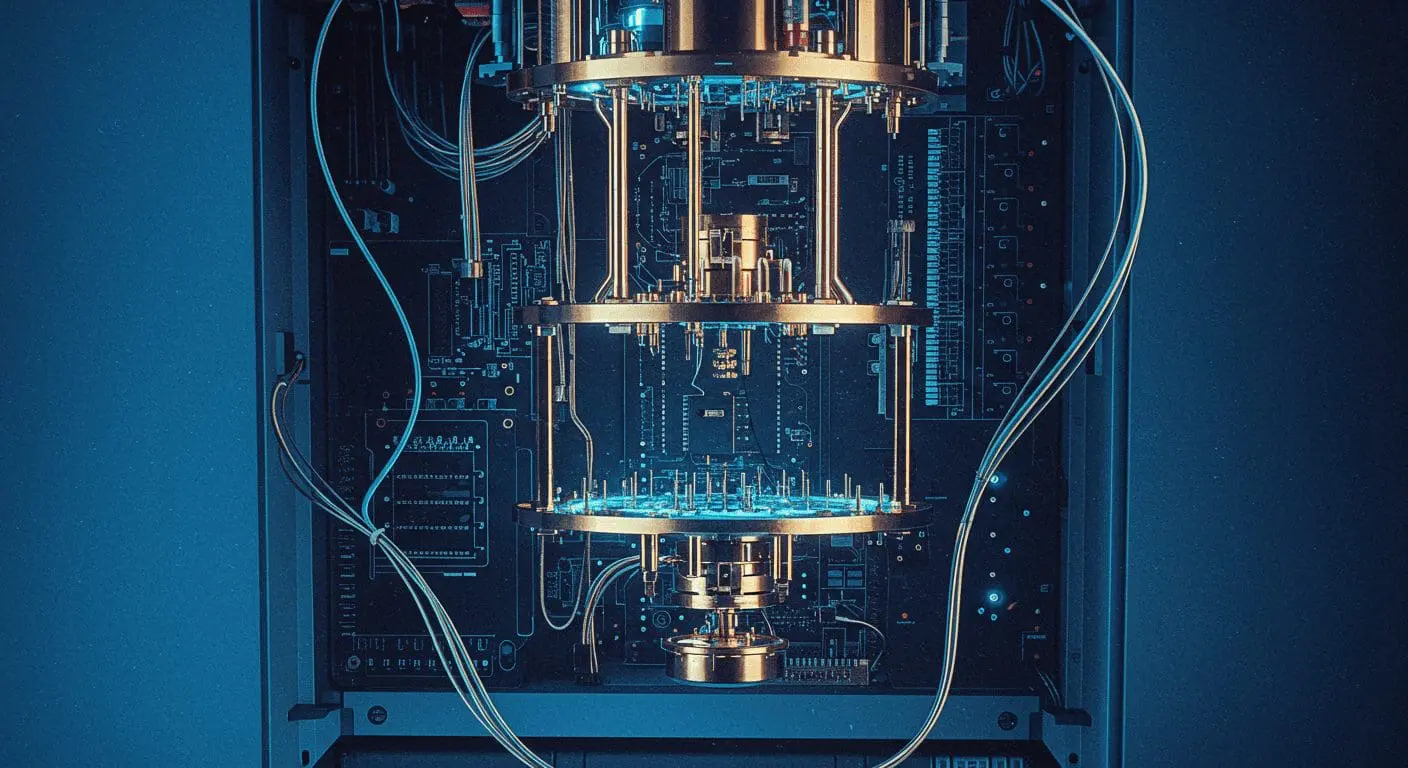
In early 2026 Equal1 unveiled Bell-1, named after the Irish physicist John Stewart Bell, and described it as the first Irish-made quantum server. Equal1 packages its technology as a rack-mountable server that operates at a few hundred millikelvin, a less extreme temperature than some other modalities require, and around the same time it closed a funding round of roughly 60 million United States dollars, taking total funding to about 85 million. The company has also won Irish government innovation funding and a European Space Agency selection for a hybrid quantum-computing project. Equal1 is the company that puts the Ireland quantum companies on the international map.
The Dublin, Cork, and Galway map
The Ireland quantum companies are spread across three cities. Dublin, the capital, is the largest centre, home to Equal1, Pilot Photonics, the Horizon Quantum Computing office, the IBM research lab, and the universities Trinity College Dublin, University College Dublin, and Dublin City University. The concentration of universities, multinational research, and the country’s flagship quantum company makes Dublin the heart of the Irish quantum ecosystem.
Cork, in the south, is the second centre, anchored by the Tyndall National Institute and its semiconductor and photonics research, which gives Ireland its main quantum hardware-and-fabrication base. Galway, on the west coast, is the third centre, home to Mbryonics and a University of Galway research cluster focused on optical quantum communication. The three cities give the Ireland quantum companies a clear national geography, with Dublin leading, Cork providing the fabrication base, and Galway specialising in quantum communication.
When Ireland matters for your quantum strategy
Silicon quantum hardware
If your quantum strategy involves hardware that could be manufactured at semiconductor scale, Ireland is worth tracking through Equal1. The company builds silicon spin-qubit processors using standard CMOS manufacturing and packages them as rack-mountable servers, and it has the funding and external validation, including a European Space Agency selection, to be taken seriously. Organisations watching the silicon route to scalable quantum hardware should follow the Ireland quantum companies.
Quantum photonics and satellite communication
For quantum communication and photonics, Ireland has genuine capability. Mbryonics builds the optical satellite terminals needed for space-based quantum key distribution, and Pilot Photonics builds photonic integrated circuits used in quantum and other applications. Organisations interested in satellite quantum communication or in integrated-photonics components should account for the Ireland quantum companies and the Galway and Dublin photonics activity.
Research collaboration and talent
For research partnerships and talent, Ireland offers a strong university base and the Tyndall National Institute’s semiconductor and quantum facilities. The Trinity Quantum Alliance provides a structured route for industry to engage with Irish academic quantum research, and the universities run quantum education programmes. Organisations seeking European research collaboration or quantum talent should consider the Ireland quantum companies and the institutions behind them.
Germany quantum companies
Netherlands quantum companies
Denmark quantum companies
Top silicon-spin companies
Top quantum hardware companies
Frequently asked questions
Who are the leading Ireland quantum companies in 2026?
The Irish ecosystem is led by Equal1, the Dublin-based company that builds silicon-qubit quantum processors and produced the first Irish-made quantum server. The Tyndall National Institute in Cork provides the country’s main semiconductor and quantum hardware research base. Mbryonics in Galway builds satellite quantum-communication optics, and Pilot Photonics in Dublin builds photonic integrated circuits. Horizon Quantum Computing runs quantum-software operations from Dublin, and IBM Research Europe operates a quantum-relevant lab in the city. The universities Trinity College Dublin, University College Dublin, the University of Galway, and Dublin City University are central research anchors. Together these 10 organisations define the Ireland quantum companies covered in this guide.
What is Equal1?
Equal1 is a Dublin-based quantum-hardware company, founded in 2017 as a spin-out of University College Dublin, and it is the flagship of the Ireland quantum companies. The company builds quantum processors from silicon spin qubits using standard CMOS semiconductor manufacturing, the same process the global chip industry runs, and packages them as rack-mountable quantum servers operating at a few hundred millikelvin. In early 2026 Equal1 unveiled Bell-1, named after the Irish physicist John Stewart Bell and described as the first Irish-made quantum server, and it closed a funding round of around 60 million United States dollars, taking total funding to roughly 85 million. Equal1 has also won Irish government innovation funding and a European Space Agency selection, making it a credible silicon-hardware contender.
What is the Quantum 2030 strategy?
Quantum 2030 is Ireland’s first national quantum strategy, launched in late 2023 by the government department responsible for higher education and research. It sets the goal of making Ireland an internationally competitive quantum hub by 2030, and it is organised around pillars covering research, talent and skills, collaboration, and innovation and enterprise, with an additional focus on raising quantum awareness. The strategy gives the Ireland quantum companies a coordinating national framework and a clear ambition. It is supported by Ireland’s restructured research-funding system, including the body Research Ireland created in 2024, alongside Enterprise Ireland and the inward-investment agency, which together fund quantum research and enterprise.
Does Ireland have its own quantum computer?
Yes, in the form of Equal1’s Bell-1, which the company unveiled in early 2026 and described as the first Irish-made quantum server. Bell-1 is built from silicon spin qubits using standard CMOS semiconductor manufacturing and is packaged as a rack-mountable server that operates at a few hundred millikelvin. It is named after the Irish physicist John Stewart Bell, whose work was foundational to quantum information science. Ireland does not host a large foreign quantum computer such as an IBM Quantum System Two, so the domestic hardware story is centred on Equal1. As the company scales its silicon-qubit technology, Bell-1 represents the leading edge of quantum hardware among the Ireland quantum companies.
What is the Tyndall National Institute’s role?
The Tyndall National Institute in Cork, part of University College Cork, is Ireland’s national institute for semiconductor and photonics research, and it is a central pillar of the Ireland quantum companies. Tyndall hosts the Quantum Computer Engineering Centre, the first such centre in Ireland, and it leads the Irish part of a major European photonics-for-quantum pilot programme aimed at building chip-fabrication capability for quantum technology. The institute has the cleanroom facilities and semiconductor expertise that quantum-hardware development depends on. In 2026 the Irish government approved a roughly EUR 100M expansion of Tyndall, set to roughly double its footprint, which will deepen Ireland’s capacity for quantum and advanced-computing hardware research.
Where are Ireland’s quantum companies located?
The Ireland quantum companies are spread across three cities. Dublin, the capital, is the largest centre, home to Equal1, Pilot Photonics, the Horizon Quantum Computing office, the IBM research lab, and the universities Trinity College Dublin, University College Dublin, and Dublin City University. Cork, in the south, is the second centre, anchored by the Tyndall National Institute and its semiconductor and photonics research, which provides Ireland’s main quantum hardware-and-fabrication base. Galway, on the west coast, is the third centre, home to Mbryonics and a University of Galway research cluster focused on optical quantum communication. Dublin leads, Cork provides the fabrication base, and Galway specialises in quantum communication.
Why are universities so important to Irish quantum computing?
Universities and research institutes are unusually central to the Ireland quantum companies because Ireland is a young quantum nation, and in a young ecosystem the research base is where most of the activity, talent, and spin-out potential sits. University College Dublin produced Equal1, the country’s flagship quantum company, the Tyndall National Institute provides the semiconductor and quantum fabrication base, Trinity College Dublin runs the industry-facing Trinity Quantum Alliance, and the universities of Galway and Dublin City University add research and photonics capability. Universities supply the graduates, laboratories, and research that a quantum industry needs, and a country building a quantum ecosystem benefits from having several institutions engaged. That is why research institutions are treated as core members of the Irish quantum ecosystem.
How does Ireland compare with other quantum nations?
Ireland is an emerging quantum nation rather than an established one. It does not match the funding or company count of Germany, France, or the Netherlands, and several of the most important organisations in its ecosystem are research institutes and universities rather than companies. But Ireland has real strengths: Equal1 is a genuinely credible silicon-qubit hardware company, the Tyndall National Institute provides a serious fabrication base, and the country has a national Quantum 2030 strategy and a strong university research network. Ireland also benefits from its position as a European base for technology multinationals. The Ireland quantum companies are concentrated and young, but the trajectory is clearly upward, with Equal1 giving the country international visibility.




See today’s quantum computing news on Quantum Zeitgeist for the latest breakthroughs in qubits, hardware, algorithms, and industry deals.