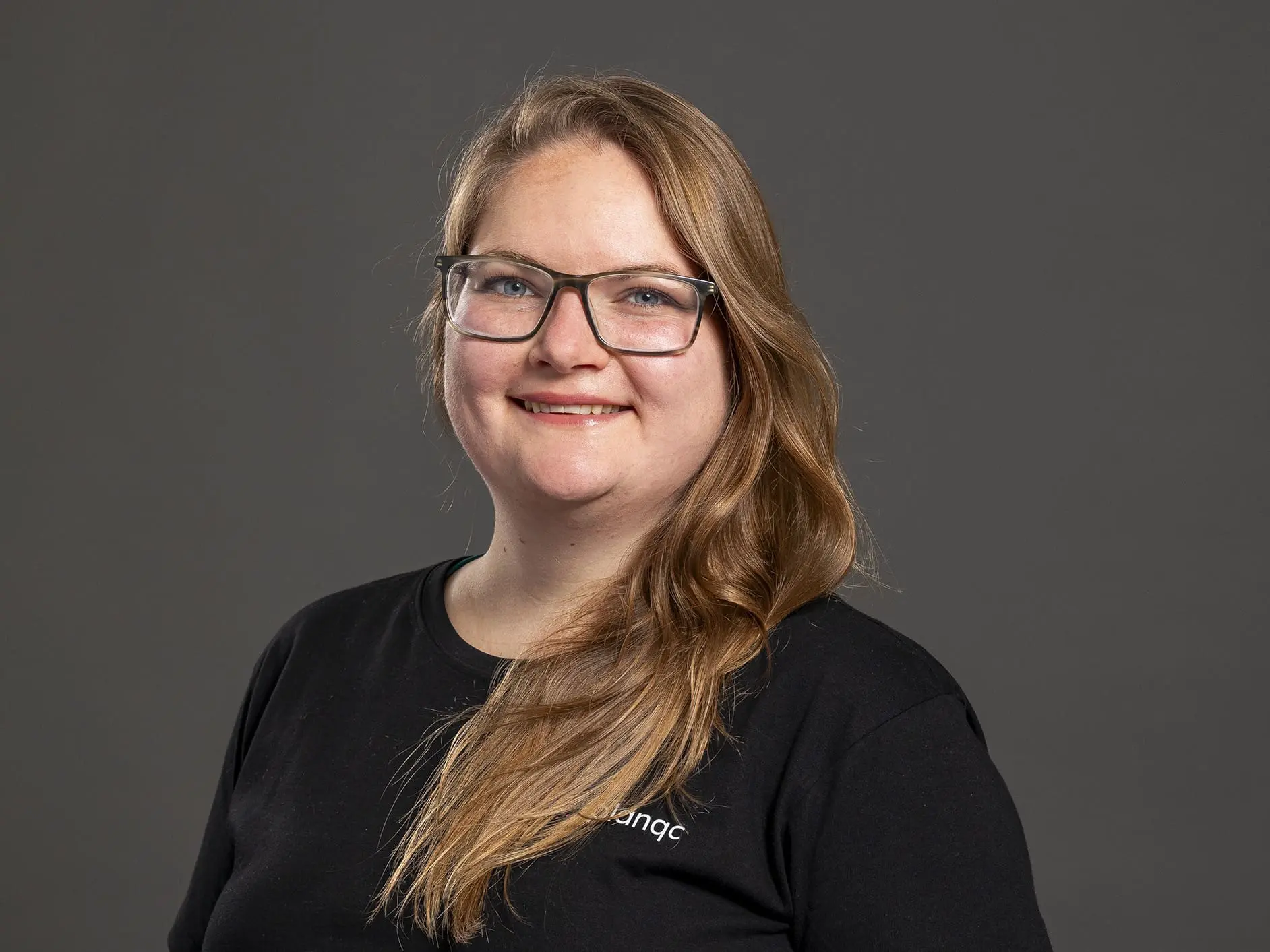
After a decade dedicated to ion trap research, Jennifer Lilieholm has shifted her focus to building quantum computers as a quantum hardware engineer at planqc. Lilieholm’s expertise evolved from probing quantum transitions to applications in sensing and simulation while at the National Institute of Standards and Technology (NIST) in Colorado, following doctoral work at the University of Washington; this progression now informs her hands-on work constructing and running quantum systems. “I wanted to work with a world so different from the one I was used to,” explains Lilieholm, drawn to the counterintuitive rules governing quantum mechanics. Her career path also includes advocating for change after witnessing disrespectful behavior in a program lacking female representation, ultimately leading to the inclusion of female mentors and anti-harassment training.
From Ion Traps to planqc: Jennifer Lilieholm’s Quantum Hardware Journey
Lilieholm’s early fascination with physics stemmed from recognizing the predictive power of mathematics, observing how “a few numbers can predict where a thrown ball is going to land,” a foundation that ultimately drew her to the counterintuitive world of quantum mechanics. Lilieholm’s commitment to inclusivity is also notable; she recounted an experience where she addressed disrespectful behavior within a program lacking female representation, leading to positive structural changes years later. This advocacy highlights her willingness to challenge existing norms and foster a more equitable environment. Currently at planqc, Lilieholm focuses on the practical aspects of building a quantum computer, specializing in the operation and troubleshooting of complex experimental systems. She emphasizes the importance of diverse skillsets within quantum technology, asserting that “a diversity of roles means a diversity of thoughts and skills,” crucial for tackling the multifaceted challenges of quantum machine construction and operation.
Overcoming Gender Bias in Early Quantum Physics Programs
Early quantum physics programs, while intellectually stimulating, have historically presented challenges for women entering the field, often manifesting as subtle but impactful biases. Jennifer Lilieholm’s career trajectory illustrates a shift in addressing these issues; her decade dedicated to ion trap research demonstrates a deepening of expertise before transitioning to quantum hardware at planqc. This progression wasn’t simply about changing focus, but building a robust skillset within a specific area of quantum control. Experiences during a training program highlighted the importance of actively challenging exclusionary environments. Lilieholm recounted a situation where disrespectful attitudes towards women were prevalent, and though she didn’t receive direct harassment, overheard comments were deeply upsetting.
Her decision to speak with the program’s lead organizer proved impactful; subsequent iterations incorporated female mentors, gender harassment training, and reporting pathways. “I am so grateful that I spoke up and that he listened,” she stated, emphasizing the power of direct advocacy. This willingness to address problematic dynamics is crucial, as a diverse workforce fosters innovation. The need for varied perspectives extends beyond technical roles; she points out that building a functional quantum computer requires a complex support system, encompassing skills ranging from optics to thermal control and global team building, skills not solely possessed by physicists.
I wanted to work with this world which was so different from the one I was used to.
Witnessing Rare Molecular Fluorescence: A Career Defining Moment
Jennifer Lilieholm’s career trajectory demonstrates a deliberate evolution from fundamental research into the practical demands of quantum hardware engineering at planqc; her initial decade focused intensely on ion trap technology, a foundation built before shifting to building a functioning quantum computer. This specialization began with probing quantum transitions, then broadened to encompass quantum sensing and simulation applications, revealing a deepening of expertise before the move to a company focused on quantum computer construction. A pivotal moment arrived during her undergraduate studies when a graduate student revealed a biophysics experiment, offering Lilieholm a glimpse of something extraordinarily rare. “I was able to look through a microscope and watch individual molecules fluoresce in a live cell,” she recalls, describing the experience as the most magical of her life.
Witnessing this molecular fluorescence, a phenomenon observed by so few throughout history, solidified her commitment to laser-based experimental science and propelled her into the field. This experience, she notes, sparked a lifelong dedication to pushing the boundaries of what is visible and measurable. Now at planqc, Lilieholm applies her troubleshooting skills to finalize the construction of a functional quantum computer, emphasizing the necessity of diverse expertise for such complex endeavors. Lilieholm’s journey underscores the importance of both technical proficiency and collaborative spirit in advancing quantum technology, a field demanding increasingly interdisciplinary approaches.
Diverse Roles Fuel Complex Quantum Computer Development
The construction of functional quantum computers demands expertise extending far beyond physics; a cohesive team requires a spectrum of specialized roles to overcome the inherent complexities of the technology. Jennifer Lilieholm’s career trajectory exemplifies this need, transitioning from a decade dedicated to probing quantum transitions and quantum sensing using ion traps at institutions like NIST in Colorado, to a hands-on hardware engineering position at planqc. This shift wasn’t merely a change in focus, but a recognition that building a quantum computer necessitates integrating theoretical understanding with practical implementation. Lilieholm’s background illustrates a deepening of expertise within ion trap research, evolving from initial investigations into more applied areas like simulation before the move to full hardware development. Similarly, assembling a global team demands skills beyond her own technical capabilities. This interconnectedness highlights the limitations of siloed expertise and the necessity of cross-disciplinary collaboration for success.
Lilieholm’s experience underscores the importance of a supportive company culture, noting that at planqc, “everyone here is incredibly friendly and helpful. We’re all a team working towards the same goal.” She envisions a future where gender is no longer a defining characteristic in science and technology, and encourages aspiring young women to “don’t let anyone tell you what you can’t do!”, a sentiment reflecting the broader need for inclusivity and empowerment within the rapidly evolving quantum landscape.
A diversity of roles means a diversity of thoughts and skills.




See today’s quantum computing news on Quantum Zeitgeist for the latest breakthroughs in qubits, hardware, algorithms, and industry deals.