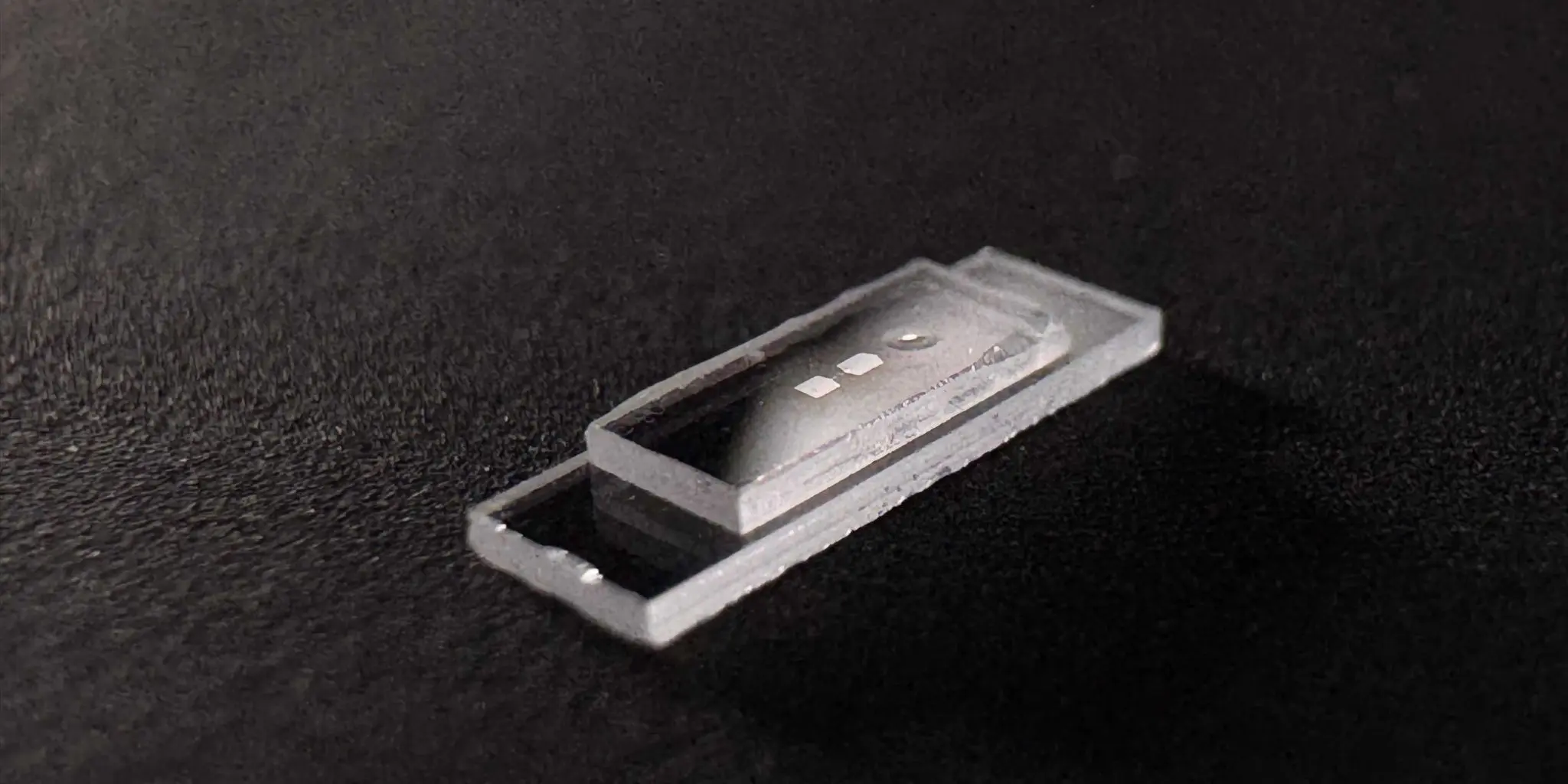
Laboratory for Solid State Physics (LFKP) has combined a superconducting circuit with a “bulk acoustic wave resonator” to successfully execute key two-qubit gates and quantum algorithms, demonstrating a hybrid quantum computing architecture different from many current single-platform approaches. While classical computers separate processing and memory, quantum computers face the challenge of finding a single system excelling at both computation and information storage; superconducting circuits show promise for error correction but struggle with long-term data retention. The ETH Zurich group led by Professor Yiwen Chu proposes mechanical resonators as a solution, with the acoustic wave resonator providing highly coherent states potentially realizing a quantum random-access memory. In their findings published in Science 392, (), the team’s system utilizes the transmon qubit as a “CPU” and phonon modes within the resonator to store qubit states, performing operations via iSWAP gates, essential for entanglement and complex computations.
Transmon Qubit & HBAR: A Hybrid Quantum Architecture
Combining superconducting qubits with mechanical resonators offers a potential solution to a critical challenge in quantum computing: balancing processing power with long-term data storage. Researchers at the Laboratory for Solid State Physics (LFKP) led by Professor Yiwen Chu have demonstrated a hybrid architecture integrating a transmon qubit and a high-overtone bulk-acoustic wave resonator (HBAR) capable of performing essential two-qubit gates and quantum algorithms. Unlike classical computers with distinct CPUs and RAM, quantum systems currently struggle to efficiently both compute and store quantum information; superconducting circuits excel at computation but fall short on storage duration. This new approach positions the superconducting transmon qubit as the computational element, the CPU, while leveraging the coherent states of the acoustic wave resonator, vibrating like a miniature speaker, as a potential quantum RAM.
The team successfully implemented fast controlled-phase (C-PHASE) two-qubit gates with arbitrary phase values, relying on a novel protocol they believe is broadly applicable. Demonstrating the system’s capabilities, they ran instances of the quantum Fourier Transform (QFT) and quantum period finding (QPF) algorithms, highlighting the advantage of the HBAR’s extended coherence times during idle periods within the QFT. The team concludes that the current demonstration is limited by the number of phonon modes and is already working on multiple fronts: improving the system’s coherence, implementing different designs for the hybrid architecture, and speeding up transmon state readout.
iSWAP Gates & C-PHASE for Universal Quantum Control
Current approaches to building quantum computers are diverse, lacking a single dominant physical platform; superconducting circuits excel at error-corrected computations, but struggle with long-term quantum information storage, a limitation mirroring the separation of CPU and RAM in classical computing. The dimensionality of the Hilbert space within this resonator dictates its storage capacity, demanding coherence times sufficient for complex operations. This team demonstrated key two-qubit gates and quantum algorithms using iSWAP gates, which swap the states of qubits to enable entanglement, effectively moving information between the transmon qubit, acting as the CPU, and the phonon modes of the HBAR, which serve as the quantum RAM. While the current demonstration is limited by the number of interacting phonon modes, the researchers are actively working to enhance coherence, explore alternative designs, and accelerate qubit readout, paving the way for mechanical-resonator-based quantum memories.
Classical computers have long reached a stage where their architecture doesn’t change substantially as a result of the research, development and optimisation processes that characterise newer or emerging technologies.
Quantum Fourier Transform & Period Finding Algorithms Demonstrated
Researchers at ETH Zurich have moved beyond simply demonstrating qubit manipulation, successfully executing complex quantum algorithms using a novel hybrid architecture. This approach diverges from many current efforts focused on single-platform quantum computers, instead leveraging the strengths of both superconducting circuits and mechanical resonators. The team concludes, while acknowledging current limitations in the number of phonon modes, that the QFT, an ideal test for this hybrid system, demands both controlled arbitrary-phase gates and full qubit connectivity, conditions well-suited to the long coherence times offered by the HBAR’s phonon modes. The fidelity of these gates, crucial for reliable computation, aligned with simulated performance after accounting for experimental errors.



See today’s quantum computing news on Quantum Zeitgeist for the latest breakthroughs in qubits, hardware, algorithms, and industry deals.