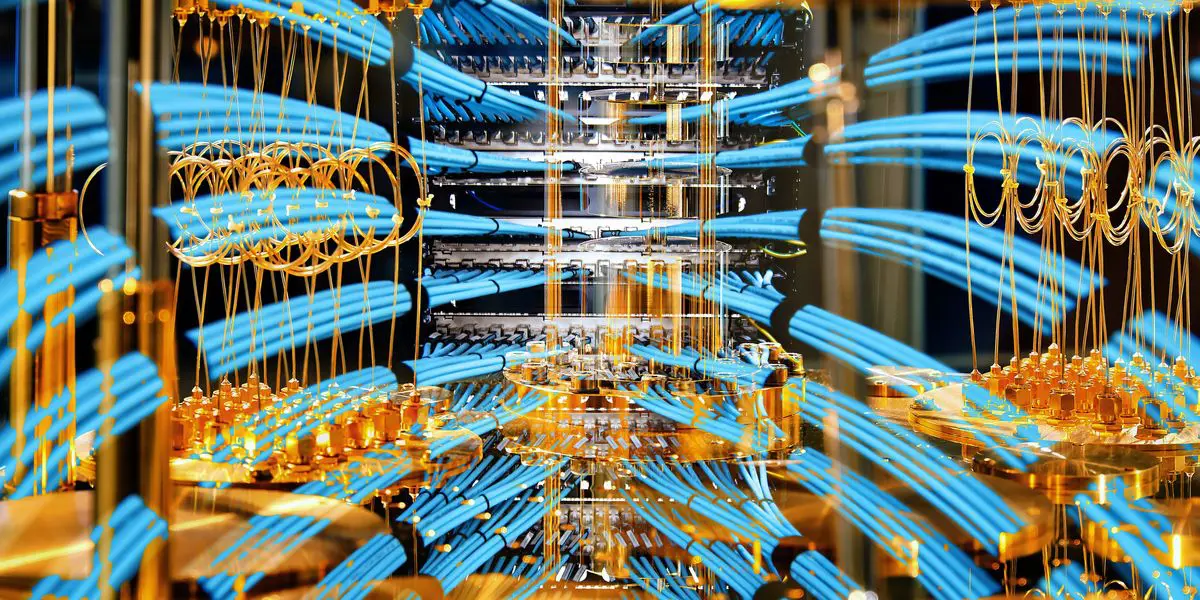
The increasing complexity of quantum computers is driving a surprising reliance on classical computing infrastructure, as Nvidia announced in April new AI-based software designed to accelerate the essential classical tasks that underpin quantum operations. While quantum bits, or qubits, are inherently requiring constant calibration and error correction, digital computer chips operate flawlessly and can perform trillions of operations without error, a stark contrast highlighting the current need for robust classical support. Sydney-based Q-CTRL is now leveraging Nvidia’s agent-based system with its own automatic calibration algorithm to address this challenge, joining IBM Quantum, Riverlane, and Google Quantum AI in developing similar tools. “The cheapest and fastest way to execute most computer programs is to run them on a classical computer, even if a quantum computer is available,” says Adam Zalcman, a quantum software engineer at Google Quantum AI, emphasizing that hybrid quantum-classical architectures are likely the most practical path forward.
Qubit Calibration Processes for Quantum Hardware Tuning
The stark contrast between the reliability of classical and quantum computing components necessitates increasingly sophisticated calibration processes for qubits. This disparity underscores the significant classical infrastructure currently required to operate even early quantum systems, a point often underappreciated as the field advances. Calibration isn’t simply an initial setup; it’s a continuous process vital for mitigating the inherent instability of qubits and ensuring accurate computation. Tuning these quantum components begins with a painstaking “bring up” phase, determining crucial parameters like resonance frequency, quantum state coherence, and sensitivity to control pulses. All of these factors directly influence a qubit’s error propensity and response to signals. Historically, this process has been a manual undertaking, requiring expertise and consuming considerable time, potentially days or even weeks, according to Jay Guilmart, lead product manager at Q-CTRL.
Recognizing the limitations of this approach, companies like Q-CTRL are driving automation, developing intelligent software that dynamically assesses calibration results and adjusts its methodology accordingly. Guilmart explains, “After each step, we analyze that data and we say, are we okay to proceed to the next step? Do we have to go back to the previous step? Do we have to re-recreate this step?” highlighting the iterative nature of the process. However, even automated calibration isn’t a permanent fix; key qubit parameters drift over time, gradually degrading performance. Q-CTRL’s software addresses this with runtime recalibration, but this introduces a trade-off. “If I’m running a recalibration, I’m not running a circuit,” Guilmart points out, emphasizing the need to balance maintenance with computational uptime. Beyond calibration, decoding errors in real-time is paramount, particularly given the fleeting coherence times of superconducting and silicon spin qubits, lasting only microseconds or milliseconds. This demands specialized classical hardware, such as field-programmable gate arrays (FPGAs) or application-specific integrated circuits (ASICs), capable of rapidly analyzing error syndromes and implementing corrections.
Q-CTRL Software Automates Runtime Recalibration Sequences
The pursuit of stable, scalable quantum computation increasingly relies on sophisticated classical infrastructure working in tandem with the quantum hardware itself. While qubits are notoriously susceptible to environmental noise and decoherence, demanding constant correction, the sheer complexity of manual calibration is becoming a bottleneck. Companies like Q-CTRL are now addressing this challenge with automated software solutions designed to streamline the recalibration process, and are actively integrating these tools with accelerating classical computing resources. This shift acknowledges a critical reality: maintaining qubit fidelity requires a substantial and evolving classical computing footprint. Q-CTRL’s approach centers on an automatic calibration algorithm now leveraging Nvidia’s agent-based system, a partnership born from the recognition that qubits are Traditional calibration, involving a painstaking “bring up” phase to determine fundamental qubit characteristics, can consume days or even weeks with a Ph. D.-level expert at the helm.
Recognizing this lack of scalability, Q-CTRL has developed intelligent software that moves beyond predefined scripts. Q-CTRL’s software performs to counteract this degradation, though Jay Guilmart cautions that there are limits to on-the-fly adjustments. The need for continuous recalibration underscores the vast difference between digital computer chips, capable of trillions of error-free operations, and the fragile state of qubits. As quantum computers scale towards thousands or even millions of qubits, these classical support systems will become increasingly vital, demanding entirely new architectural approaches to manage the computational load.
Using them for computation requires a painstaking calibration process to turn the “bare metal” of the underlying hardware into a qubit that can be controlled to run quantum circuits, says Jay Guilmart , lead product manager at Q-CTRL.
Syndrome Decoding with FPGAs and ASICs for Error Correction
Nvidia’s recent foray into quantum computing isn’t focused on building qubits, but rather on accelerating the classical infrastructure necessary to control them. In April, the company announced new AI-based software designed to expedite the classical tasks underpinning quantum operations, a move highlighting the often underappreciated reliance on conventional computing power for even nascent quantum systems. This emphasis on classical support is particularly crucial for syndrome decoding, the process of identifying and correcting errors that inevitably plague qubits. While quantum bits themselves are inherently fragile, demanding constant calibration, the error detection and correction rely entirely on the speed and reliability of digital electronics. Jerry Chow, CTO of quantum-centric supercomputing at IBM, explains that “You need to be able to keep up and you need to be able to effectively decode on the fly,” leading to a preference for tightly integrated FPGA or ASIC decoder capabilities.
These specialized silicon chips, field-programmable gate arrays and application-specific integrated circuits, are optimized for speed, essential given that superconducting and silicon spin qubits can only maintain their quantum state for microseconds or milliseconds. Decoding involves analyzing “syndromes”, measurements revealing qubit states, to pinpoint errors. This process must occur rapidly; some errors require immediate correction to prevent the algorithm from derailing. The computational burden is substantial, and researchers are exploring the potential of artificial intelligence to streamline the process. Nvidia’s approach utilizes convolutional neural networks to identify simple errors, passing more complex cases to traditional algorithmic decoders, achieving a reported 2x speedup. However, Marco Ghibaudi, vice president of engineering at Riverlane, cautions that even with a “fat pipe,” latency remains a concern, advocating for minimizing steps and maximizing speed throughout the system.
Google’s researchers are even exploring hybrid architectures combining traditional and AI-based decoders, recognizing that, as AI pioneer Richard Sutton argues, may ultimately favor learned algorithms capable of capturing hidden correlations in syndrome data. Regardless of the chosen method, Andi Gu, a Harvard Ph. D. Student, emphasizes that.
You need to be able to keep up and you need to be able to effectively decode on the fly.
Jerry Chow, CTO of quantum-centric supercomputing at IBM
AI-Assisted Decoding Versus Physics-Informed Algorithms
While qubits themselves represent a paradigm shift in computation, their inherent instability demands a robust classical infrastructure to function, a point often overlooked by those focused solely on quantum advancements. Innovations in this supporting architecture are now critical as qubit counts climb, and companies are actively developing both AI-assisted and physics-informed algorithms to address the challenges. In April, Nvidia unveiled new AI-based software designed to accelerate these crucial classical tasks, signaling the immediate and growing need for classical support. Calibration, the process of tuning qubits for reliable computation, initially required manual intervention by experts, taking days or weeks. Q-CTRL’s intelligent software automates this, examining measurement results and adjusting its approach iteratively. Even with automation, calibration is ongoing; parameters drift, necessitating recalibration to maintain performance. Decoding errors, essential for quantum error correction, presents another computational bottleneck. Algorithms analyze “syndromes”, measurements revealing errors, and must do so with microsecond or millisecond precision.
Nvidia is exploring AI, specifically convolutional neural networks, to identify simpler errors, reducing the load on traditional decoders and achieving a 2x speedup. However, Riverlane’s Marco Ghibaudi cautions against relying solely on AI due to latency issues, advocating for streamlined, highly optimized classical pipelines. IBM’s Jerry Chow agrees that current GPU latency limits real-time decoding with AI, but Google’s Andi Gu believes that, ultimately, AI will favor its ability to learn hidden correlations in error data. Regardless of the method, a reliance on classical hardware will remain essential for decoding and calibration as quantum computers scale.
If you make the model large enough and you throw enough training data at it, it will learn to capture the hidden correlations better than any other handwritten algorithm,” says Gu.
Andi Gu, a Harvard Ph.D. student working on AI decoders

See today’s quantum computing news on Quantum Zeitgeist for the latest breakthroughs in qubits, hardware, algorithms, and industry deals.