Wondering how to build a quantum computer? The short answer is that you need a handful of fragile quantum objects, an almost perfect way to isolate them from the world, exquisite control to nudge them, and a way to read the answer before it slips away. Physicists even wrote down the formal rulebook in the 1990s, and every real machine, from IBM’s chips to trapped-ion systems, must obey it. This guide walks through how to build a quantum computer in plain language: the five rules, the build stack, the minimum requirements, and the companies actually doing it. There is no single blueprint, because the right answer depends on which kind of qubit you choose, but the underlying recipe is always the same.
1. There is a rulebook. Any quantum computer must satisfy the five DiVincenzo criteria: qubits, a reset, long coherence, universal gates and measurement. Miss one and it does not work.
2. Pick a qubit first. The build starts by choosing a physical qubit, superconducting circuits, trapped ions, neutral atoms, photons or silicon spins, each with its own machinery.
3. Isolation is everything. Qubits must be cut off from heat and noise, which usually means a dilution refrigerator near absolute zero or atoms held in a vacuum by lasers.
4. Control and readout are the hard engineering. Precise microwave or laser pulses run the gates, and a delicate measurement reads each qubit without disturbing the rest.
5. Error correction is non-negotiable. Qubits are noisy, so a useful machine spends most of its qubits correcting errors, which is why scale is the real challenge.
6. You cannot build one at home, but you can use one. The isolation and control are beyond a garage, yet anyone can run real quantum hardware today through the cloud.
The five rules every quantum computer must obey
In 2000 the physicist David DiVincenzo wrote down what a working quantum computer actually requires, and his five criteria remain the checklist engineers use today. They are not a recipe for one specific machine but the minimum any design must meet, whatever the qubit. Knowing them is the fastest way to understand how to build a quantum computer that genuinely computes rather than just looks impressive.
- Well-defined qubits you can scale. You need a physical system with clean two-level quantum states, and a way to add more of them.
- The ability to reset. You must be able to set every qubit to a known starting state, usually all zeros, before a calculation.
- Long coherence times. The qubits must hold their quantum state far longer than it takes to run a gate, or the information decays first.
- A universal set of gates. A small toolkit of one and two-qubit operations must be enough to build any quantum program.
- Reliable measurement. You must be able to read each qubit’s final answer accurately.
Two further criteria matter once you want machines to talk to each other, namely converting stationary qubits into flying photons and sending those photons between locations. Those underpin quantum networking rather than a single processor. For the building blocks themselves, our explainer on what a qubit is goes deeper on rule one.
How to build a quantum computer, step by step
The build always follows the same logic regardless of platform, starting with the choice of qubit, because that decision dictates every machine around it. A superconducting design needs a chip and a dilution refrigerator, a trapped-ion design needs a vacuum chamber and lasers, and a neutral-atom design needs optical tweezers, but the sequence of steps is shared. First you fabricate or trap the qubits, then you isolate them, then you wire up control and readout.
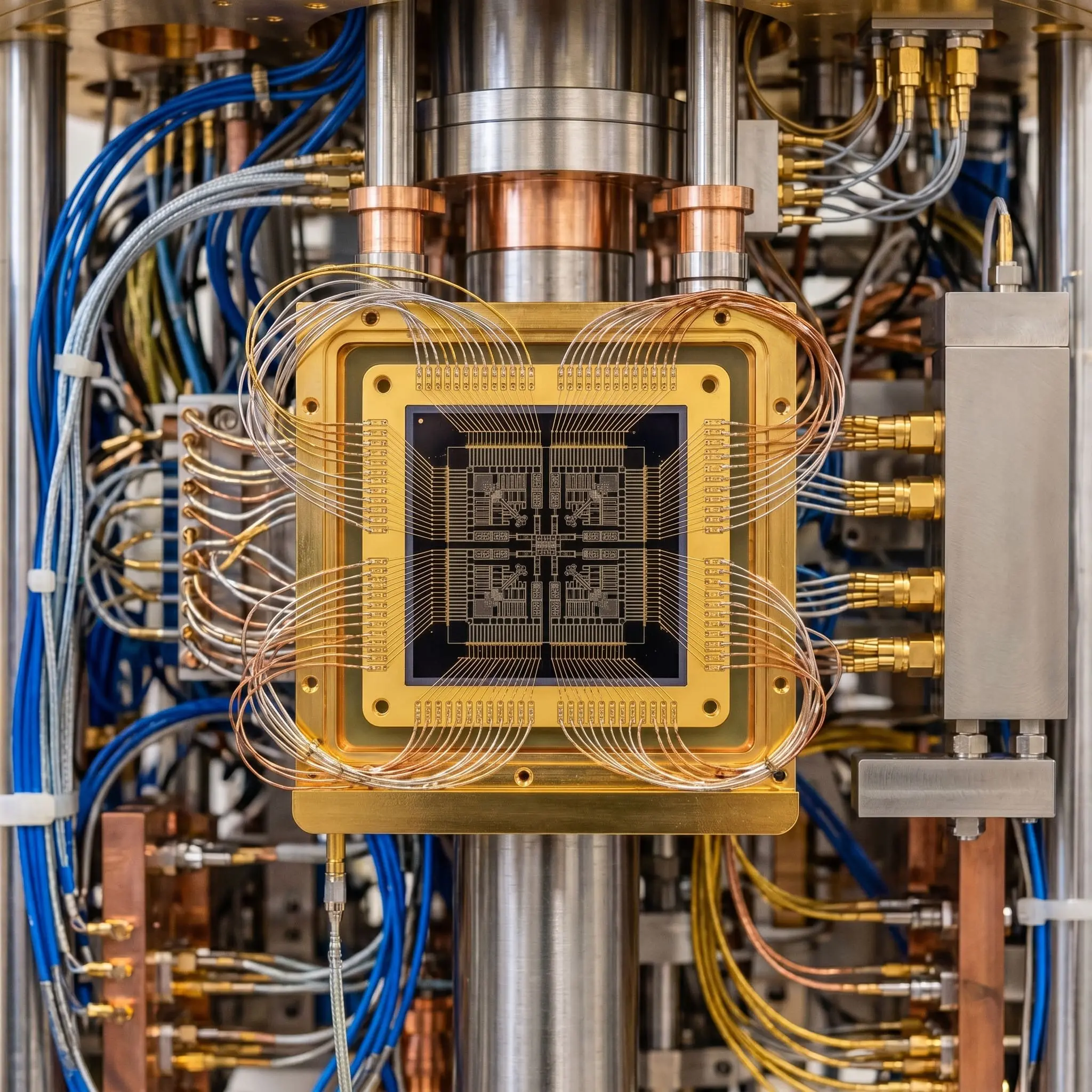
Isolation comes next and is the step most people underestimate, since a single stray photon of heat can destroy the quantum state. Superconducting and silicon machines sit inside a dilution refrigerator at a few thousandths of a degree above absolute zero, while atomic machines hold their qubits in ultra-high vacuum and pin them in place with laser light. Only once the qubits are this isolated can you add the precise microwave or laser pulses that perform gates, the charge or fluorescence sensors that read them out, and the racks of classical electronics that orchestrate the whole sequence millions of times a second.
How each kind of quantum computer is built
The five rules are universal, but the actual machinery depends entirely on the qubit you pick, and the leading platforms build their qubits in strikingly different ways. Superconducting machines, used by IBM, Google and Rigetti, print tiny circuits with Josephson junctions onto a chip, cool them in a dilution refrigerator to a few thousandths of a degree, and steer them with shaped microwave pulses. Trapped-ion machines, used by IonQ and Quantinuum, instead suspend individual charged atoms in an electromagnetic trap inside an ultra-high vacuum and manipulate them with finely tuned lasers, which gives very high fidelity at the cost of slower operation.
The newer platforms diverge further still. Neutral-atom builders such as QuEra and Pasqal arrange ordinary atoms into grids using laser optical tweezers and switch on interactions by exciting the atoms to high-energy Rydberg states. Photonic builders such as PsiQuantum and Xanadu generate and interfere single particles of light through optical chips that can run close to room temperature, sidestepping the cryostat entirely, while silicon-spin builders such as Intel and Diraq trap single electrons in transistor-like quantum dots so the qubit can ride existing chip foundries. Our guide to the top quantum hardware companies compares these approaches, and the qubit explainer covers the physics behind each.
Cooling, cryogenics and temperatures
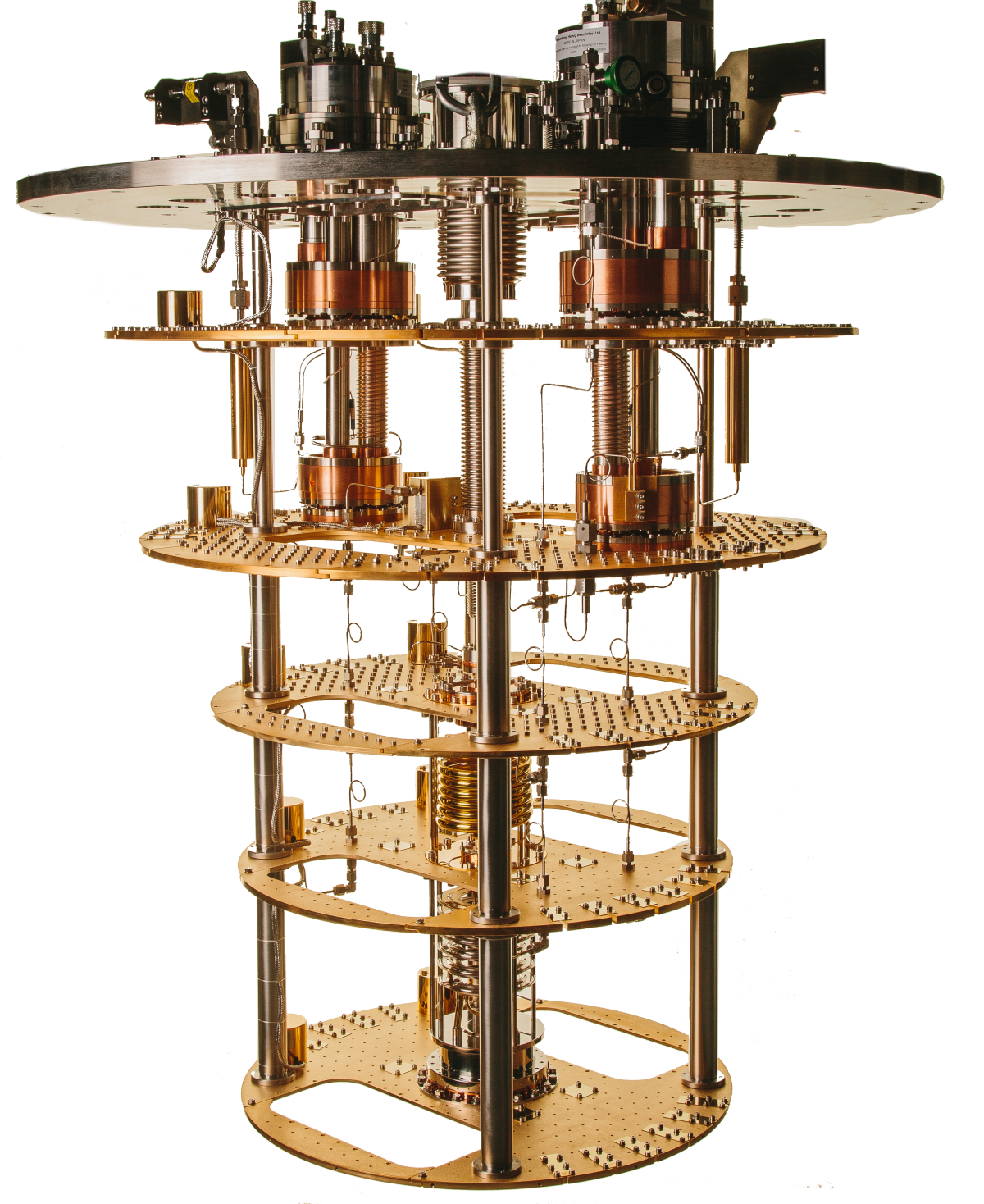
For superconducting and silicon machines, extreme cold is the single most demanding requirement, because the qubits only behave quantum-mechanically when thermal noise is almost gone. A dilution refrigerator, the iconic gold chandelier of quantum computing, cools the chip in stages from room temperature down through roughly 50 kelvin, then 4 kelvin, a still plate near 0.8 kelvin, and finally a mixing chamber at about 0.01 kelvin, ten thousandths of a degree. That is colder than the 2.7 kelvin of deep space, and it is reached by circulating a mixture of helium-3 and helium-4, with the qubit chip mounted at the very bottom where it is coldest.
Atomic machines take a different path to isolation. Trapped-ion and neutral-atom computers usually skip the fridge but seal their qubits inside an ultra-high vacuum, around a hundred-billionth of normal air pressure, so stray gas molecules cannot disturb the atoms, and then use laser cooling to chill the atoms themselves to a few millionths of a degree. Photonic machines are the exception and can run near room temperature, which is one of their main attractions.
Cold and vacuum are not the whole story, because qubits are also fragile to magnetic fields and vibration. Builders wrap the system in magnetic shielding and mount it on vibration-isolated frames, since a passing truck or a stray field can corrupt a calculation. Every control wire that runs down to the cold chip also carries a little heat with it, so the cooling power of the refrigerator and the number of wires it can take become a hard limit on how many qubits one machine can hold.
The minimum requirements
Beyond the five rules, building even a modest quantum computer demands a specific stack of hardware, and skipping any layer stops the machine working. At minimum you need the qubits themselves, an isolation system to protect them, a control system to drive gates, a measurement system to read results, and a classical computer to run it all. For anything useful you also need error correction, which multiplies the qubit count enormously.
The numbers set the bar high. A few dozen physical qubits make a research demonstrator, but a machine that beats classical computers on a real problem needs thousands of error-corrected logical qubits, which today means hundreds of thousands to millions of physical qubits. That gap between a demonstrator and a useful machine is the central reason quantum computers are so hard to build, and it is the same gap our guide to error-corrected quantum computers tracks.
There is also a practical dimension that the rulebook leaves out, namely cost, facilities and people. A serious build needs a specialised laboratory with vibration isolation and electromagnetic shielding, a dilution refrigerator or laser-and-vacuum system that runs into the millions of dollars, and a multidisciplinary team of physicists, cryogenic engineers, electronic engineers and software developers. It also takes years, because each generation of hardware must be designed, fabricated, cooled, characterised and debugged before the next one begins. This is why almost every effort to build a quantum computer sits inside a well-funded company, national laboratory or university rather than a lone inventor’s workshop, and why progress is measured in steady increments rather than overnight breakthroughs.
What it costs to build a quantum computer
Building your own
Building your own is the expensive path, and the bill starts with the hardware. A single dilution refrigerator runs from roughly half a million to over a million dollars, precision lasers and control electronics add hundreds of thousands more, and a shielded, vibration-isolated cleanroom to house them costs millions to build and run. Add a multidisciplinary team whose salaries reach into the millions a year over the several years each hardware generation takes, and a research-grade machine typically costs tens of millions of dollars. The companies chasing a useful, error-corrected computer have raised hundreds of millions to billions, with PsiQuantum alone securing more than six billion dollars in commitments.
Buying or renting instead of building
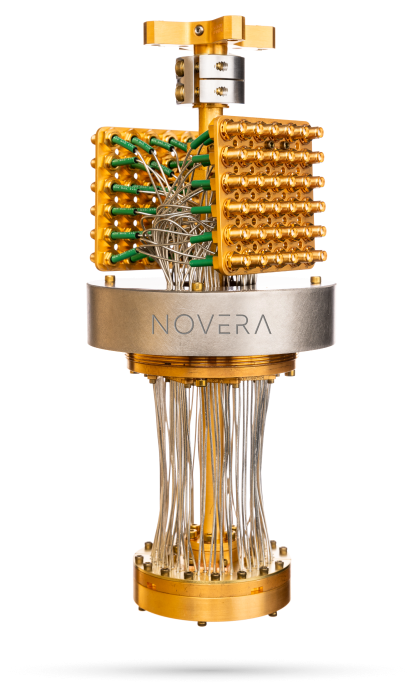
You can also buy a quantum computer rather than build one. Rigetti sells its Novera QPU, a nine-qubit on-premises system, for around 900,000 dollars, and full turnkey machines from vendors such as IQM run from several million into the tens of millions depending on qubit count and support contract. At the other end of the market, SpinQ and others sell desktop nuclear-magnetic-resonance machines for education that cost only a few thousand to a few tens of thousands of dollars, enough to teach the basics though not to do useful computation.


For almost everyone the cheapest path is to use a machine you do not own at all. Cloud platforms from IBM, Amazon and others offer free tiers and pay-as-you-go access billed per job, simulators run for nothing on a laptop, and supercomputing centres increasingly host shared quantum hardware. Renting time is thousands of times cheaper than building, which is why building stays the domain of well-funded laboratories while using one is open to anyone.
The control stack: software and calibration
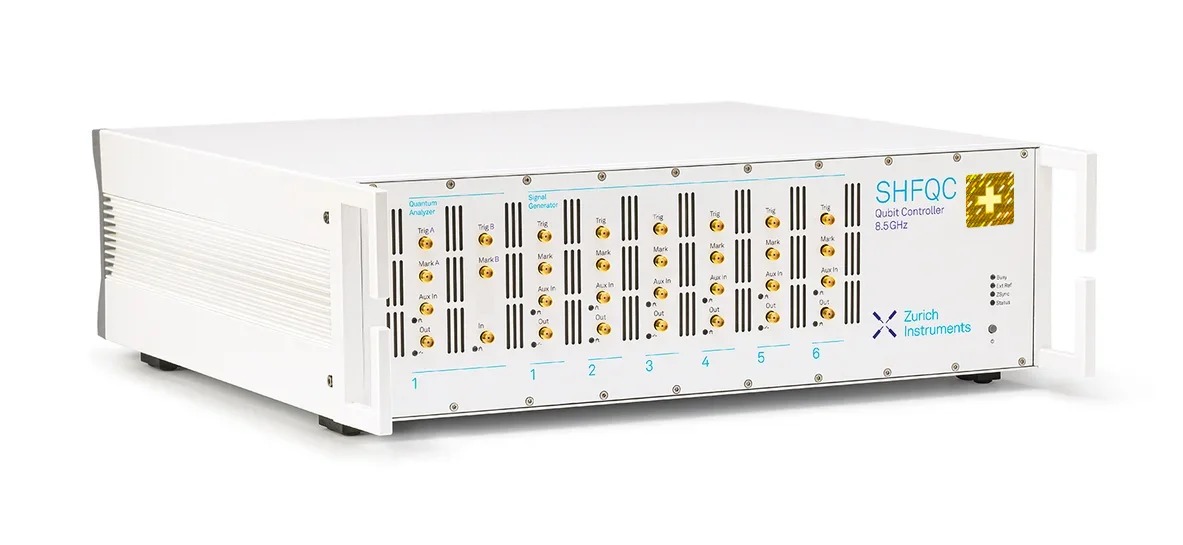
A surprising amount of a quantum computer is ordinary electronics and software wrapped around the fragile quantum core. Racks of classical control hardware, including arbitrary waveform generators and field-programmable gate arrays, produce the precisely timed microwave or laser pulses that drive every gate, and they must fire with nanosecond accuracy. Because real qubits drift with temperature and time, the machine is constantly recalibrated, often automatically, so that a gate that worked this morning still works this afternoon.
On top of that sits the software layer that turns a human-written program into hardware instructions. A quantum software framework compiles a high-level circuit down to the specific native gates a chip supports, maps the abstract logical qubits onto the physical ones, and schedules the pulses, while a classical computer orchestrates millions of repeated runs and stitches the noisy results into an answer. Anyone learning how to build a quantum computer quickly finds that this control and software stack is as much of the engineering as the qubits themselves.
Can you build one at home?
Honestly, no, you cannot build a real quantum computer at home, because the isolation and control are beyond any garage workshop. You cannot reach millikelvin temperatures or laser-cool atoms without equipment that costs millions and fills a room, and even a two-qubit toy would need specialist vacuum, cryogenics or optics. The fragile physics simply does not survive a kitchen table.
What you absolutely can do is learn and experiment without owning hardware at all. You can write and run quantum programs on a laptop using a free simulator, and you can send real circuits to genuine quantum processors over the cloud through providers like IBM and Amazon. That means anyone curious about how to build a quantum computer can start using and programming one this afternoon, even if assembling one stays the work of large laboratories.
Learn to quantum code
Here is the genuinely fun part of how to build a quantum computer: you do not have to build one to start programming it. The very cloud platforms that run real hardware also let you write quantum programs on an ordinary laptop, so you can learn the ideas this afternoon and move up to genuine quantum processors whenever you are ready. Most of the leading toolkits are free, open source and built on Python, which makes the on-ramp far gentler than the underlying physics suggests.
The quickest way in is to pick one framework and write a tiny circuit. IBM’s Qiskit is the most widely used and comes with free access to real IBM machines, Google’s Cirq targets its own processors, and Xanadu’s PennyLane is built for quantum machine learning, while Microsoft offers Q# and Amazon Braket reaches several vendors through a single software development kit. Our introduction to Qiskit and our roundup of quantum programming languages are good places to choose one.
- Install a framework. A single pip command sets up Qiskit or PennyLane on any laptop, with no special hardware required to begin.
- Write a two-qubit circuit. Put one qubit into superposition and entangle it with another, and you have created a Bell state in only a few lines of code.
- Run it on a simulator. Your laptop simulates the result in an instant, so you can inspect the quantum statistics long before touching real hardware.
- Send it to a real machine. Submit the same circuit to a cloud quantum processor, then compare the noisy real-world counts against the ideal simulation.
From there the path is practice rather than equipment, which is the opposite of building the hardware. Work through a short guide to quantum algorithms, rebuild textbook routines such as Grover search and the quantum Fourier transform, and keep experimenting on the free cloud tiers from IBM and Amazon. Understanding how to build a quantum computer becomes far easier once you have programmed one, because writing the code turns the abstract rules about qubits, gates and measurement into something you can see and run.
Who actually builds quantum computers
A small set of companies and laboratories do the real building, each committed to a particular qubit and the machinery it demands. The leaders below span the main approaches, from superconducting chips to trapped ions, neutral atoms and photonics. For the full landscape see our worldwide quantum computing companies directory.








The hard part: error correction and scale
If the five rules are the entry ticket, error correction is the mountain, because real qubits are noisy and lose their state in fractions of a second. The fix is to spread one reliable logical qubit across many physical qubits that constantly check and repair each other, a technique that works but is hungry for hardware. This is why the headline qubit counts in the news are physical qubits, while the useful number is the far smaller count of logical ones.
Scaling is therefore the defining engineering problem, since every extra qubit adds wiring, control channels and heat that the isolation must still handle. The companies furthest ahead are the ones solving manufacturing and control at scale, not just demonstrating a few clever qubits. Understanding that distinction is the key to reading any quantum computing announcement, and our explainer on what quantum supremacy means puts the milestones in context.
Frequently asked questions
How do you build a quantum computer?
You build a quantum computer by choosing a physical qubit, isolating it almost perfectly from heat and noise, and adding precise control and measurement. In practice that means fabricating or trapping the qubits, cooling them in a dilution refrigerator or holding atoms in a laser-lit vacuum, then wiring up microwave or laser pulses for gates and sensors for readout. The whole system must satisfy the five DiVincenzo criteria and, for useful work, run quantum error correction across many physical qubits.
What are the minimum requirements for a quantum computer?
The formal minimum is the five DiVincenzo criteria: scalable well-defined qubits, the ability to initialise them to a known state, coherence times much longer than gate times, a universal set of quantum gates, and reliable qubit measurement. In hardware terms that translates into qubits, an isolation system such as cryogenics or a vacuum, a control system, a readout system and a classical computer to run it. Anything genuinely useful also requires error correction, which pushes the qubit count into the hundreds of thousands.
Can I build a quantum computer at home?
No, you cannot build a working quantum computer at home, because the required isolation and control are far beyond a home workshop. Reaching millikelvin temperatures or laser-cooling atoms needs equipment costing millions of dollars and filling a room, and the quantum states are too fragile to survive ordinary conditions. You can, however, learn by running quantum programs on a free simulator on your laptop and by sending real circuits to genuine quantum hardware over the cloud.
What are the DiVincenzo criteria?
The DiVincenzo criteria are five conditions, set out by physicist David DiVincenzo around 2000, that any physical system must meet to be a quantum computer. They are well-characterised scalable qubits, the ability to initialise to a known state, long coherence times relative to gate operations, a universal set of quantum gates, and a qubit-specific measurement capability. Two extra criteria about converting and transmitting flying qubits apply to quantum communication and networking.
Why is it so hard to build a quantum computer?
It is hard because qubits are extraordinarily fragile and lose their quantum state when disturbed by the smallest amount of heat or noise. Keeping them isolated requires extreme cryogenics or vacuum systems, controlling them requires exquisitely precise pulses, and reading them requires delicate measurement that does not disturb the others. On top of that, qubits are error-prone, so a useful machine needs error correction that multiplies the number of qubits from thousands into the hundreds of thousands or millions.
How many qubits do you need to build a useful quantum computer?
A research demonstrator can be built with a few dozen qubits, but a machine that solves real problems classical computers cannot needs thousands of error-corrected logical qubits. Because each logical qubit is built from roughly a thousand physical qubits, that translates into hundreds of thousands to millions of physical qubits. The leading roadmaps therefore aim for very large physical-qubit counts, and closing the gap between today’s hardware and that target is the main challenge in the field.
What materials and equipment are needed?
It depends on the qubit, but every build needs an isolation system, a control system, a measurement system and classical electronics. Superconducting and silicon machines need a dilution refrigerator, specialised chips and microwave electronics, while trapped-ion and neutral-atom machines need ultra-high-vacuum chambers, precision lasers and optical systems. All of them rely on racks of conventional computers and custom control hardware to sequence the operations and process the results.
Which companies build quantum computers?
The main builders include IBM and Google with superconducting chips, IonQ and Quantinuum with trapped ions, QuEra and Pasqal with neutral atoms, Rigetti with superconducting processors, and PsiQuantum with photonics, alongside Intel and others working on silicon. Each commits to one qubit technology and the machinery it needs. Many of them let the public run real circuits on their hardware through cloud platforms, so you can use a quantum computer without building one.
How is a superconducting quantum computer built?
A superconducting quantum computer is built by fabricating tiny circuits containing Josephson junctions onto a silicon or sapphire chip, much like making a specialised microchip. The chip is mounted inside a dilution refrigerator and cooled to a few thousandths of a degree above absolute zero so the circuits behave as clean quantum systems. Shaped microwave pulses delivered through carefully engineered wiring then perform the gates, and the qubits are read out using microwave resonators, which is the approach IBM, Google and Rigetti take.
What software runs a quantum computer?
A quantum computer runs on a software stack that compiles a human-written circuit into the specific native gates the hardware supports, maps logical qubits onto physical ones, and schedules the control pulses. Popular open frameworks include Qiskit, Cirq and PennyLane, which let developers write programs that run on simulators or real machines. A conventional computer then orchestrates the millions of repeated runs and processes the noisy measurement results into a final answer.
How cold does a quantum computer need to be?
Most quantum computers need to be extraordinarily cold. Superconducting and silicon-spin machines run inside a dilution refrigerator at around ten millikelvin, about a hundredth of a degree above absolute zero and colder than the 2.7 kelvin of deep space. Trapped-ion and neutral-atom machines do not chill the whole chip but use laser cooling to bring the atoms themselves down to millionths of a degree inside an ultra-high vacuum, while photonic machines are the main type that can operate near room temperature.
How much does it cost to build a quantum computer?
Costs vary enormously with ambition. A single dilution refrigerator costs roughly half a million to over a million dollars, and once lasers, control electronics, a shielded laboratory and a specialist team are added, a serious research-grade machine typically runs into the tens of millions. Companies pursuing a useful, error-corrected computer have raised hundreds of millions to billions of dollars, while anyone who only wants to use a quantum computer can access real hardware over the cloud for free or a small per-job fee.
Can you buy a quantum computer?
Yes, several vendors sell quantum computers outright. Rigetti offers its nine-qubit Novera QPU as an on-premises system for around 900,000 dollars, and full turnkey machines from companies such as IQM range from several million into the tens of millions depending on size and support. For education there are far cheaper desktop nuclear-magnetic-resonance machines from SpinQ and others costing a few thousand to a few tens of thousands of dollars, and for most users renting hardware over the cloud is cheaper still.


See today’s quantum computing news on Quantum Zeitgeist for the latest breakthroughs in qubits, hardware, algorithms, and industry deals.