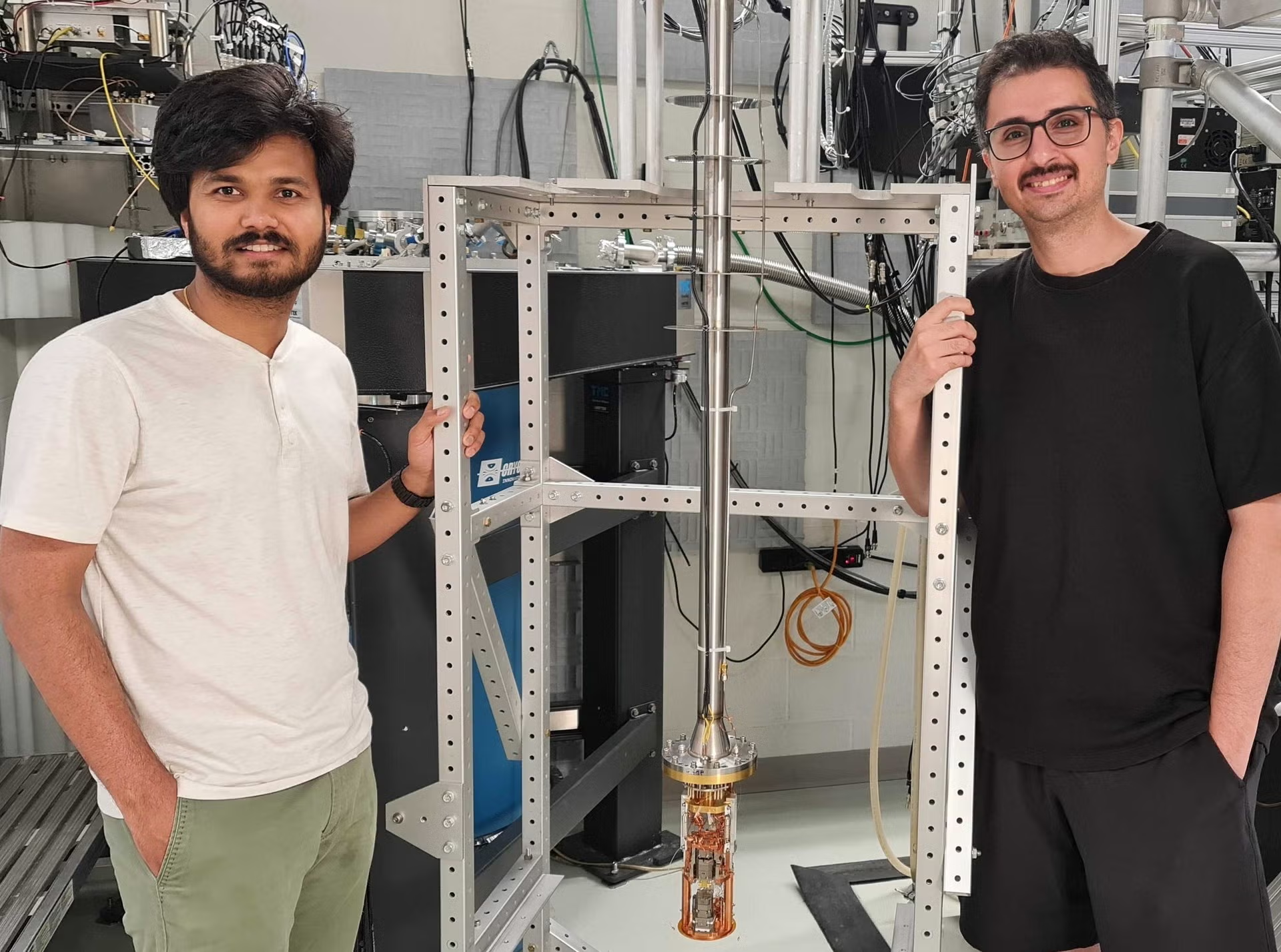
Researchers at the Institute for Quantum Computing (IQC) at the University of Waterloo have developed a new quantum sensing technique employing trityl-OX063 molecules, marking the first time this class of molecules has been used to measure the structure of single proteins. This method utilizes the properties of quantum mechanics to achieve precise measurements previously difficult to obtain, potentially accelerating structural biology and drug discovery. The team isolated and protected the spin of the trityl-OX063 sensor, preserving its quantum characteristics for detailed biomolecular analysis. The team explains that precise imaging of single molecules helps researchers understand how proteins and other biomolecules behave, suggesting the technique could reveal insights into disease development and drug interactions for more effective treatments.
Trityl-OX063 molecules function as quantum sensors, representing the first application of this molecular class to such measurements. This approach utilizes a single molecule to achieve measurements previously impossible with conventional sensors, and the ability to visualize these structures at this scale could facilitate the design of more effective therapies. The research represents a departure from traditional quantum sensing methods; the team reports demonstrating a functional quantum sensor based on a unique molecular structure. This breakthrough expands the toolkit available to scientists studying the fundamental building blocks of life, potentially revolutionizing fields reliant on detailed molecular understanding.



See today’s quantum computing news on Quantum Zeitgeist for the latest breakthroughs in qubits, hardware, algorithms, and industry deals.