

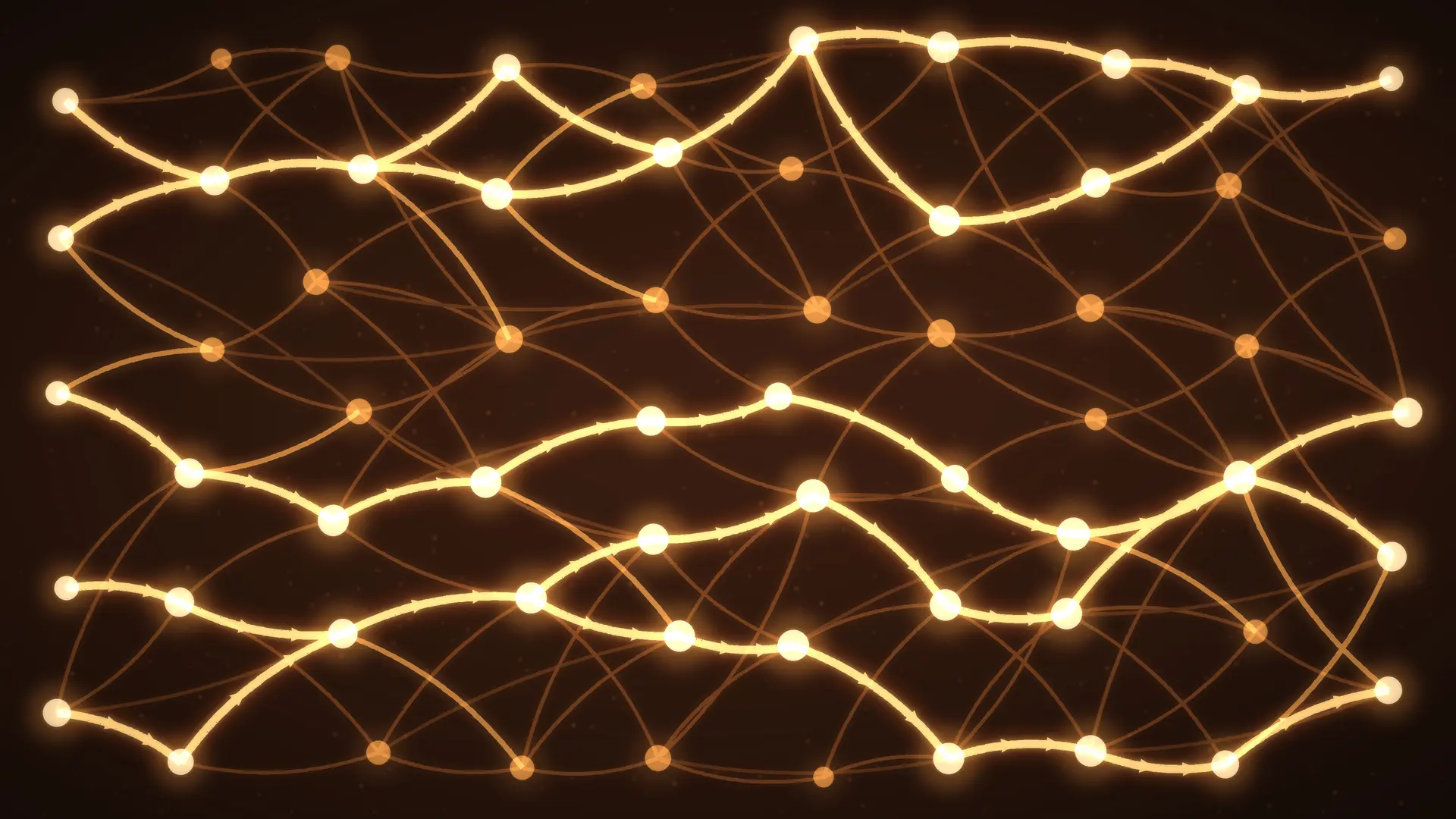
Synthesising graph states in quantum networks previously relied on incremental construction, causing resource use to increase sharply with denser graphs. A new method from Macao Polytechnic University formulates synthesis as a mathematical reduction process using difference matrices. The technique creates complex entangled connections, graph states, within quantum networks. Current methods construct these states link by link, but this approach requires increasing resources as networks become more densely connected.
The team formulated synthesis using mathematical principles relating to difference matrices enabling scalable creation regardless of network density. This method reduces the number of steps needed and minimises required entanglement resources compared with existing approaches, particularly within denser configurations. Existing methods build these connections incrementally demanding ever more resources as network density increases.
However, this team has instead formulated synthesis using mathematical principles relating to difference matrices essentially representing relationships with numbers akin to how spreadsheets organise data yet tailored for quantum calculations. The new technique reduces sequential steps, termed ‘time-slot depth’, and minimises required entanglement resources especially in densely connected configurations; imagine building something with Lego bricks where fewer steps mean faster construction.
Difference matrix formulation enables scalable quantum network construction with reduced operational steps
Time-slot depth, a key measure of quantum network efficiency, improved dramatically across almost all modelled scenarios. Previously limited by incremental construction requiring numerous sequential operations, the new protocol achieves an upper bound of floor(N/2) steps irrespective of target quantum network density. This represents a sharp advancement because resource demands escalate rapidly alongside increasing edge density in existing schemes; however, this approach maintains scalability regardless of connections.
Macao Polytechnic University researchers formulated graph state synthesis as a mathematical process utilising difference matrices over GF, numerically representing relationships for quantum calculations and demonstrating substantial gains near an edge density of 0.3. Decreases were also observed in both CZ gate counts and Pauli measurements around approximately 0.3 edge density, with entanglement resource overhead diminishing below that of a strong Steiner baseline at this point.
These improvements continued as networks became more densely connected, particularly pronounced for high-density graph states where conventional schemes struggle most. The team successfully modelled fibre attenuation using Waxman topologies via Monte Carlo experiments; practical implementation still requires overcoming challenges related to qubit crosstalk from parallel operations and maintaining coherence times long enough for complex state distribution.
While offering a compelling path towards scalable quantum networks by decoupling performance from density, reliance on these Monte Carlo experiments introduces inherent statistical uncertainties. Validating the gains necessitates extensive testing across diverse network topologies beyond those already modelled using Waxman configurations. The current approach employs a “heuristic algorithm”, suggesting potential for further optimisation in translating this mathematical formulation into physical implementations and raising questions about whether results represent peak efficiency.
A new method for building complex quantum networks has been established by researchers through reframing how entangled connections are created. They treat network construction as a mathematical simplification process utilising difference matrices, a numerical way to represent relationships between nodes, rather than adding links one at a time. This technique uses an equivalence between measuring entanglement and altering graph structure, allowing definition of an upper limit on the steps needed regardless of network complexity. Overcoming limitations found in existing methods that struggled with increasing network complexity due to reliance on dense node connections, this approach offers significant benefits.
This research demonstrated a new method for constructing N-node quantum networks which limits synthesis steps to approximately half the number of nodes present. By reframing the creation of entangled connections as a mathematical simplification process, performance is no longer limited by how densely connected the network becomes.
Monte Carlo experiments modelling fibre attenuation using Waxman topologies showed improvements in time-slot depth and resource overhead, specifically CZ gate counts and Pauli measurements, compared to established Steiner baseline protocols at edge densities above 0.3. The authors suggest further validation across diverse network configurations will be necessary to confirm these gains.
👉 More information
🗞 Distributed synthesis of arbitrary graph states in quantum networks via rank-two GF(2) reduction
✍️ Xiaoyi Zheng, Lin Chen and Chan-Tong Lam
🧠 ArXiv: https://arxiv.org/abs/2608.21166


See today’s quantum computing news on Quantum Zeitgeist for the latest breakthroughs in qubits, hardware, algorithms, and industry deals.



