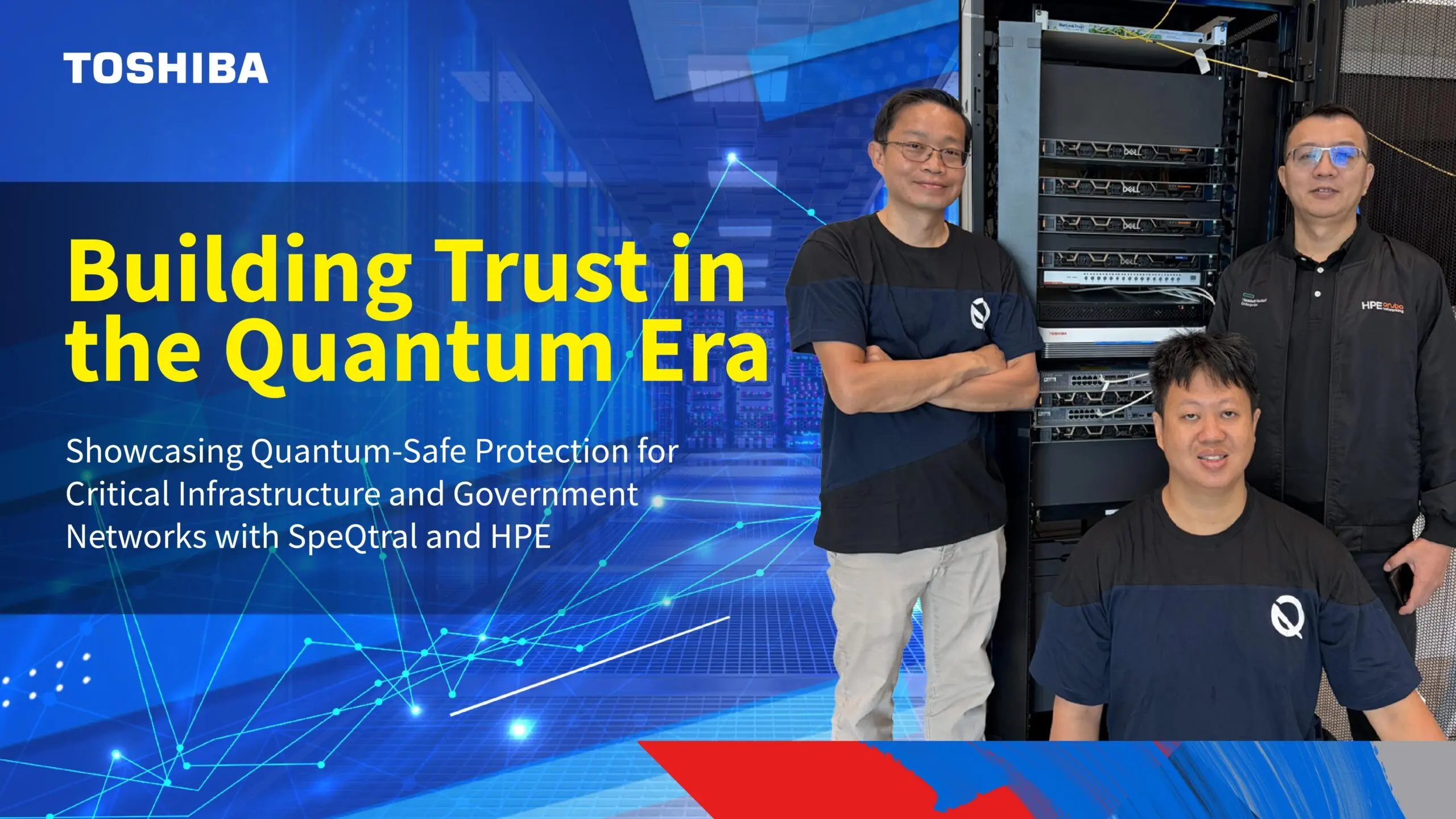
IPsec VPNs, a widely used protocol for secure communications, now face vulnerability to future decryption enabled by advances in quantum computing. Toshiba, in collaboration with SpeQtral and HPE, has validated a solution integrating Toshiba’s Quantum-secure Networking (QSN) Platform with HPE Networking SRX Next Generation Firewall to introduce quantum-safe key material into existing IPsec environments.
This approach combines Post-Quantum Cryptography and Quantum Key Distribution, offering layered security as organizations prepare for quantum threats. “As organizations prepare for the quantum era, they need practical, non-disruptive pathways to strengthen security across their existing operations,” said Mark Ablett, Vice President, Asia Pacific and Japan, HPE Networking.
QKD and PQC Integration Strengthens Existing IPsec VPNs
This validation demonstrates a practical pathway for critical infrastructure operators and government agencies to bolster their defenses against “harvest now, decrypt later” attacks, where encrypted communications are intercepted and stored for future decryption once sufficiently powerful quantum computers become available. The combined solution uses both Post-Quantum Cryptography (PQC) and Quantum Key Distribution (QKD) to create a layered security approach, rather than relying on a single quantum-resistant method.
SpeQtral led the integration effort, successfully verifying interoperability and secure IPsec VPN operation using this quantum-safe key material, an important step toward preserving existing network investments while enhancing cyber resilience. The system’s design prioritizes crypto-agility, allowing organizations to adapt to evolving security standards and potential future quantum threats, a key consideration for long-term security planning.
This layered approach combines the strengths of both PQC, using quantum-resistant cryptographic algorithms, and QKD, which employs quantum-generated encryption keys for enhanced security, Toshiba says. “Together with Toshiba and SpeQtral, we have demonstrated how quantum-safe capabilities can be integrated into existing IPsec environments using HPE’s advanced firewall solution.” The demonstration confirms a deployment-ready model, offering organizations a tangible solution for strengthening cyber resilience without requiring a complete overhaul of their current infrastructure.
Toshiba emphasizes the importance of this layered approach, highlighting that it provides flexibility to adapt to future security requirements as quantum computing technology advances, according to the company. “CII operators and government agencies need confidence that their critical networks can remain protected as quantum risks grow,” explained Anandaraman Sankaran, Strategic Partnerships & Marketing Lead, APAC of Toshiba Asia Pacific.
“Organizations recognize the need to begin their quantum-safe transition, but they also require solutions that can be integrated into existing environments with minimal disruption,” Lum said. The integrated solution will be demonstrated at GovWare 2026, providing attendees with an opportunity to explore practical, crypto-agile approaches for protecting critical communications against future quantum-enabled threats.
As organisations prepare for the quantum era, they need practical, non-disruptive pathways to strengthen security across their existing operations.
Mark Ablett, Vice President, Asia Pacific and Japan, HPE Networking
See today’s quantum computing news on Quantum Zeitgeist for the latest breakthroughs in qubits, hardware, algorithms, and industry deals.