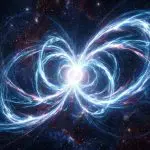
A new method for creating large Fock states offers sharply improved probability for use in quantum technology and precise measurements. Combining quantum nondemolition photon-number encoding alongside quantum amplitude amplification allows transfer of information about the number of photons into a multi-qubit system without disturbing the light itself. The technique creates substantial quantities of photons, particles of light, in a specific quantum state, overcoming limitations found in current methods.
The approach merges established techniques to reliably generate these ‘Fock states’ without needing increasingly complex control systems or accepting low success rates. This method could enable improvements in sensors and novel computation forms through more accurate manipulation of numerous photons simultaneously. Researchers from Universidade Federal de São Carlos and UNESP detailed a new method for generating substantial quantities of photons in a specific quantum state; these ‘Fock states’ are vital resources for emerging technologies like advanced sensors and novel computational approaches.
A Fock state represents a precise arrangement, imagine having exactly five red marbles in a box, no more and no less, making accurate manipulation of many photons simultaneously possible. They employ what is known as quantum nondemolition (QND) photon-number encoding, reading information from an object without disturbing it, much like weighing something on a sensitive scale that doesn’t move when you place the item upon it.
Encoding photon numbers via nondestructive qubit readout using Quantum Phase Estimation
Quantum nondemolition (QND) photon-number encoding underpins this novel technique; it operates similarly to weighing an object on a sensitive scale that remains stable upon placement, allowing for data retrieval from a quantum system without disturbance. A coherent state, light exhibiting wave-like behaviour, initiated the process before employing Quantum Phase Estimation to translate information regarding photon count into readings stored within multiple qubits, fundamental units of quantum information.
This transfer occurred without altering the original light’s properties, preserving its delicate quantum characteristics and circumventing signal loss common in many measurement processes. Utilising up to eight qubits enabled near-deterministic preparation of Fock states containing hundreds of excitations, avoiding alteration of the initial light’s quantum qualities during measurement unlike existing techniques prone to signal degradation.
High excitation Fock states prepared via amplified photon number encoding
The achievement of near-deterministic preparation for Fock states with hundreds of excitations signifies a considerable advancement over prior methods restricted by low heralding probabilities or intricate control systems. The protocol integrates QND photon-number encoding alongside quantum amplitude amplification; this effectively enhances the probability of generating these substantial Fock states from an originating coherent state, a predictable type of light wave.
Initial target weights around 0.040 for one hundred photon states were dramatically improved following amplification, approaching unity and converting algebraically decaying probability into deterministic outcomes. This enhancement sustains high post-amplification success rates even as the quantity of distinguishable targets expands exponentially with increasing qubit numbers, requiring approximately six iterative steps to reach a state containing one thousand photons.
Generating and manipulating multiple photon Fock states advances scalable quantum technologies
Reliable manipulation of large quantities of photons is crucial for realising scalable quantum computation, forming the foundation for proposed technologies ranging from ultra-secure communication networks to sensors that surpass classical limitations. Generating more complex ‘NOON states’, however, essential for applications such as interferometry, remains an area demanding further research and development. Nevertheless, substantial progress has been made by providing a route toward generating sizable ‘Fock states’; these are collections of photons with precisely defined numbers, contrasting conventional approaches often hindered by low success rates during state construction. QND photon-number encoding reads information about photons without disturbing their delicate quantum properties; combining this with quantum amplitude amplification significantly increases the probability of successfully creating large Fock states using readily available coherent light sources containing 500 excitations.
The researchers demonstrated a method to generate Fock states, collections of photons with precise number definitions, with greatly improved probabilities. This matters because manipulating many photons is essential for developing scalable quantum technologies such as advanced sensors and secure communication networks. The authors also indicate that their protocol could be extended towards generating two-mode NOON states via beam splitting operations.
👉 More information
🗞 Preparation of Large Fock States in Resonators with High Probability
✍️ Lucas R. S. Santos, Ciro M. Diniz, Daniel Z. Rossatto and Celso J. Villas-Boas
🧠 ArXiv: https://arxiv.org/abs/2608.20133


See today’s quantum computing news on Quantum Zeitgeist for the latest breakthroughs in qubits, hardware, algorithms, and industry deals.