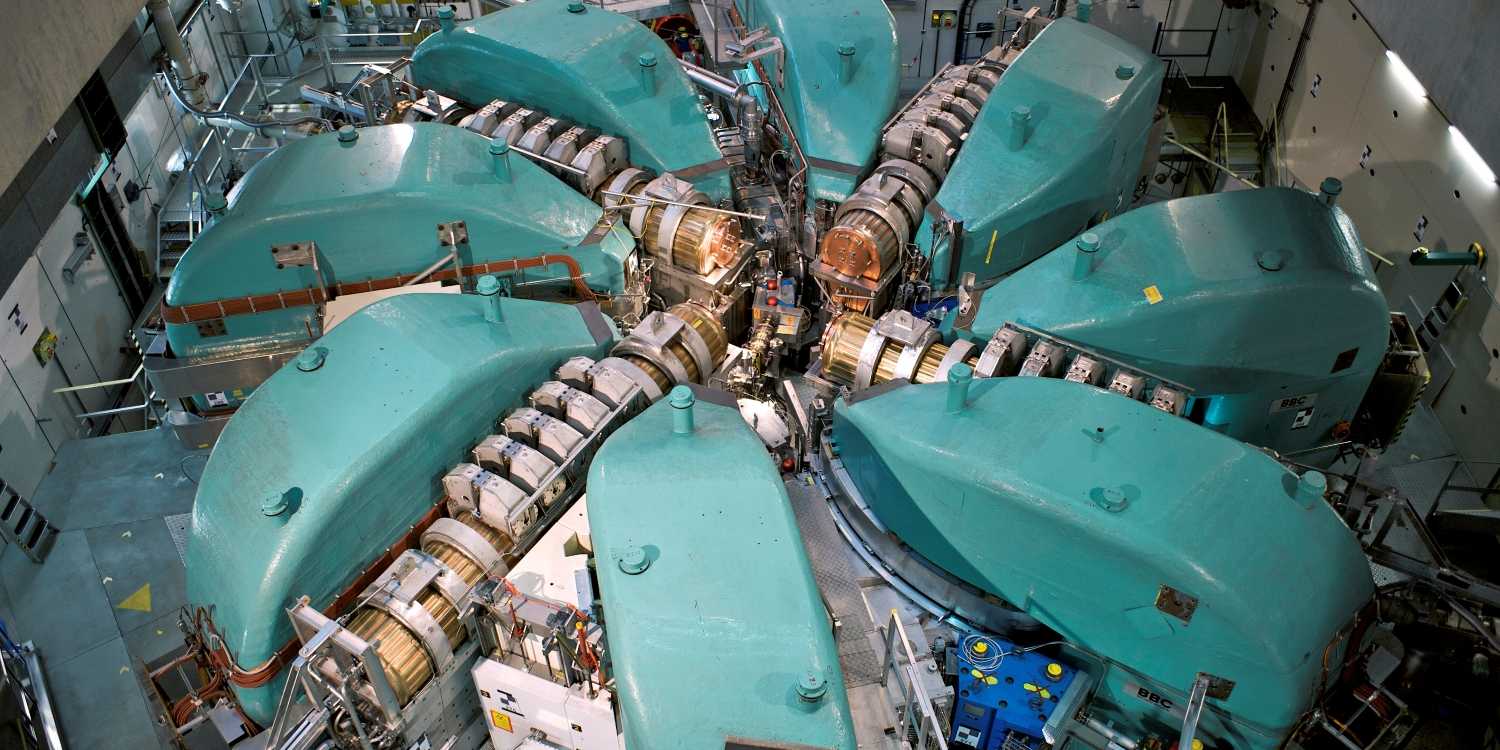
Researchers at ETH Zurich and the Paul Scherrer Institute are artificially producing an intense, cold beam of muonium, an exotic atom containing a second-generation antiparticle, to test a fundamental prediction of Einstein’s theory of gravity. The team aims to measure whether Earth’s gravitational pull acts on muonium in the same way it does on ordinary matter, a principle known as the universality of free fall.
“We have taken an important step towards carrying out an exciting experiment on this topic,” says Anna Soter, professor of physics at ETH Zurich; “We want to measure the gravitational interaction of the muon.” A difference in how these exotic atoms fall could indicate the existence of a fifth fundamental force.
Muonium Atom Beam Challenges Equivalence Principle
The creation of a superthermal muonium beam at ETH Zurich represents an advancement in precision measurement, enabling researchers to probe the gravitational interaction with second-generation particles for the first time. Unlike previous experiments limited to ordinary matter or first-generation antimatter, this new approach utilizes muonium, an exotic atom composed of a muon and an electron, to test the universality of free fall with increased sensitivity.
The team achieved this by generating a beam of muonium atoms in a ‘cold’ state, a necessary condition for the gravity experiment itself, using superfluid helium cooled to near absolute zero at minus 273 degrees Celsius. “Superfluid helium is what is known as a quantum fluid, in which the individual helium atoms lose their identity, and which does not tolerate any impurities within it,” explains a researcher involved in the project, highlighting the technical challenges overcome in creating a stable beam.
Generating the muonium beam relies heavily on the particle accelerator at the Paul Scherrer Institute (PSI), which produces the world’s most intense, continuous muon beams. These muons, unstable subatomic particles, quickly decay into muonium, necessitating an intense source to create a measurable flux. The resulting beam’s characteristics, specifically its superthermal nature, allow for precise measurements of the subtle shifts in its trajectory caused by Earth’s gravity.
Researchers anticipate initial tests of the beam’s functionality this year, with the full gravity experiment projected to follow within two to three years. This timeline is ambitious, given the complexity of isolating and measuring the gravitational effect on such short-lived particles.
The implications of this research extend beyond simply verifying Einstein’s equivalence principle. “I simply want to measure, for the first time, whether the equivalence between gravitational and inertial mass also applies to the second generation of particles – this alone is quite an inspiring piece of work,” states a lead researcher, emphasizing the foundational nature of the inquiry. The high-intensity muonium beam is expected to facilitate new experiments in laser spectroscopy, allowing for more precise measurements of the muon’s mass and fundamental physical constants.
This precision is important, as even slight discrepancies could reveal subtle flaws in the Standard Model of particle physics, potentially opening doors to new theoretical frameworks.
We have managed to produce the muonium atoms in a ‘cold’ state, which is what makes the gravity experiment possible in the first place.
Anna Soter, professor of physics at ETH Zurich and the Paul Scherrer Institute (PSI)
PSI Accelerator Produces Intense, Cold Muonium Source
The newly developed muonium beam at the Paul Scherrer Institute achieves a critical characteristic for precise gravitational measurement: a narrow velocity spread. This precise control over the beam’s momentum is essential for discerning subtle gravitational effects, as any significant velocity variation would blur the interference pattern used to detect gravity’s influence. The team’s method for generating these slow-moving muonium atoms represents a significant technical hurdle overcome in the pursuit of testing fundamental physics.
Generating sufficient quantities of muonium for this experiment relies heavily on PSI’s high-intensity muon source. The accelerator creates muons and their antimatter counterparts, which then combine with electrons to form neutral muonium atoms; the sheer number of atoms produced is vital for generating a detectable signal within the interferometer. This high flux, coupled with the innovative “cold” state preparation, allows for a statistically robust measurement of any potential deviation from expected gravitational behavior.
Researchers are now focused on constructing the interferometer itself, a device designed to exploit the wave-like properties of muonium to measure gravitational effects. The interferometer will split the muonium beam, sending the resulting waves along different paths before recombining them; gravity’s influence, if present, will manifest as a shift in the resulting interference pattern.
“We hope to be able to test the method for the first time with the atomic beam this year, and if all goes well, the actual gravity experiment should follow in two or three years’ time,” Soter states, outlining the timeline for the ambitious undertaking. A confirmed deviation from the predictions of general relativity, even a small one, “would indeed be surprising, and, in addition to other theories, it could point to the existence of a fifth force,” she concludes, highlighting the profound implications of a successful, and potentially groundbreaking, result.
But we physicists do not yet understand why these additional generations exist at all in the first place.
Anna Soter, professor of physics at ETH Zurich and the Paul Scherrer Institute (PSI)
Superfluid Helium Enables Controlled Muonium Emission
The precision of the muonium beam hinges on the unique properties of the superfluid helium used to generate it. Researchers use the quantum fluid’s intolerance of impurities to create a remarkably clean environment for slowing antimuons, a crucial step in forming the exotic muonium atoms. “Thanks to this high-quality source, a great many muonium atoms can be produced,” explains lead author Jesse Zhang, detailing the high flux necessary for statistically robust measurements of gravitational effects.
This isn’t simply about generating any exotic atom; muonium, containing a second-generation antiparticle, offers a novel test case for fundamental physics. The process relies on firing antimuons, created at the Paul Scherrer Institute’s accelerator, into the superfluid helium.
Upon encountering electrons within the liquid, muonium atoms form with a positive chemical potential, effectively being ejected upwards. “So we’re using the chemical potential as an atomic cannon,” Zhang clarifies, describing how this kinetic energy boost allows the atoms to escape the liquid helium before their extremely short lifespan expires. The ability to control the muonium’s velocity without collisions is paramount; any disruption would render precise gravitational measurements impossible. This method allows for a beam, meaning the atoms possess a controlled momentum beyond what is typically achievable with cold atom sources.
The neutral nature of muonium is also critical to the experiment’s design. “The exotic muonium is very well suited to this because it is a neutral atom,” Soter notes, emphasizing that a neutral charge is essential for observing gravitational effects without interference from electromagnetic forces.
“After all, to make something fall, you need something neutral.” A deviation from the expected gravitational behavior of muonium, as predicted by Einstein’s equivalence principle, would not necessarily invalidate general relativity entirely, but it would suggest the existence of previously unknown physics. “But we physicists do not yet understand why these additional generations exist at all in the first place,” Soter adds, highlighting the broader mystery surrounding fundamental particle properties.
In order to achieve this, we used superfluid helium that had been cooled close to absolute zero at minus 273 degrees Celsius.
Jesse Zhang, lead author of the study:
Interferometry Measures Gravity’s Effect on Muon Beam
Researchers are not simply observing free fall, but actively manipulating the beam’s initial conditions to enhance the sensitivity of their measurements. This level of control, previously unattainable, stems from a unique method of generating muonium within superfluid helium. This kinetic energy is harnessed as described by Zhang, enabling the creation of a beam with properties exceeding those typically achieved with conventional methods. The interferometer, currently under development, will exploit the wave-like properties of the muonium atoms to generate an interference pattern, a subtle shift in which will reveal the gravitational force acting upon them.
The precision required for this experiment necessitates a high-intensity muon source, provided by the Paul Scherrer Institute’s accelerator. Such precise measurements could reveal discrepancies with existing theoretical models, potentially indicating the need for new physics. “And why are there three in total?” Soter asks, referencing the three generations of fundamental particles and the ongoing mystery surrounding their existence.
For our experiments, we also rely on PSI’s particle accelerator, which generates the world’s most intense, continuous muon beams.
Anna Soter, professor of physics at ETH Zurich and the Paul Scherrer Institute (PSI)


See today’s quantum computing news on Quantum Zeitgeist for the latest breakthroughs in qubits, hardware, algorithms, and industry deals.