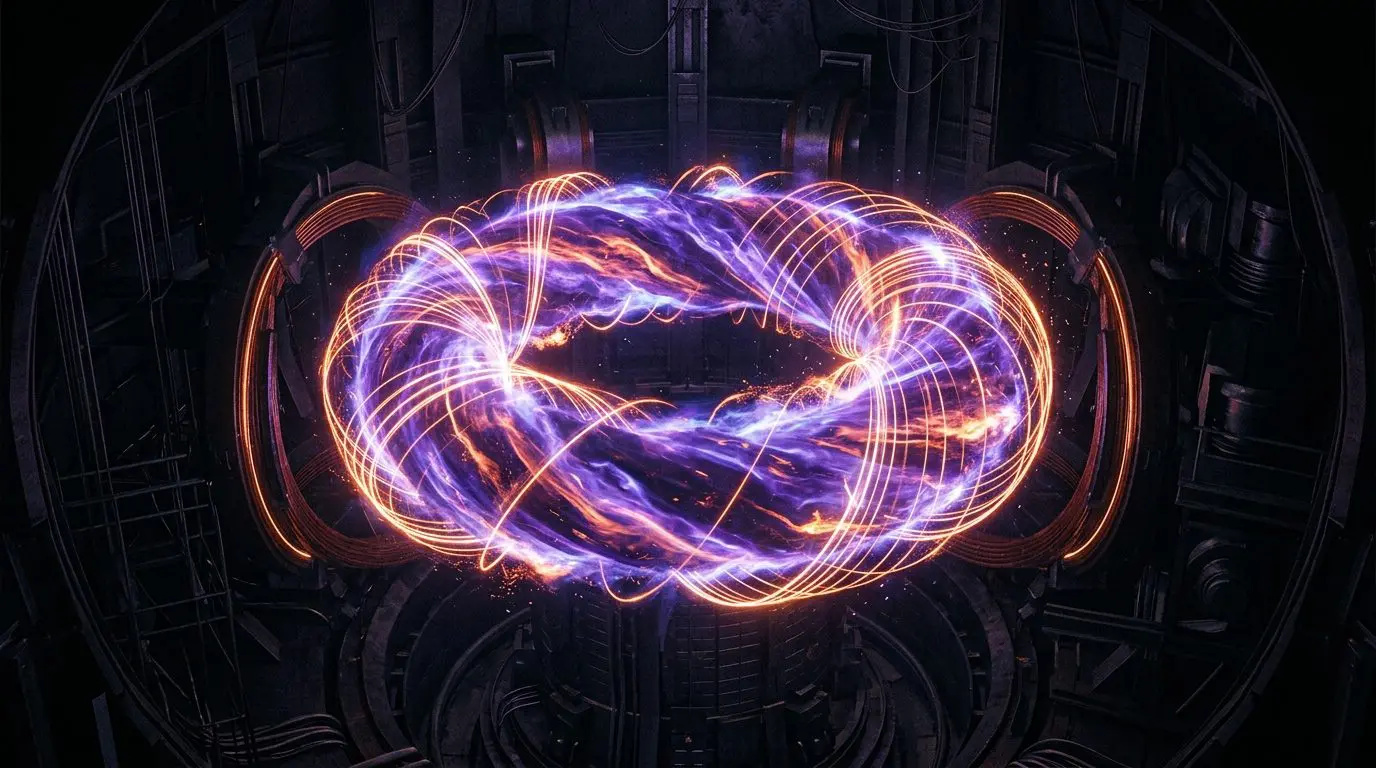
Private sector investment in fusion energy reached $2.6 billion in fusion energy research and development last year, and industry forecasts suggest continued growth as companies race to build demonstration reactors. A recent survey indicates that 71% of fusion energy companies now predict commercial electricity from fusion by 2040.
The Department of Energy launched the Genesis Mission, which announced in July a project pairing UT’s Oden Institute for Computational Engineering and Sciences with Sandia National Laboratories, applying artificial intelligence to accelerate fusion’s commercialization. “Bringing together teams with complementary expertise, from plasma physics and from engineering, will allow us to make an impact in a way that these two different groups could never dream of alone,” said UT physicist David Hatch.
DOE Funding Fuels UT Austin Fusion Collaborations
This investment directly addresses a critical need for skilled personnel as the field rapidly expands; if successful, these grants will support students through doctoral programs and prepare them for careers in either industry or academia. The program aims to ensure a sustained influx of talent into the burgeoning fusion sector. Researchers are concentrating on methods to improve the speed and reliability of simulations, a bottleneck in fusion development; the project uses expertise in physics-constrained optimization, adjoint methods, and real-time neural-operator surrogates.
This computational approach seeks to overcome limitations of traditional methods, which can require extensive simulated training data and lack definitive guarantees. Beyond personnel development and AI-driven simulations, UT Austin researchers are also investigating novel materials for fusion reactor components, specifically liquid metal alloys. Current liquid metals lack an ideal combination of properties for reactor use, prompting exploration of alloys that could offer improved performance.
This work builds on earlier concepts developed and spun off into ExoFusion, a company focused on liquid metals for fusion applications.
One of the most compelling aspects of this project is that it’s coming at just the right time to test our candidate alloys out in a real fusion environment.
David Hatch, IFS
IFS Seed Grants Bridge Physics and Engineering Expertise
The University of Texas at Austin will support four graduate students focused on fusion research through newly awarded seed grants, fostering an interdisciplinary approach to overcome key challenges in the field. These grants specifically aim to build bridges between plasma physics and engineering, a collaboration UT physicist David Hatch believes will yield results neither discipline could achieve independently.
A central focus of these collaborations is addressing the computational bottleneck currently hindering fusion energy development; simulations, while accurate, demand substantial computing resources and time. One team led by Diego Del-Castillo-Negrete for Fusion Studies intends to develop faster, more efficient numerical tools for simulating the plasma edge.
Del-Castillo-Negrete explained their plan is to “use UT Austin’s unique expertise to develop the next generation of numerical tools for the fast and accurate simulation of the plasma edge.” This approach seeks to introduce novel numerical techniques, previously unexplored within the context of fusion simulations, to enhance both fidelity and speed. Beyond simulation speed, the program prioritizes building lasting research partnerships. Assistant professor of physics Josh Burby, a co-principal investigator on one of the grants, expressed excitement about the potential for expansion.
“The most exciting aspect for me is actually the prospect of having it balloon into a larger collaboration with another research group,” Burby said. This emphasis on collaboration extends to workforce development; the funding is designed to cultivate a sustained pipeline of talent into the fusion sector.
The collaborative spirit is also seen as mutually beneficial, with plasma physics presenting unique problems for computational engineers to tackle. Del-Castillo-Negrete noted, “This collaboration is a win-win because we are bringing unique problems from plasma physics that our colleagues in computational engineering and sciences haven’t encountered before, for which they can develop their own numerical techniques, which is their area of expertise.” This cross-pollination of knowledge is expected to accelerate progress on multiple fronts within fusion energy research.
Bringing together teams with complementary expertise, from plasma physics and from engineering, will allow us to make an impact in a way that these two different groups could never dream of alone.
David Hatch, UT physicist
AI-Driven Digital Twins Optimize Plasma Confinement
Developing accurate, real-time assessments of plasma behavior within fusion reactors is becoming increasingly reliant on digital twin technology. Researchers are now focused on creating virtual replicas of the plasma itself, using indirect measurements to determine its three-dimensional shape, alignment, and other critical properties. This allows for continuous adjustments to magnetic coils, aiming to maintain stable plasma confinement and prevent energy loss through instabilities. A collaborative effort led by Diego Del-Castillo-Negrete, Omar Ghattas, and Aaron West intends to address the computational demands of this process.
Their plan involves generating a training dataset using high-fidelity simulations, then employing an artificial intelligence model to rapidly and accurately predict plasma behavior. Machine learning methods, such as reinforcement learning, have shown promise in plasma control, but often require extensive training data and lack guaranteed performance. Current engineering practices rely on simulations to track the movement of particles within the magnetic confinement system.
These simulations, while valuable for identifying potential leak points in the magnetic field, are computationally intensive and time-consuming, hindering rapid design optimization. The team hopes to circumvent these limitations by employing advanced numerical methods, aiming to This approach mirrors a separate Genesis Mission project, led by Oden Institute director Karen Willcox, which applies digital twins to the physical components of fusion reactors, ensuring their durability under extreme conditions.
Building these interdisciplinary connections is a key benefit of the funding. “You know, it’s not always easy to build bridges with other faculty because everyone is so busy. I’m really excited that this will be a very structured and mutually beneficial way of building one of those bridges,” Del-Castillo-Negrete explained, emphasizing the importance of collaboration between plasma physics and computational engineering. One parallel project is also testing candidate alloys in a real fusion environment, with the hope that the new numerical methods will accelerate the process of optimizing reactor materials.
Right now, where people might either not do these alpha particle calculations during design, or maybe they’ll use them for fine-tuning a design late in the process, our hope is that these machine learning-based tools we develop will allow people to confidently include these alpha particle calculations in all of their design optimizations without worrying about how much it’s going to slow down the process.
Josh Burby, assistant professor of physics, one of the co-PIs on a new seed grant
Liquid Metals Offer Solution to Reactor Heat Challenges
Liquid metals present a viable path toward managing the intense thermal loads inherent in fusion reactors, with scientists now actively testing alloys to optimize performance. The challenge lies in the extreme conditions within a reactor, where heat, radiation, and energetic particles threaten to degrade plasma-facing components; continuously replenished liquid metals like lithium, indium, gallium, and tin offer a potential solution. However, no single pure liquid metal possesses all the necessary properties, prompting research into alloys combining these elements with other materials to achieve an optimal balance.
Accurately simulating the behavior of this scrape-off layer, or SOL, is important for reactor design, yet presents significant computational hurdles due to its inherent complexity. The ultimate goal is to overcome limitations in current modeling techniques, allowing for faster and more reliable plasma control. Achieving a demonstrable speed-up in these simulations, the team believes, could attract further private sector investment and collaborative partnerships, accelerating the path toward commercially viable fusion power.
The most exciting aspect for me is actually the prospect of having it balloon into a larger collaboration with another research group.
Josh Burby, assistant professor of physics, one of the co-PIs on a new seed grant
Graduate Student Research Advances Fusion Workforce Development
The influx of private capital into fusion energy is directly bolstering the next generation of researchers; $2.6 billion in fusion energy research and development was invested last year, with projections indicating continued growth as companies pursue demonstration reactors. “If we’re successful with these grants, these four graduate students will find and maintain an interest in fusion research, get Ph.D.s related to this work, publish papers and gain experience that will carry them on into industry or academia,” explained del-Castillo-Negrete.
The interdisciplinary nature of the projects, each involving principal investigators from both the Oden Institute and the Institute for Fusion Studies, is intended to broaden perspectives and accelerate innovation. Physicists will apply new numerical methods, while engineers will confront problems outside their traditional domains. A key focus of these collaborations is using artificial intelligence to improve the efficiency of complex simulations. Three of the four funded projects involve replacing computationally intensive models with AI surrogates trained on existing data.
If we’re successful with these grants, these four graduate students will find and maintain an interest in fusion research, get Ph.D.s related to this work, publish papers and gain experience that will carry them on into industry or academia.



See today’s quantum computing news on Quantum Zeitgeist for the latest breakthroughs in qubits, hardware, algorithms, and industry deals.