Advanced Micro Devices is explicitly positioning its processors to allow data centers to pursue a strategy focused on reducing operational costs. The company reports that this approach targets power, space and licensing expenses, three key areas of concern for data center managers, improving the economics of server infrastructure. According to AMD, this consolidation isn’t just about efficiency now, but about “creating capacity for what comes next.” This shift suggests a path toward future-proofing data centers without requiring immediate, large-scale overhauls.
AMD EPYC Processors Enable Data Center Server Consolidation
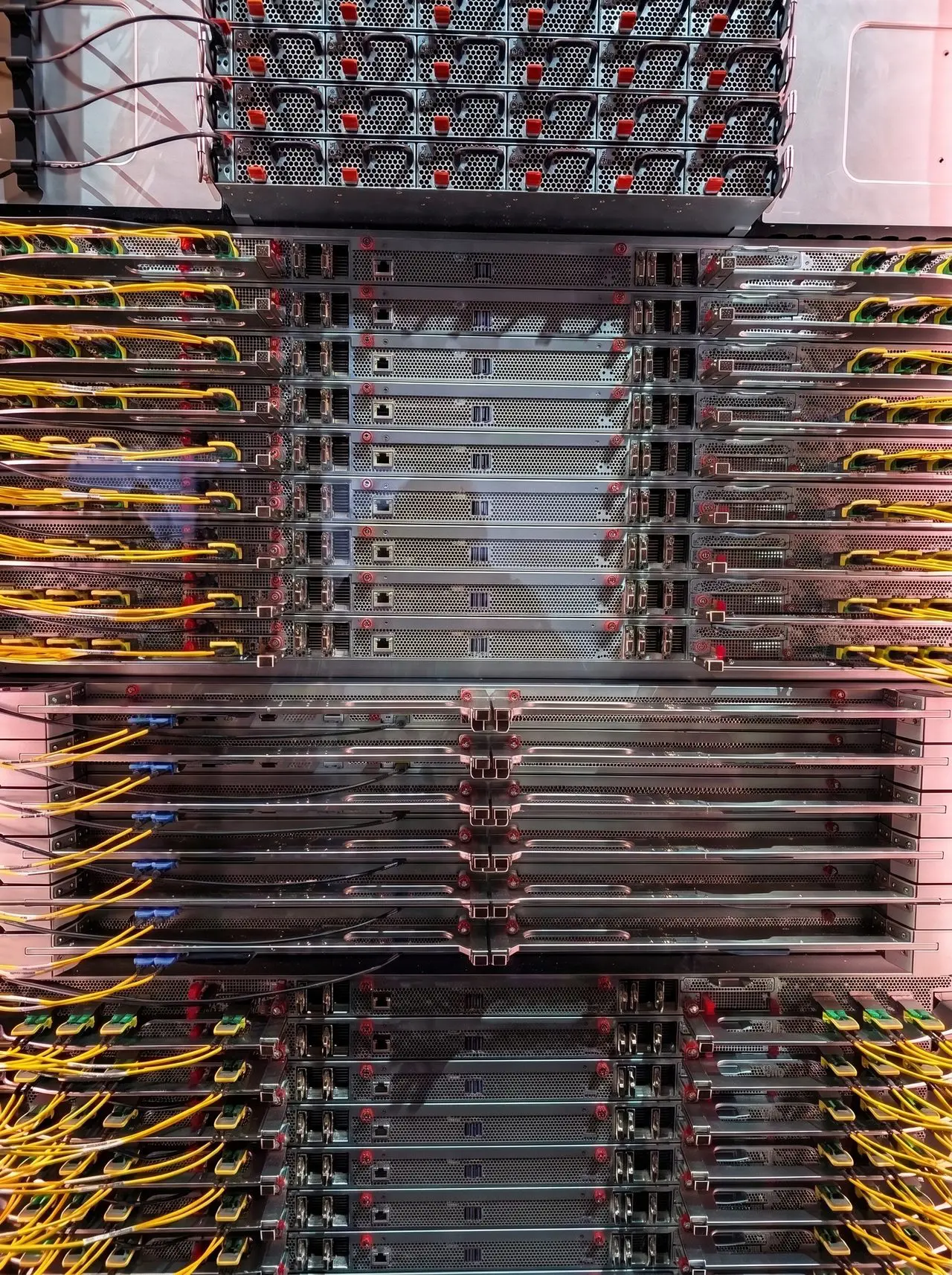
DNSE Securities achieved a 69 percent reduction in power consumption by consolidating servers using Advanced Micro Devices EPYC processors, a shift that also lowered their three-year total cost of ownership by 41 percent. The financial and environmental benefits stemmed from replacing a legacy infrastructure of 100 servers, each with 28-core Intel Xeon Platinum 8280 processors and two sockets, totaling 5,600 cores, with just 14 servers powered by AMD EPYC 9965 CPUs, boasting 192 cores and two sockets each, for a combined 5,376 cores.
This consolidation freed up significant data center capacity, reclaiming both rack space and kilowatts of power for new workloads without requiring expansion of the physical infrastructure. The move addressed a critical limitation within DNSE’s existing server environment, which struggled to support the company’s growth ambitions.
After rigorous benchmarking of AMD and Intel systems, DNSE strategically deployed both 3rd and 4th Generation AMD EPYC CPUs throughout its data center, ultimately halving the number of racks required. Power consumption per rack decreased dramatically, falling from 16 to 17 kilowatts to between 7 and 9 kilowatts, which demonstrably improved operational efficiency. Currently, 90 percent of DNSE’s workloads operate on AMD EPYC CPUs, utilizing a combination of high-frequency processors for low-latency trading systems and high-core-count processors for containerized applications.
Performance gains were substantial; a score of 3000 was achieved with a dual-socket EPYC 9965 server, significantly exceeding the 391 score of a comparable legacy Intel Xeon Platinum 8280-based server. Even an upgrade to a dual-socket Intel Xeon Platinum 8592+ (64C) server only yielded a score of 1130, highlighting the performance advantage of the AMD EPYC processors.
Environmental impact estimates, using data from the 2024 International Country Specific Electricity Factors and the United States Environmental Protection Agency, further support the sustainability benefits of this consolidation strategy. The ability to strategically allocate workloads based on specific requirements, complexity, data sensitivity, latency, and cost, offers further flexibility. For organizations integrating artificial intelligence, this consolidation can create space for deploying accelerators within existing data center constraints, allowing for incremental expansion and optimized resource allocation.
This approach allows IT teams to match processors, accelerators, and models to the tasks they perform best, avoiding the need for complete overhauls based on a single workload or model. Details regarding this data and claims are available at https://www. amd. com/en/legal/claims/epyc. html#q=epyc5#9xx5TCO-001B, including information protected under relevant trademark and copyright laws around the world, and provided on an “as is” basis.
DNSE Securities Achieves 86% Server Reduction with AMD EPYC
DNSE Securities achieved an 86 percent reduction in server count after deploying AMD EPYC processors, consolidating 100 older Intel Xeon Platinum 8280 servers into just 14 systems based on AMD EPYC 9965 CPUs while maintaining equivalent performance levels. This consolidation wasn’t simply about shrinking the data center footprint; it directly addressed key operational expenses, including software licensing tied to core or socket counts, potentially saving millions in associated fees.
The ability to extract more work from each core fundamentally alters the cost equation for organizations utilizing such licensing models, a benefit not mirrored in software priced by user or device. The Vietnamese online stock brokerage implemented the AMD EPYC processors to meet cloud-like density and performance demands while adhering to strict on-premises regulatory requirements, a challenge its previous infrastructure could not overcome.
Following benchmarking of both AMD and Intel systems, DNSE halved its rack count and significantly reduced power consumption, dropping from 16 to 17 kilowatts per rack to 7 to 9 kilowatts per rack, DNSE Securities says. This flexible approach, selecting the optimal CPU for specific tasks, allows DNSE to scale its operations without unnecessary overprovisioning, according to DNSE Securities. “AMD EPYC CPU-powered servers will enable us to keep building infrastructure and running our software how we run it right now, but at a much bigger scale,” explained Binh Nguyen, DNSE’s chief technology officer.
Beyond immediate cost savings and efficiency gains, the consolidation creates valuable headroom for future technologies, including the deployment of AMD Instinct GPUs for accelerating artificial intelligence inference and training, and AMD Pensando networking to ensure predictable data transfer speeds. Success in server consolidation is measurable through metrics like server count, rack space, power usage, licensing expenditures, and overall total cost of ownership, offering IT organizations concrete goals without compromising performance or enforcing a uniform configuration across all workloads.
AMD EPYC CPU-powered servers will enable us to keep building infrastructure and running our software how we run it right now, but at a much bigger scale.
High Core Density & Frequency Optimize Software Licensing Costs
The economic advantages extend beyond immediate infrastructure savings; software licensing models heavily influence total cost of ownership, and AMD is positioning its processors to capitalize on this dynamic. This approach allows organizations to scale operations without necessarily increasing the number of physical servers, a critical consideration given the rising costs associated with power and rack space. Beyond cost reduction, the ability to consolidate workloads onto fewer, more powerful servers creates valuable headroom for emerging technologies.
AMD anticipates further advancements with its 6th Generation EPYC “Venice” processors, promising configurations offering up to 256 cores, extending the density advantage currently offered by the 5th Generation EPYC CPUs. This future-proofing capability prepares for computationally intensive applications like analytics and artificial intelligence, allowing businesses to expand their technological capabilities without requiring immediate, large-scale infrastructure overhauls, the company says. The portfolio currently supports high-density configurations with up to 192 cores, alongside high-frequency options reaching up to 5GHz, providing balanced solutions for diverse workload requirements.
Future AMD EPYC “Venice” Extends Consolidation Capabilities
This increase in core density builds on existing AMD EPYC capabilities, allowing organizations to run a greater number of virtual machines and applications on each server. This balanced approach highlights the flexibility of the EPYC portfolio, allowing organizations to tailor compute resources to specific workload demands. AMD’s strategy focuses on enabling consolidation on existing x86 architecture, avoiding the application validation and migration challenges that can accompany transitions to alternative architectures like Arm.
“AMD EPYC processors combine high-core density, strong per-core performance and energy efficiency on the same x86 architecture enterprises already use,” according to AMD. The company anticipates that this will allow IT teams to pursue consolidation without extensive re-engineering of existing applications.
Source: https://newsroom.amd.com/news/data-center-math-has-changed-2/