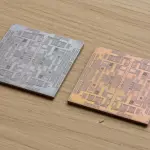
Security module manufacturers are bolstering their defenses against increasingly sophisticated threats by integrating quantum randomness into established hardware designs. An FPGA and MCU architecture is the specific setup being upgraded with this new entropy source, addressing a growing inadequacy of older systems reliant on analog noise, oscillator jitter, or operating-system timing. The upgrade isn’t a wholesale replacement of existing security measures. Instead, a Quantum Random Number Generator is integrated “upstream” of current entropy-conditioning and DRBG paths to strengthen the foundation of the random subsystem.
FPGA/MCU Integration of Quantum Entropy Sources
The integration of quantum random number generators (QRNGs) into existing hardware security module (HSM) designs prioritizes a targeted enhancement of entropy sources rather than a complete overhaul of established cryptographic systems. Rather than replacing existing random functions, a QRNG functions as an independent physical source used to establish and replenish unpredictability within the module’s random subsystem, a strategy that acknowledges the continued need for conditioning, health tests and a robust deterministic random bit generator (DRBG).
This approach allows manufacturers to add a defined physical basis with measurable operational behavior to their entropy designs, reducing reliance on any single mechanism and bolstering resilience against source degradation or supply-chain variations. The specific architecture frequently upgraded with this quantum-derived entropy consists of an FPGA for high-speed cryptographic functions paired with an MCU managing monitoring and secure boot, demonstrating a practical application beyond purely software-based solutions.
A QRNG can connect to either the FPGA or MCU through interfaces like SPI, USB, or UART, with the preferred choice dictated by factors like throughput, pin availability and electromagnetic compatibility, all considered within the HSM’s defined security boundary. For FPGA-centered HSMs, a low-power module can feed a hardware FIFO and entropy accumulator, while MCU-centered designs expose a controlled entropy service to secure firmware, preventing direct access to raw device output.
According to the source, the value proposition for HSM vendors is not a claim that existing entropy sources are unusable, but the ability to add an independent source with a defined physical basis and measurable operational behavior. Independence is particularly useful in composite entropy designs, allowing manufacturers to mix legacy sources with quantum-derived entropy using approved constructions, thereby reducing dependence on any single mechanism.
This layered approach supports resilience against source degradation, supply-chain variation, and modeling assumptions that may be difficult to communicate to a high-assurance customer. A well-scoped prototype integration can begin without a full motherboard redesign, with engineering teams connecting a QRNG evaluation unit to the target FPGA or MCU.
This initial phase focuses on measuring acquisition latency, exercising the driver under load and validating DRBG reseeding through instrumented firmware builds. Critical testing includes power cycling, temperature variation relevant to the appliance’s operating environment, interface fault injection, and extended soak testing to ensure robust performance under stress.
The production phase then replaces the prototype connection with a mechanically and electrically suitable module or adapter, updating the board support package, secure firmware, manufacturing test procedure and field diagnostics. The path to integration requires careful consideration of the trust boundary; if the QRNG sits outside the existing HSM security boundary, the interface becomes a potential fault or injection point. The HSM should authenticate or sanity-check the device state, monitor availability and fail according to a defined policy.
Retrofitting this documentation late in the program can be more expensive than the hardware integration itself, highlighting the importance of upfront planning and documentation. Crypta Labs’ low-power Quantum Optics Module is presented as a solution suited to this type of integration, offering quantum-derived entropy in FPGA- and MCU-based security hardware without a large power or board-space penalty.
The source states that the relevant question for assessing the upgrade is whether the HSM can demonstrate sufficient min-entropy at the point where the new source enters the conditioned random-bit generator design. A changing bitstream can still be predictable under a fault, a bias shift, a component-aging event, or an attacker who can influence the source’s physical environment, emphasising the need for continuous assessment and robust design.
The project should begin by defining what the new source changes and what it intentionally leaves unchanged, ensuring a focused and efficient upgrade path. “If the HSM retains its legacy source and mixes it with quantum-derived entropy using an approved construction, the design can reduce dependence on any one mechanism,” the source concludes, reinforcing the value of a diversified and resilient entropy strategy.
Existing HSM Architecture & Entropy Limitations
Relying on analog noise, oscillator jitter, or operating system timing as entropy sources, the architecture of many existing hardware security modules (HSMs) is increasingly scrutinized for its ability to meet current security demands, given that these are years-old methods. A shift towards bolstering entropy isn’t simply about adding a new component; it’s about addressing a growing inadequacy in established systems, as manufacturers seek to provide evidence suitable for engineering review and customer due diligence.
Before an upgrade, a typical HSM data path begins with a noise source feeding into an analog-to-digital converter (ADC), followed by firmware conditioning and ultimately seeding a DRBG that serves cryptographic consumers. These consumers encompass a wide range of security-critical operations, including asymmetric key generation, nonce creation and session-key generation. A fluctuating bitstream remains vulnerable to prediction if compromised by a fault, bias shift, component aging, or direct manipulation of the source’s physical environment.
The upgraded architecture introduces the quantum entropy source at an earlier stage, followed by an interface driver, source health checks, and conditioning before feeding into the DRBG and cryptographic consumers. This approach strengthens the foundation upon which existing controls operate, rather than attempting to replace them entirely. The conditioning function itself requires careful selection and documentation; a cryptographic hash or approved conditioner can compress source samples for DRBG seeding, subject to entropy estimates and security requirements.
Directly feeding raw bytes from a QRNG into key-generation code, simply because of its origin, is generally considered poor design. The HSM must maintain a clear random-bit generation architecture with known interfaces and controlled state transitions. An entropy upgrade, while often small in terms of schematic complexity, carries significant implications for overall assurance.
The most decisive engineering question is not whether the module can produce random bits in isolation, but whether the completed HSM possesses a controlled, testable, and supportable entropy path from the physical source to the cryptographic consumer. An HSM entropy upgrade is most effective when treated as a security architecture change, not merely a component substitution. Defining source assumptions, preserving disciplined DRBG operation, rigorously testing failure paths alongside normal operation, and formulating a defensible assurance claim are all critical elements of a successful integration.
Upgraded Entropy Path with QRNG Implementation
This approach addresses a key concern. The value to an HSM vendor isn’t simply claiming existing sources are unusable, but rather augmenting them with a quantum-derived source. The source cautions that system-level security testing is essential, confirming that key generation, signing, secure boot, and protocol operations either fail or recover as documented under entropy fault conditions.
For products pursuing formal validation, the entropy design must align with the target program’s requirements, potentially impacting source documentation, min-entropy assessment, conditioning choices, health-test implementation and retained manufacturing evidence. The engineering team can then measure acquisition latency, exercise the driver under load and validate DRBG reseeding through an instrumented firmware build.




See today’s quantum computing news on Quantum Zeitgeist for the latest breakthroughs in qubits, hardware, algorithms, and industry deals.