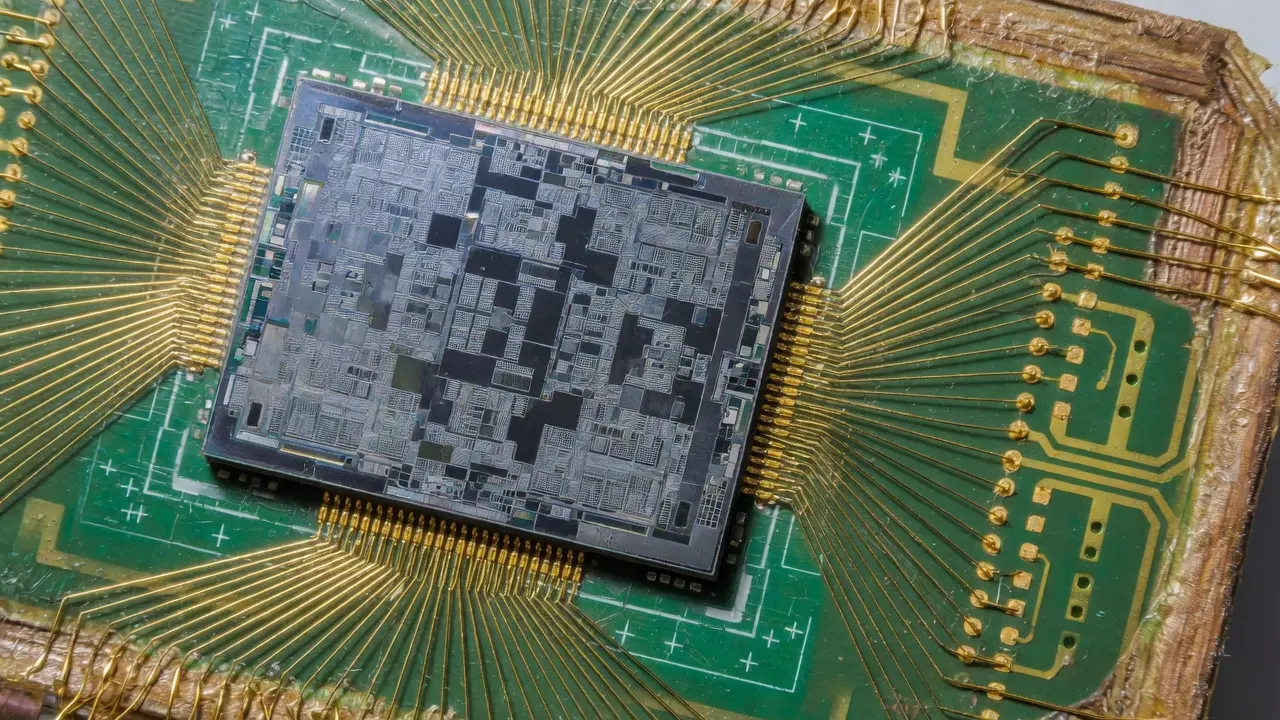
Engineers from Chalmers Next Labs AB and ConScience AB successfully shipped a QiB1 quantum processor from Gothenburg, Sweden to Singapore and back, testing the limits of physically transporting delicate quantum hardware. The experiment focused on whether changes in magnetic environments and lab setups would affect qubits controlled by microwave pulses, a critical factor for a potential global quantum market.
Researchers fabricated qubits using very thin layers of aluminum oxide, where even slight thickness variations can significantly impact performance. “If we want a global market for quantum components, they must work reliably wherever they are sent, like consumer electronics such as your iPhone,” the team reports.
The QiB1 quantum processor exhibited a frequency shift of only one percent when calibrated in Gothenburg and Singapore, demonstrating surprising resilience during shipment and relocation. Engineers from ConScience AB and the National Quantum Federated Foundry Singapore (NQFF) verified this consistency by repeating identical calibration procedures at both the WACQT Quantum Technology Testbed in Gothenburg in January 2026 and at NQFF’s facilities in Singapore months later.
This level of stability is important because even slight variations in qubit control frequencies can disrupt quantum calculations. The experiment confirms the potential for reliable international transport of these sensitive devices. Subsequent recalibration in Gothenburg, following the return shipment in August, further validated the initial findings, maintaining the frequencies within the same one percent margin. The experiment addressed a fundamental challenge for scaling quantum technology: the susceptibility of superconducting qubits to environmental factors.
The team specifically investigated how differing magnetic environments and laboratory setups between Gothenburg and Singapore might affect these frequencies, recognizing that a global quantum market demands consistent functionality regardless of location. Beyond frequency stability, researchers also assessed the coherence time, denoted as T1, of the qubits, a measure of how long a qubit retains information before decoherence. The best qubit on the QiB1 processor achieved a coherence time exceeding 100 microseconds, a performance level comparable to that of leading quantum laboratories.
This metric is vital because longer coherence times enable more complex and computationally intensive quantum algorithms. The successful maintenance of this performance level throughout the shipping process and across geographical locations emphasises the robustness of the processor’s design and fabrication. The collaboration between Swedish and Singaporean institutions highlights a growing international effort to advance quantum technology. This project, funded by the Swedish innovation agency Vinnova, demonstrates a practical approach to addressing the logistical hurdles of a future quantum marketplace.




See today’s quantum computing news on Quantum Zeitgeist for the latest breakthroughs in qubits, hardware, algorithms, and industry deals.