
The team reports achieving millisecond-scale retention of a quantum state, a duration significantly longer than many current qubit technologies allow for more complex calculations before decoherence. This molecular qubit, detailed in a paper published in Nature, uses light for preparation and readout, offering a photonic interface that could simplify scaling of quantum systems. “Our team started with a list of the properties a quantum computer needs, then designed a molecule to have them,” explains the team.
Molecular Design for Scalable Quantum Computing
This extended coherence is partially attributed to the molecule’s design, which separates its spin states in energy, effectively shielding the quantum information from disruptive magnetic fields originating from nearby hydrogen atoms. Achieving this level of isolation is critical, as even weak magnetic interference can quickly degrade the delicate quantum state.
The architecture, dubbed PIQC, uses a dual functionality within each molecule; the electron spin is the interface for light-based communication and qubit connectivity, while integrated nuclear spins act as long-lived quantum memories. The ability to tune the molecule’s properties is a key advantage of this design, allowing for customization of light emission frequency, spin energy levels and reset speed to suit specific application requirements.
These adjustments are achieved using techniques borrowed from pharmaceutical chemistry, where molecular structures are refined to optimize drug efficacy, and the vast design space offers considerable flexibility. “Changing the molecule’s structure can tune the frequency of its light, the spin’s energy levels and how quickly it resets, to fit what a given application needs,” the team explains, highlighting the adaptability of their approach. Measurements were conducted at 4.5 Kelvin (approximately −269 °C) using a custom-built microscope capable of focusing on individual molecules within a crystal while maintaining cryogenic temperatures.
The team observed thousands of bright, single-molecule emitters at the end of 2025, identifying what they termed the “Goldilocks” molecule, the one with the ideal properties for their design. Flipping the spin state from one to the other requires less than 50 nanoseconds, meaning tens of thousands of operations can be performed within the coherence time before information is lost.
This work demonstrates the first individually addressable organic molecular qubit with a photonic interface, a significant step toward scalable quantum computing. Current research and development efforts are focused on implementing gates between the electron spin and nuclear memory, integrating the molecules onto photonic chips, achieving heralded entanglement between separate molecules, and ultimately, implementing error correction protocols. “This paper shows the core building block works,” the team states, outlining the next steps toward a fully functional, scalable quantum computer.
PIQC Architecture: Spin and Nuclear Spin Roles
Deliberately integrating processing and memory within a single molecular entity, a departure from designs requiring separate components for these functions, is the architecture underpinning NVision Quantum’s molecular qubit. Each molecule functions as both the qubit, using the behavior of its electron spin, and its own long-term storage, utilizing nuclear spins incorporated during the molecule’s synthesis.
The molecule’s design prioritizes a spin-dependent response to light, meaning the emitted glow varies based on the spin state, enabling both preparation and readout of the quantum information. Unlike many existing qubit technologies relying on defects within materials, NVision Quantum’s approach centers on molecular engineering, allowing for precise control over the qubit’s properties through chemical modifications.
Further development includes creating gates that link the electron spin to the nuclear memory, enabling the transfer of information between the processing and storage components, the company says. The team aims to implement error correction techniques to mitigate the effects of decoherence and ensure the reliability of quantum calculations.
Requirements for a Functional Qubit-Photon Interface
The demonstrated molecular qubit fulfills a critical need for scalable quantum computing: a component that simultaneously acts as a processing unit and a data store. Unlike architectures requiring separate elements for these functions, NVision Quantum Technologies GmbH’s design integrates both within a single molecule, streamlining connections and reducing complexity. The electron spin within the molecule is the photonic interface, facilitating communication with other qubits, while strategically incorporated nuclear spins provide long-lived quantum memory.
This dual functionality stems from a deliberate design process, prioritizing the requirements of a functional quantum computer from the outset. Measurements conducted at 4. 5 Kelvin (−269 °C) using a custom-built microscope confirmed the molecule’s ability to emit single photons, a key indicator of individual molecular qubit operation.
Achieving spin-dependent light emission was another important requirement. This photonic interface offers a potential advantage over systems relying solely on microwaves or other techniques for qubit control, aligning with a growing consensus that light-based connections will be vital for linking smaller quantum computing units into larger, networked systems.
“There’s a growing consensus in the community that the way forward is to divide quantum computers into many smaller units and link these together with light,” the team notes, highlighting the broader trend toward modular quantum architectures. The team’s approach represents a shift from discovering suitable qubits to designing them, offering significant control over their properties.
Confirming the presence of a single emitter was a necessary step, achieved through a standard test known as g⁽²⁾ autocorrelation, according to NVision Quantum. The team observed individual bright spots under laser light at low temperatures, verifying that each spot corresponded to a single molecule. This meticulous verification process ensured the reliability of subsequent measurements and validated the molecule’s potential as a functional qubit.
The molecule, its host crystal, and the activation method were each specifically engineered for their respective roles, and each component delivered the expected performance, the company says. A few years ago, the possibility of creating a molecule with this combination of properties was an open question.
The question now, according to the researchers, is how to engineer it into a scalable system. For a technology that will require vast numbers of identical, well-behaved qubits, the ability to design them from the atom up may prove to be one of the most valuable tools available.
Carbene Molecule as a Molecular Qubit
The carbene molecule at the heart of this development stores quantum information within the combined spin of two unpaired electrons, a configuration that allows for a molecular qubit where the molecule itself acts as the container and the spin holds the data. This approach differs from many current qubit designs where processing and storage are separate components, and relies on triplet states, the molecule’s lowest-energy resting configuration, to avoid the need for maintaining unstable excited states.
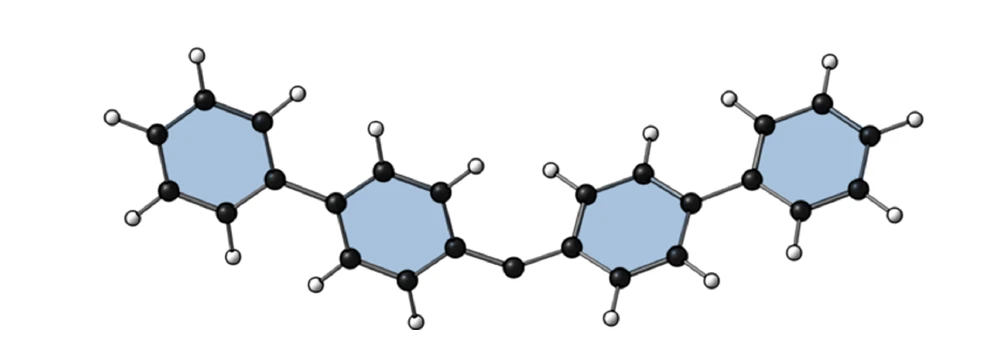
The team’s design uses three key decisions to achieve a stable, addressable qubit, beginning with the selection of a carbene molecule due to its inherent spin properties, NVision Quantum reports. The molecule’s structure, featuring two biphenyl arms extending from a central carbon atom, was deliberately chosen to minimize disturbances to the electron spins and extend the duration of quantum state storage.
Heavy atoms, known to disrupt spin coherence, were avoided in the molecule’s construction, which is composed solely of carbon and hydrogen. Prior to physical realization, the team employed computational modeling to predict the molecule’s behavior within its host crystal, an important step in optimizing its performance and ensuring stability, the company’s account states. This modeling informed the selection of a specific crystal host, a near-identical twin molecule with a carbon-oxygen group replacing the central carbon, allowing the molecular qubit to slot into the crystal lattice with minimal disruption.
The resulting crystal environment serves multiple purposes, not only stabilizing the molecule against vibrations and reactions but also influencing its geometry. In free space, the biphenyl arms twist approximately 36 degrees relative to each other, but the crystal confines them to a nearly flat configuration of 6 degrees.
This flattening, along with the molecule’s inherent symmetry, is critical for enabling precise control and readout of the qubit’s spin state using light. “When the molecule is excited, the energy difference between its possible spin states changes substantially,” explains the team, detailing how each spin state absorbs laser light at a unique frequency, allowing for selective interrogation. The activation process itself is a demonstration of the deliberate design principles employed.
Rather than directly synthesizing the highly reactive carbene, the team incorporated a stable precursor molecule into the crystal. A focused laser pulse then selectively removes a nitrogen molecule from the precursor, transforming it into the active carbene qubit only where the laser is aimed.
This method transforms a challenging chemical problem into a precise tool for qubit creation, allowing for the creation of multiple inactive precursors within the crystal, each capable of becoming a qubit upon laser activation. “Design decision 3: switching the qubit on with light,” highlights the team, emphasizing the precision and control afforded by this activation method. The ability to prepare the qubit’s spin in a known starting state using laser light is also central to the system’s functionality.
By tuning the laser to a specific frequency, the team can reliably initialize the qubit before any quantum operation begins, ensuring accurate and predictable results. The team’s PIQC architecture envisions each molecule playing both roles, qubit and memory, a concept that could significantly reduce the complexity of future quantum computers.
Host Crystal Design for Molecular Stability
The stability of the molecular qubit relies heavily on its crystalline environment, designed to minimize disruptive vibrations and unwanted reactions. NVision Quantum Technologies GmbH researchers created a host crystal composed of molecules nearly identical to the qubit itself, differing only by a carbon-oxygen group substitution at the central carbon atom. The resulting crystal not only provides a stable home but also actively modifies the qubit’s geometry, forcing the biphenyl arms to flatten from a typical 36-degree twist to approximately 6 degrees.
This flattening, achieved through the host crystal’s structure, directly impacts the qubit’s performance. The team observed that the resulting single-molecule emitters exhibited a g⁽²⁾(0) value of 0.14, well below the 0.5 threshold indicating single-photon emission. This confirms that the light originates from individual molecules, a prerequisite for precise quantum control. The molecule’s linewidth measured at 38 MHz demonstrates a sharp, well-defined frequency, essential for accurate qubit addressing.
The frequency stability, drifting by only 2.5 MHz over an hour, ensures consistent photon emission over time, an important characteristic for maintaining coherence. The design extends beyond simply providing a static environment. It facilitates qubit creation through a precise activation process.
This method, described by the researchers as turning “a chemistry problem into a precision tool,” allows for targeted qubit generation only where the laser is focused, minimizing unwanted activation of surrounding precursor molecules. The resulting molecular qubits exhibit coherence comparable to silicon-vacancy centers in diamond, bringing them into the range of established solid-state qubit technologies.




See today’s quantum computing news on Quantum Zeitgeist for the latest breakthroughs in qubits, hardware, algorithms, and industry deals.