Researchers at National Cheng Kung University in Tainan, Taiwan have demonstrated a new method for detecting coherence transfer in quantum networks using up to six photons. The team developed a nonlinear criterion requiring only two measurement settings to verify coherence, even when network nodes have uncharacterized experimental conditions or limited access. This principle applies to networks of any size, from chip-scale systems to those spanning large distances, and offers a practical tool for advancing quantum information science. Quantum networks are essential for exploring how quantum states transfer between diverse systems and for their nonclassical applications.
Nonlinear Criterion Identifies Coherence Transfer in Networks
Experiments using six photons demonstrated the successful transfer of quantum coherence within complex networks, a feat previously difficult to verify under realistic conditions. The criterion’s utility extends beyond simple verification. It can detect coherence dynamics over time, applicable to quantum transport networks where population measurements are taken using quantum point contacts. The method addresses a key challenge in quantum networking: accurately assessing coherence transfer when full characterization of all network components is impractical.
Researchers established a criterion, denoted as 𝒬, that analyzes the probabilities of observing specific basis states after applying both a known and unknown operation to the output state of the network. The mathematical formulation, 𝒬:= minℰℐ |PℰV(i|ρout,k) − Pℰℐ(i|ρout,k(d))| > 0, assesses the difference in these probabilities, providing a definitive indication of coherence transfer.
This approach bypasses the need to fully understand the internal workings of “checkpoint nodes”, intermediate points in the network where quantum states are processed, a significant simplification for larger, more complex systems. Experimental validation involved the transfer of single polarization qubits and polarization-entangled pairs within four- and six-photon entanglement networks. Photonic fusion units, combined with waveplate sets, were used to overlap photon pairs at a polarizing beam splitter, enabling either photonic fusion or Bell-state measurement.
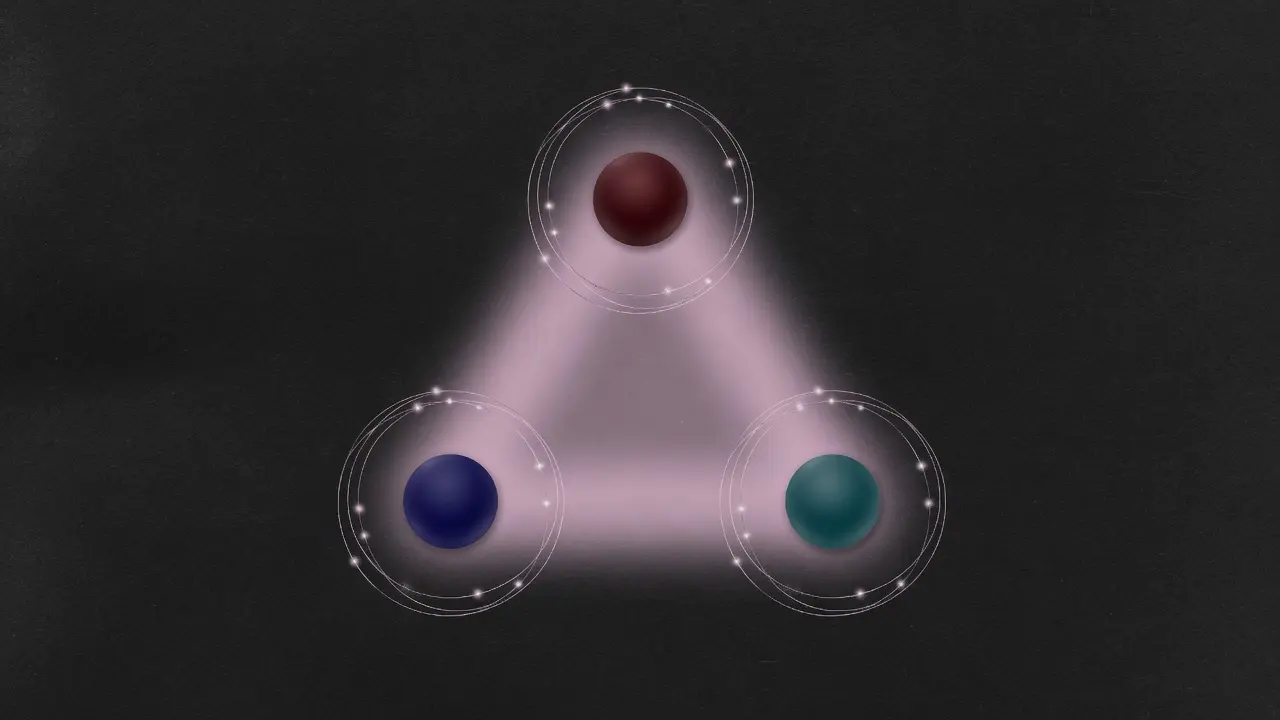
These networks were designed to mimic star-shaped multi-photon entanglement configurations, allowing researchers to test the criterion across multiple transmission scenarios. The results, as detailed in the study, demonstrate the detection of both one- and two-qubit coherence transfer, something that could not be achieved using previously available methods under similar experimental constraints. Discrepancies between ideal and experimental values were attributed to limitations in state fidelity and errors inherent in the photonic fusion process.
However, the core principle of the nonlinear criterion remained robust, successfully identifying coherence transfer in all tested configurations. The researchers built upon their previous work, demonstrating the criterion’s adaptability to diverse network architectures and access levels. “By capturing both the static feature of coherence and its dynamic transfer property, it is comprehensive and suitable for a wide range of coherence network detection tasks across different experimental access levels,” the study concludes, highlighting the method’s versatility.
This new criterion offers a practical tool for assessing coherence in quantum information systems and open quantum networks, whether those networks are artificially constructed on a chip or occur naturally within biological systems. The ability to verify coherence transfer with minimal measurement requirements represents a step toward building more robust and scalable quantum networks, essential for exploring the potential of quantum technologies.
Six-Photon Entanglement Networks Demonstrate Coherence Transfer
This achievement extends beyond previous approaches by detecting coherence even under limited experimental conditions, a significant hurdle in scaling quantum networks. The newly developed criterion assesses coherence transfer through three distinct stages, input, evolution, and output, categorizing nodes as either entangled or not, and allowing for the detection of a broader window of quantum coherence than methods like the Leggett-Garg-type approach.
Analysis of four-photon networks revealed coherence propagating from nodes one and three to nodes two and four via a single Bell-state measurement, while six-photon networks used a more complex process involving Bell-state measurements from nodes two and five, assisted by nodes one and three, to transfer coherence to nodes four and six.
Experimental Constraints Limit Coherence Verification Methods
This nonlinear criterion identifies coherence transfer using only two measurement settings, a significant reduction compared to existing methods and a boon for complex network analysis. The approach bypasses the need for fully characterized checkpoint nodes, addressing a major obstacle in real-world quantum network implementation where complete control is rarely possible. The team’s criterion addresses two primary challenges: uncharacterized experimental conditions and restricted system access, both common in quantum experiments.
Environmental noise and imperfections inevitably introduce discrepancies between expected and actual node states, creating uncertainty. Similarly, limited access restricts the ability to fully measure or control network components. Previous methods struggled to confirm coherence transfer under these conditions. But the newly developed approach circumvents these hurdles by focusing on both static coherence features and the dynamic transfer of that coherence. This dual focus allows for a more robust assessment, even when complete information is unavailable.
Experiments involved transferring qubits within four- and six-photon entanglement networks, pushing the boundaries of current multi-photon quantum systems. Maintaining coherence typically decreases as the number of photons increases, making the successful demonstration in a six-photon network particularly noteworthy.
Network Structures Enable Diverse Coherence Transfer Scenarios
This adaptability allows for verification even when the detection capabilities of intermediate nodes remain unknown, a common limitation in complex quantum systems. The principle’s generality extends to scenarios involving quantum transport networks, such as single-charge transport between nodes in nanostructures, where a double quantum dot is a fundamental unit. This broad applicability is important because coherence transfer relies on establishing and maintaining quantum coherence, a vital aspect of developing quantum techniques.
The criterion’s effectiveness stems from its ability to discern coherence transfer through the kernel value, Q, where a non-zero Q clearly demonstrates that the network process can transfer coherence and that the verification process can create it. This contrasts with approaches limited to specific network structures or those requiring extensive characterization of experimental conditions. The team designed two coherence transfer processes, one capable of generating coherence and another incapable under post-selection, to rigorously test the criterion.
These processes used quarter-wave plates (QWPs) and half-wave plates (HWPs) set to specific angles to manipulate the polarization of photons, serving as the qubits. The effectiveness of coherence transfer was evaluated using the kernel Q, based on the basis |i⟩ = |0⟩ = = = = |VV⟩. “They imply that Q = 0 when = 0 and n ≠ l, indicating that the network process cannot generate coherence, or that = 0 and n ≠ l, meaning is unable to produce coherence,” the paper states.
This dual assessment, considering both the presence and absence of coherence, provides a robust method for evaluating complex quantum networks. By requiring only two measurement settings, the criterion minimizes the need for extensive calibration and characterization, making it suitable for real-world implementations. The work demonstrates that the criterion provides experimental evidence of coherence transfer in multi-photon entanglement networks.
Polarization Qubit Transfer via Entanglement Swapping
This achievement relied on remote state preparation and entanglement swapping to transmit both single polarization qubits and polarization-entangled pairs, establishing a pathway for multi-photon quantum communication. The team’s experimental setup involved three spontaneous parametric down-conversion sources, each generating entangled photon pairs via type-II non-collinear SPDC, with walk-off compensation provided by additional BBO crystals. The experimental validation of coherence transfer in these networks hinged on a newly developed criterion, requiring only two measurement settings for network-state populations, regardless of network size.
Detailed experimental parameters and configurations are available in the supplementary materials. This process, described as entanglement swapping within a star six-photon entanglement network, uses Bell states and Bell-state measurements to extend quantum connections. “We perform different coherence transfer processes, , which include the respective coherence input, , for j = 1,2,3, and the same photonic fusion processes, ,” the researchers detail in their report.
The team’s criterion also demonstrated a broader window for detecting quantum coherence compared to time-period-based approaches like the Leggett-Garg-type method. By defining polarization states as |i⟩ = |0⟩ = = |V⟩ and employing waveplates for end-checking operations, they confirmed coherence transfer and the effectiveness of their method.
Experimental results, detailed in figures within the paper, show faithful one-qubit coherence transfer achieved through remote state preparation, waveplates, polarization measurements and shared entanglement, followed by photonic fusion operations. The researchers note that these applications range from naturally occurring in vivo processes to artificially generated systems on a chip-scale or across large spatial separations.
👉 More information
🗞 Coherence transfer in quantum networks
✍️ Chun-Yang Lin, Yu-Cheng Li, Shih-Hsuan Chen, Sheng-Yan Sun, Ching-Jui Huang, Kuan-Jou Wang and Che-Ming Li
🧠 DOI: http://link.aps.org/doi/10.1103/lv5x-mvvh



See today’s quantum computing news on Quantum Zeitgeist for the latest breakthroughs in qubits, hardware, algorithms, and industry deals.