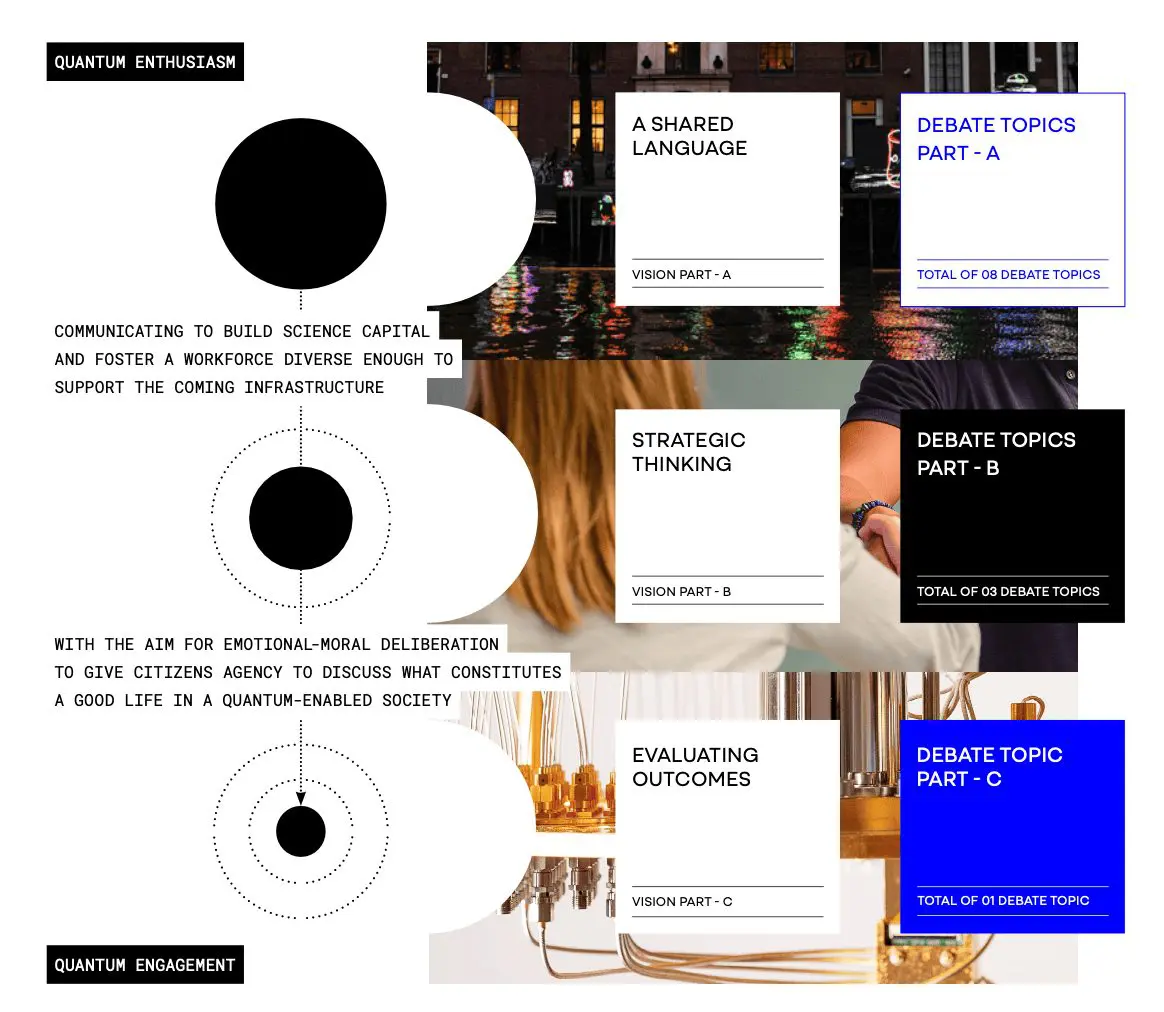
The Centre for Quantum and Society is challenging conventional approaches to science communication, arguing that simply providing more information isn’t enough to build public trust in rapidly developing quantum technologies. Led by Dr.ir Julia Cramer, head of the Quantum and Society group, a collaborative paper, “From Quantum Enthusiasm to Quantum Engagement,” questions why quantum communication is happening, not just what is being communicated. The authors advocate for a move away from the traditional “deficit model,” which assumes skepticism stems from a lack of knowledge, towards an evidence-based and participatory approach. “If we believe quantum technologies have the potential to transform encryption, influence geopolitics and revolutionize medicine, then we also have a responsibility to engage society while the technology is still shapeable,” they write, framing this as a step towards priming societal readiness and giving it the same rigor as technological readiness.
Evolving Communication Beyond Awareness for Quantum Science & Technology
Quantum science and technology communication is undergoing a critical reassessment, shifting focus from simply generating excitement to fostering genuine public engagement and trust. This evolution is outlined in a new vision paper published by the Centre for Quantum and Society (CQS) in collaboration with QDNL and Leiden University. The authors challenge the traditional methods of science communication, which incorrectly assumes public skepticism is solely due to a lack of information, advocating instead for evidence-based and participatory methods. Research indicates that increased scientific literacy alone does not guarantee public trust or support; instead, communication must enable authentic dialogue.
Mayra van Houts, Head of Strategy at QDNL, emphasized the need for evolving language as quantum technologies integrate into everyday solutions, stating, “As quantum technologies become part of real-world solutions, the language we use to communicate about quantum and its use cases should evolve in parallel.” This initiative, framed by Diederick Croese, director of the Centre for Quantum and Society, prioritizes societal readiness with the same rigor as technological readiness. The paper proposes three core approaches: establishing a shared language, developing communication that moves beyond technical jargon towards a model based on trust and inquiry, employing strategic communication tailored to diverse audiences, and rigorously evaluating outcomes beyond mere knowledge acquisition, measuring changes in trust, attitudes, and a sense of agency.
If we believe quantum technologies have the potential to transform encryption, influence geopolitics and revolutionise medicine, then we also have a responsibility to engage society while the technology is still shapeable.
The Authors
This inquiry stems from a growing recognition that increased scientific literacy, while valuable, does not automatically translate into public trust or support for emerging technologies. The paper proposes three core approaches to improve public engagement, beginning with a shared language, developing communication that moves beyond technical jargon towards a model based on trust, agency and shared inquiry, enabling more people to participate in democratic discussions. The vision paper concludes that effective communication is not merely a supplementary activity, but an essential component of responsible innovation, as vital to the future of quantum technologies as the scientific and technological advances themselves.
As quantum technologies become part of real-world solutions, the language we use to communicate about quantum and its use cases should evolve in parallel. Communicating the close connection between quantum innovation and its societal impact makes it more accessible to a broad audience.
Mayra van Houts, Head of Strategy at QDNL




See today’s quantum computing news on Quantum Zeitgeist for the latest breakthroughs in qubits, hardware, algorithms, and industry deals.