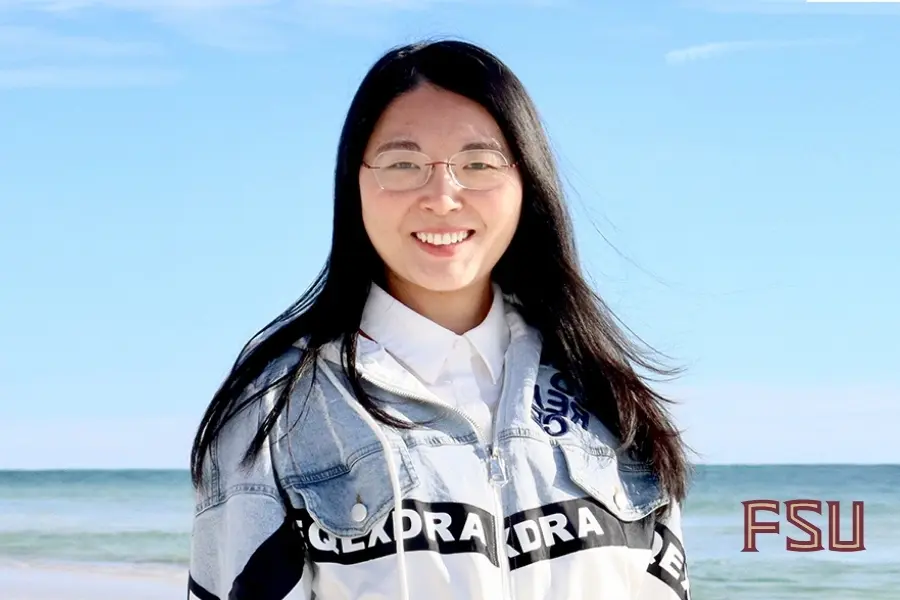
Assistant Professor Xiaonan Zhang of Florida State University is a recipient of a 2026 National Science Foundation CAREER Award, the agency’s most significant honor for early career faculty. The award provides five years of funding to support Zhang’s research into how wireless networks can enable devices to collaborate on advanced artificial intelligence applications without relying on cloud computing.
“Receiving this was a reminder that persistence matters and good ideas often take time to develop,” said Zhang, who earned her doctorate from Clemson University in 2020 before joining FSU. This research aims to make AI technologies more accessible in areas with limited internet connectivity.
CAREER Award Supports Collaborative AI Without Cloud Dependence
Assistant Professor Xiaonan Zhang’s receipt of the National Science Foundation CAREER Award signifies a shift in how artificial intelligence systems will operate, prioritizing collaborative computing over reliance on distant cloud infrastructure. The five-year funding period will allow Zhang to investigate wireless networks as active participants in AI processing, not merely data conduits.
This approach aims to distribute computational load across connected devices, enhancing both reliability and efficiency, particularly in environments with limited internet access. Zhang’s work directly addresses a growing need for resilient AI applications in critical sectors like healthcare and emergency response; for example, a paramedic’s tablet could rapidly analyze patient data with the assistance of nearby devices sharing processing power.
While cloud computing currently handles many of these tasks, Zhang argues that dependence on remote data centers introduces unacceptable delays and vulnerabilities. “My goal is to rethink the role of wireless networks in the age of AI,” she said, envisioning networks that actively contribute to intelligent decision-making. Her research, beginning in 2026, focuses on coordinating computation, resource sharing, and adaptation to changing conditions within these networks.
The significance of Zhang’s vision extends beyond technical innovation; the CAREER Award recognizes her ability to integrate multiple disciplines. Weikuan Yu, chair of Science, explained, “Rather than viewing wireless networks solely as a way to transmit data between devices, her research explores how devices can work together and share resources to make AI systems more efficient, reliable, and resilient.” Zhang stated that earning a CAREER Award after years of proposal writing, revision, and resubmission made the recognition especially meaningful, both personally and professionally, acknowledging the persistence required to secure the funding. The award supports educational initiatives, including new courses and research opportunities designed to emphasize the practical aspects of AI deployment.
Zhang intends to highlight that effective AI requires not only intelligent algorithms but also efficient execution across diverse devices and networks. “As AI becomes increasingly incorporated into the physical world, scientists need to design communication, computing, and intelligence together so AI can operate more efficiently, reliably, and securely across connected devices instead of relying on distant cloud data centers,” she said, outlining a future where AI is truly embedded in the fabric of everyday life.
My goal is to rethink the role of wireless networks in the age of AI.
Xiaonan Zhang, Assistant Professor of Computer Science at Florida State University



See today’s quantum computing news on Quantum Zeitgeist for the latest breakthroughs in qubits, hardware, algorithms, and industry deals.