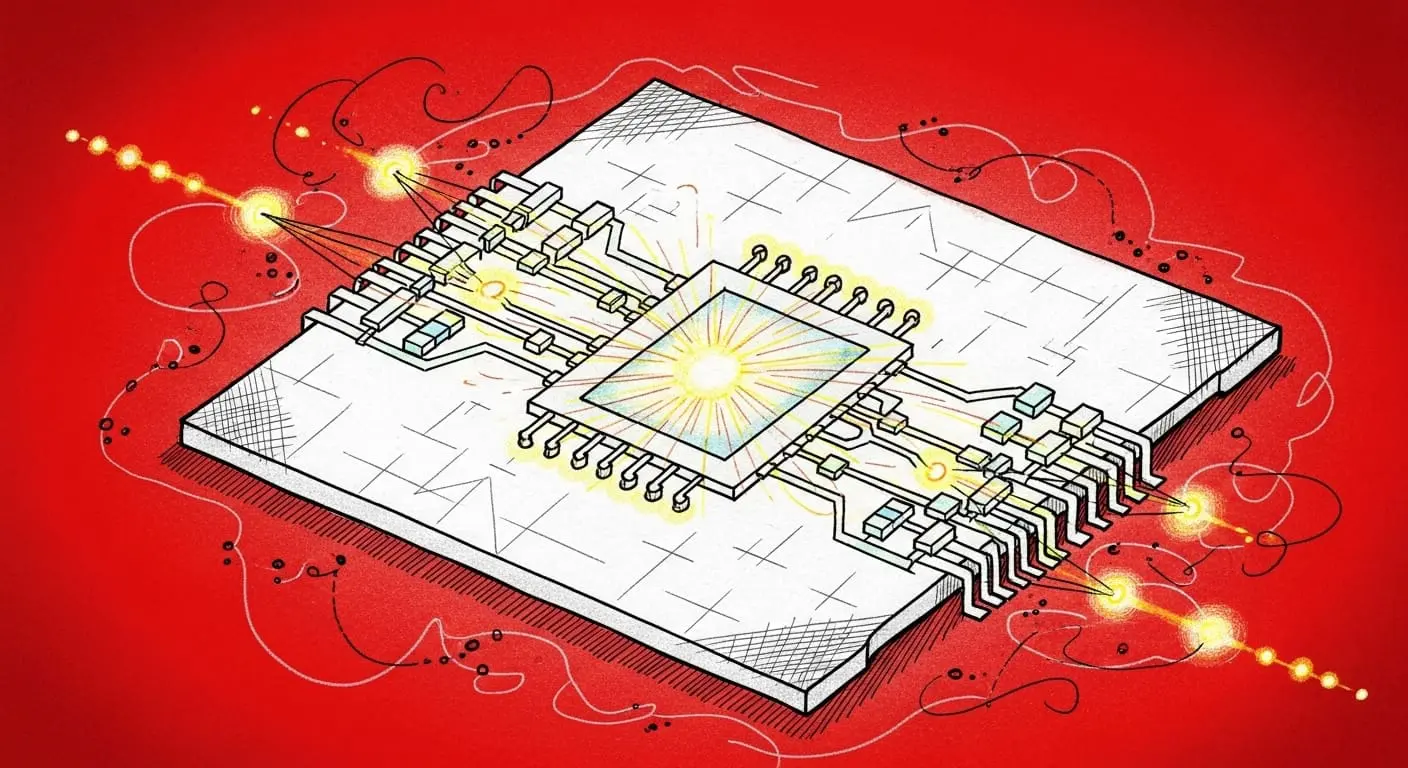
Fan Meng and colleagues from Beihang University have demonstrated high-gain transfer of vortex light through systems lacking symmetry, utilizing both forward and backward three-wave mixing processes. Their work reveals distinct behaviors between these processes; the forward method exhibits oscillating transmission while modulating the light’s spatial profile, whereas the backward method provides stable transmission with improved fidelity. Under Autler-Townes splitting conditions, the researchers found probe field detuning had a negligible influence on the gain in both schemes, suggesting a robust amplification method. The study also establishes that optical depth affects the speed at which maximum gain is achieved, leaving the peak gain value constant, and extends previous research in the field.
Vortex Beam Propagation via Forward & Backward Three-Wave Mixing
Their investigation into symmetry-broken three-level systems reveals that while both forward and backward three-wave mixing effectively transfer vortex light, the manner in which they do so differs significantly. The forward process exhibits a dynamic characteristic, displaying periodic oscillatory transmission that actively modulates the spatial profile of the resulting signal. This contrasts sharply with the stability observed in the backward three-wave mixing process, which consistently yields a higher-gain, more faithful signal field. The researchers discovered that the algebraic relationships governing the topological charges associated with the vortex beams remain consistent across both forward and backward three-wave mixing schemes, indicating a fundamental symmetry in the underlying physics despite the differing propagation dynamics. Further analysis revealed a nuanced relationship between optical depth and amplification efficiency.
While optical depth does influence how quickly the gain reaches its maximum value, it does not alter the ultimate peak gain attainable. The authors report that “optical depth influences only the rate at which the gain approaches its maximum, while the peak value remains unchanged,” implying that increasing optical depth beyond a certain point will not yield further improvements in signal strength. These results expand upon previous work in the field and may offer a viable pathway for advancements in quantum communication, quantum computation, and the generation of high-gain, high-fidelity vortex light.
The research team further explored the impact of Autler-Townes splitting on these amplification schemes, discovering a surprising robustness. This finding simplifies the practical implementation of these techniques, as precise frequency tuning is less critical than previously assumed. The implications extend to applications requiring stable, high-gain signal processing, such as quantum communication and computation.
👉 More information
🗞 Propagation dynamics of high-gain vortex beams in symmetry-broken media via forward and backward three-wave mixing
✍️ Fan Meng, Hao Zhu, Xin-Yao Huang and Guo-Feng Zhang
🧠 ArXiv: https://arxiv.org/abs/2607.19884

See today’s quantum computing news on Quantum Zeitgeist for the latest breakthroughs in qubits, hardware, algorithms, and industry deals.