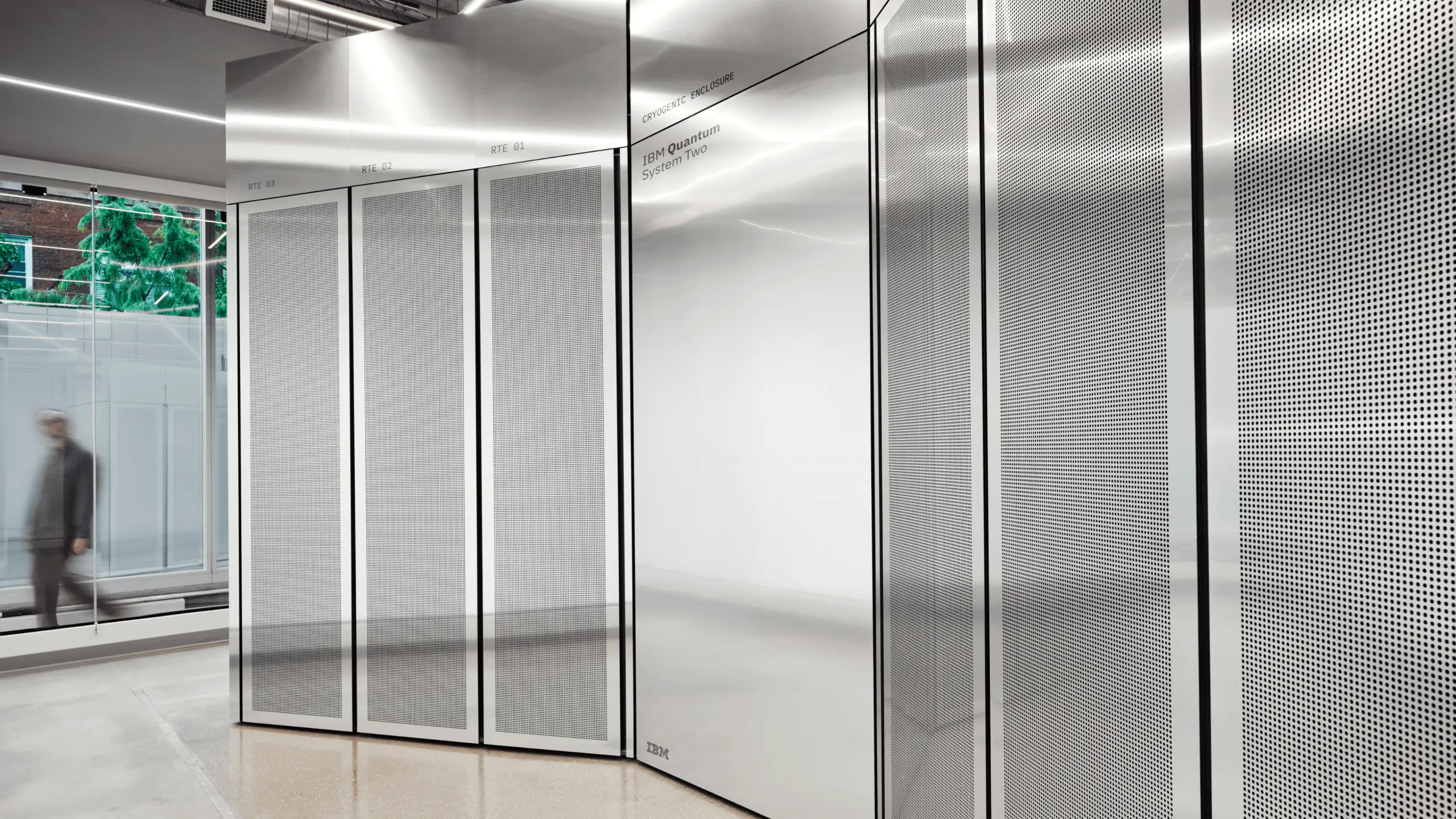
Illinois is investing $500 million to repurpose a historic U.S. Steel South Works plant site on Chicago’s lakefront as the Illinois Quantum and Microelectronics Park (IQMP). The new campus will house an IBM Quantum System Two, featuring an IBM Quantum Nighthawk r2 processor, initially operating at the University of Chicago before relocating to the IQMP.
Harley T. Johnson, CEO of the IQMP, envisions the computer’s prominent location inspiring a new generation; “It’s probably the most publicly visible quantum computer in the world,” he said, noting the potential for students to pass “a real quantum computer” on their way to school.
$500 Million Investment Launches Illinois Quantum Campus on Lakefront
The historic U.S. This repurposing of a once-industrial location signals a deliberate strategy to anchor a burgeoning technological field within an established urban environment, offering a unique setting for quantum research and development. The IQMP is envisioned as a collaborative space, drawing on the strengths of multiple institutions to support innovation in quantum computing and microelectronics.

The park’s location, Johnson believes, will have a significant impact on future generations, stating, “Imagine getting to say, ‘My daughter goes to school every day and passes a real quantum computer.’ That’s mind blowing.” The initial phase of this development includes the relocation of an IBM Quantum System Two, currently operating at Hyde Park Labs, to the IQMP campus.
The physical presence of this advanced computing system within the park, according to Johnson, demonstrates the significance of what is being built. He explained that this presence “shows the gravitas of what we’re building here. That means something to the people of this city.” The integration of quantum computing with high-performance computing is also underway, with researchers and the National Center for Supercomputing Applications (NCSA) successfully integrating NCSA’s DeltaAI supercomputer with an IBM Quantum system.
This integration resulted in a demonstration within six months of the expanded collaboration’s announcement; the team computed Cu₃C₆O₆, a strongly correlated kagome-lattice metal, using the combined DeltaAI and IBM Quantum systems. Beyond fundamental research, the state is also exploring practical applications of quantum computing, with EPRI collaborating with IBM to investigate how quantum optimization algorithms could improve the efficiency of power grids. The state’s commitment to quantum computing builds upon a strong foundation of engineering and scientific talent in the Midwest, a region that historically supplied much of the workforce for Silicon Valley’s early growth.
IBM Quantum System Two Anchors Chicago’s Quantum Computing Ecosystem
The collaborative effort driving this initiative extends beyond the University of Illinois; organizations including the Illinois Department of Commerce and Economic Opportunity, P33, and the Illinois Economic Development Corporation have collectively laid the groundwork for this emerging quantum hub. Mason, a researcher instrumental in building Chicago’s quantum ecosystem, noted that the arrival of the IBM Quantum System Two will accelerate existing work and amplify enthusiasm for quantum computing already present in the area.
IBM’s sustained commitment to the IQMP project is a critical factor in its development, extending beyond mere financial investment. He envisions a future where quantum-focused businesses, both startups and established enterprises, establish operations in the region, driving economic growth throughout Illinois and the broader Midwest. The IQMP is designed to retain local talent and draw in experts from around the globe, capitalizing on the existing concentration of quantum computing minds already present in downtown Chicago.
2026 Quantum Advantage Demonstration with 70 Logical Qubits
The team successfully completed a calculation in approximately 15 minutes using 70 logical qubits on an IBM quantum system, a feat exceeding the capabilities of current classical simulation methods. This demonstration included a built-in mechanism for verifying the results, a critical step in establishing confidence in quantum computations. This pairing brought quantum-centric supercomputing capabilities to Illinois, representing an advancement in the convergence of quantum and high-performance computing.
Quantum-HPC Convergence Accelerates Materials Science Research
The integration of high-performance computing and quantum systems in Illinois recently enabled the computation of Cu₃C₆O₆, a strongly correlated kagome-lattice metal, demonstrating a significant step toward applying quantum resources to complex materials modeling. This pairing of classical and quantum resources is intended to extend the reach of both, tackling problems previously intractable for either system alone. Researchers are already seeing increased interest in quantum computing applications across multiple disciplines, beyond the Pritzker School of Engineering’s established quantum information science and engineering expertise.
Vice President of Research Nadya Mason noted inquiries from professors and administrators in physics, other engineering fields and even medicine, all exploring how quantum computing could benefit their research areas. This broadening engagement suggests a potential for cross-disciplinary innovation fueled by the accessibility of quantum hardware. A new method called LASSQD, developed by researchers and IBM, uses quantum-centric supercomputing to address limitations in classical chemistry calculations.
Joanna Wang, a PhD candidate at the Pritzker School of Molecular Engineering was first author on a paper detailing how LASSQD replaces traditional fragment solvers with sample-based quantum diagonalization, a powerful approach for solving chemistry problems. By swapping in this quantum method, the team successfully modeled a 26-electron, 24-orbital fragment of an iron porphyrin complex, a system exceeding the capacity of conventional exact diagonalization calculations.
The accuracy of classical approximations in molecular modeling is often variable, hindering progress in fields like manufacturing, materials science, and medicine. The LASSQD method, resembling LASSCF in its overall structure, sends calculations for molecular fragments to IBM quantum hardware, recombines the results, and iteratively refines the solution. IBM Director of Research Jay Gambetta, and Director of Quantum Algorithm Centers Hanhee Paik stood with Illinois leaders to unveil the quantum computer at a ceremony on November 6.



See today’s quantum computing news on Quantum Zeitgeist for the latest breakthroughs in qubits, hardware, algorithms, and industry deals.