
CodeCoin launched the world’s first licensed digital payment instrument enabled for the Visa network during the International Monetary Fund Annual Meetings in Bangkok, directly addressing discussions on reducing cross-border settlement frictions, the company says. The company co-hosted a side event with the Reinventing Bretton Woods Committee, BRICS Thailand and the Centre for Business Technology & Innovation of The Hong Kong Polytechnic University, signaling broad support for the new card.
“Real payment services rest on a foundation of trust built on multi-jurisdiction licensing, fund segregation, and auditability,” said Benny Wong, Founder and CEO of CodeCoin, as the firm aims to connect global markets with an auditable and spendable payment path.
CodeCoin Launches First Quantum-Encrypted Licensed Digital Card
This launch positions the company within a major international financial discussion centered on the future of money and the potential for interoperable payment systems. The card allows users to fund and settle transactions in real-time using CodeCoin’s CUSD, a compliant digital payment instrument, and smoothly integrates with Apple Pay and Google Pay for widespread use at Visa-accepting merchants, according to the company. CodeCoin deliberately sought to influence the conversation surrounding multi-rail interoperability and trust infrastructure, as highlighted during the IMF meetings.
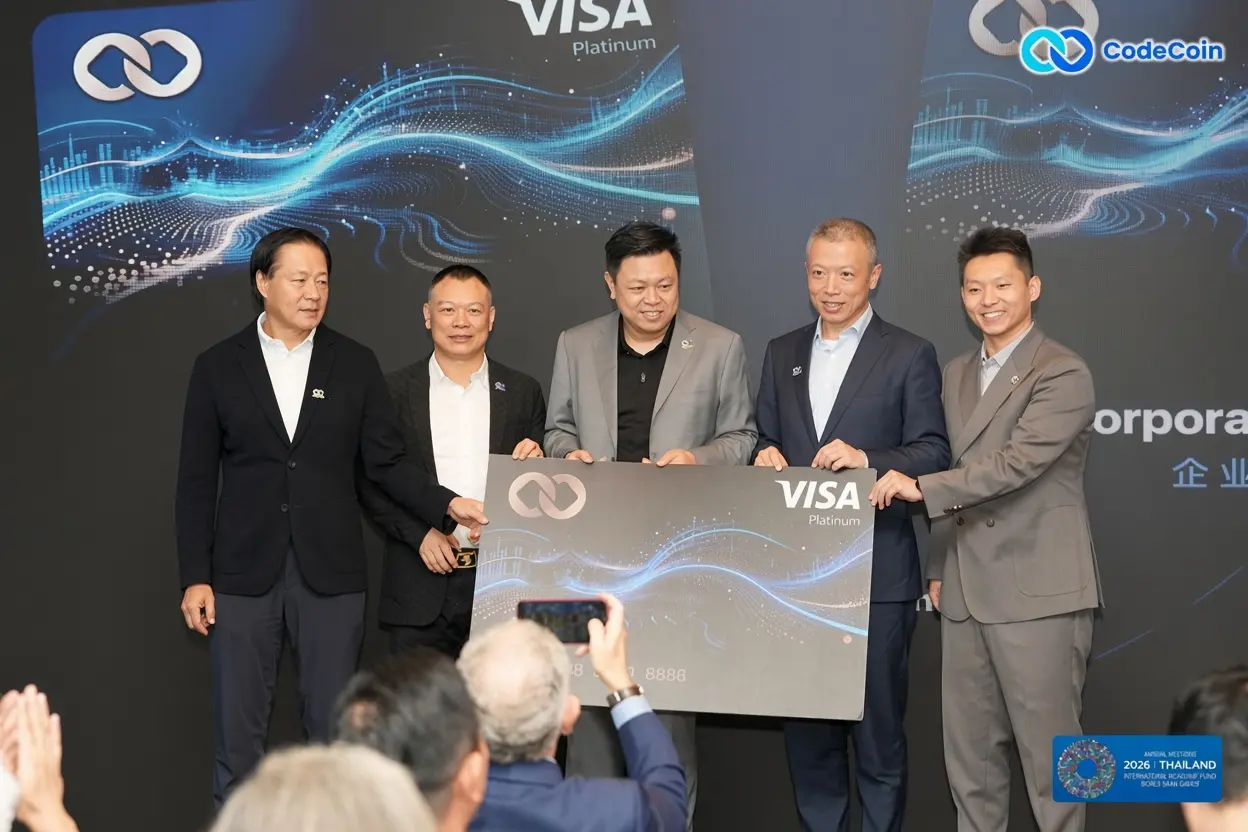
Global transaction volume for compliant digital payment instruments exceeds US$72.5 trillion. CodeCoin is capitalizing on a growing demand fueled by over 1.3 billion unbanked individuals and the need for smarter payment solutions. The newly launched card addresses a critical opportunity for licensed digital payment instruments to become a core driver of digital finance applications.
CodeCoin’s technical architecture incorporates quantum encryption, a long-term security measure designed to defend against future threats to digital payment asset storage, settlement and cross-border transmission. This proactive approach to security reflects the emphasis on resilience, buffers, and fraud prevention that permeated this year’s IMF Annual Meetings. Beyond the card itself, CodeCoin unveiled a product technology integration partnership with Dune Fintech, allowing partners to quickly integrate digital payment assets into global payment use cases supported by the Visa network.
The company also signed Memoranda of Understanding with Tiger Brokers and Dragon Rise Group to expand cooperation on compliant clearing of digital payment assets, digital asset-backed lending and the convergence of traditional finance with the digital payment ecosystem. This launch signifies a new phase in the implementation of a pathway combining licensed digital payment instruments, compliant clearing and global payment capability through the Visa network.
CodeCoin intends to continue participating in industry discussions and building bridges to enable digital payments to serve the real economy and promote inclusive finance, the firm reports. Cardholders benefit from a package including a gift worth up to US$1,000, up to 8% cashback on prepaid spending, and monthly lucky draws, incentivizing adoption of the new payment method. This launch offers a tangible model for the global digital payment ecosystem and financial inclusion, according to the company.
Smart payment applications require programmable, real-time settleable, and auditable monetary rails – licensed digital payment instruments combined with real-time Visa settlement provide the underlying payment infrastructure for smart payment scenarios.




See today’s quantum computing news on Quantum Zeitgeist for the latest breakthroughs in qubits, hardware, algorithms, and industry deals.