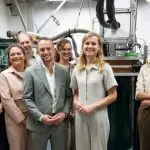
Seventeen professionals from sixteen different Tennessee employers have completed a twelve-week program designed to bring quantum technologies to a broader range of industries. The Quantum Ready Pre-Apprenticeship, created by the Chattanooga Quantum Collaborative, upskills existing employees in areas like healthcare, financial services and advanced manufacturing. “Quantum won’t replace every system overnight, but exploring where it complements classical technology can provide businesses an early competitive edge,” said Charlie Brock, CEO of the Chattanooga Quantum Collaborative. Participants return to their companies equipped to assess potential quantum applications and address challenges beyond the reach of traditional computing.
Week Quantum Ready Program Upskills Tennessee’s Existing Workforce
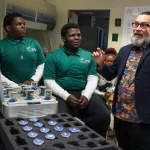
Southern Champion Tray intends to encourage the development of its team members and adopt technologies that benefit both employees and customers, as evidenced by Hudson Quatro’s participation in the recently completed Quantum Ready Pre-Apprenticeship. Quatro returns to the company with a foundational understanding of quantum computing, networking and sensing, allowing Southern Champion Tray to assess potential applications for its business, the company says.
This broad industry representation, spanning healthcare, financial services, logistics, energy and advanced manufacturing, highlights a growing, state-wide interest in quantum technologies beyond traditional tech sectors. The program’s capstone project required participants to identify potential quantum use cases within their own organizations, resulting in practical assessments of the technology’s applicability.
Jason Barks, Lead Automation Architect at Integrity Business Automation, focused his capstone on optimizing non-emergency medical transportation scheduling, recognizing the limitations of current methods as complexity increases. “Routing patient trips is a hard scheduling problem, and a late ride can mean a missed dialysis appointment,” Barks said. “Every trip or vehicle you add multiplies the number of possible schedules, so I identified where quantum optimization could come in once current methods reach their limits.” This focus on complementing existing classical computing infrastructure, rather than outright replacement, reflects a pragmatic approach to near-term quantum adoption.
The initiative builds upon a developing quantum ecosystem in the region, including EPB’s quantum network and computer, research at the University of Tennessee at Chattanooga and Oak Ridge National Laboratory, and the Vanderbilt/EPB Institute for Quantum Innovation. “Research opens the door to new possibilities, and industry adoption carries that work into economic impact,” Sartipi said.
“That is why industry engagement and commercialization are core parts of the NSF grant UTC is leading, and we’re proud to help prepare professionals who can bring quantum knowledge and capabilities into Tennessee companies.” The program was supported by a National Science Foundation planning grant awarded to the University of Tennessee at Chattanooga, with the Chattanooga Quantum Collaborative managing workforce and industry engagement. Graduates include professionals from organizations such as BlueCross BlueShield of Tennessee, Covenant Logistics, TVA and the U.S. Army Special Forces, demonstrating the broad appeal of quantum literacy across diverse fields.
The program used the BuildWithin platform for asynchronous coursework and included presentations from industry leaders at companies like qBraid, Davidson Technologies and Terra Quantum, providing participants with both theoretical knowledge and practical insights. The capstone projects, like Barks’ work on medical transportation, allowed participants to apply their learning to real-world challenges, solidifying their understanding and identifying potential areas for future quantum implementation within their respective organizations.
Southern Champion Tray is intentional about stewarding the continued development of our team members and about adopting technologies that benefit our employees and customers. Having Hudson (Quatro) participate in this program supports both.
Greg Lanter, IT Director at Southern Champion Tray


See today’s quantum computing news on Quantum Zeitgeist for the latest breakthroughs in qubits, hardware, algorithms, and industry deals.