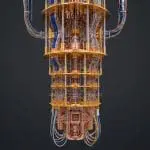
Until now, optimising quantum computers has relied on methods limited by heavy compilation requirements, specific domain knowledge, or assumptions about long-term fault tolerance. Fujitsu Research of India has achieved a breakthrough with AutoQuREO, an automated framework for full-stack Quantum Resource Estimation and Optimisation.
This new platform acts as a ‘digital twin’ for quantum computing stacks, allowing researchers to explore complex design spaces and discover previously intractable resource trade-offs, as detailed in a recent publication⁰.³. Fujitsu Research of India has developed AutoQuREO, a new framework designed to optimise the resources required for building and operating quantum computers.
This platform functions as a ‘digital twin’, a virtual replica of a quantum computing system, enabling detailed exploration of different designs and configurations. By modelling the entire quantum computing stack, AutoQuREO identifies previously hidden efficiencies relating to resources like qubits and computational depth. As quantum computers move beyond initial demonstrations towards practical applications, efficiently allocating resources like qubits and computational steps becomes increasingly vital.
This process, known as quantum resource estimation, is akin to a cost-benefit analysis for building the computer itself, figuring out how much of each component is needed to run a specific program. Existing methods often require extensive compilation or rely on specialised knowledge, limiting their usefulness. This allows the team to explore complex design options and identify previously hidden efficiencies, employing a technique called surrogate modelling, where a simplified ‘stand-in’ model quickly predicts performance without full simulations.
AutoQuREO accelerates exploration of quantum computing stack designs ten-fold
AutoQuREO achieves a 10x reduction in the computational cost of exploring design spaces previously considered intractable, improving upon prior quantum resource estimation methods. This breakthrough enables systematic analysis of quantum computing stacks, the combined hardware and software, impossible due to exponential growth in complexity as systems scale. Existing tools struggled with even moderately sized problems, but this framework functions as a ‘digital twin’, a virtual replica of a quantum computer, allowing rapid prototyping and evaluation of different configurations without building physical hardware.
A novel surrogate modelling pipeline predicts resource usage by combining algorithmic profiling and linking measurements to cost models with neuro-symbolic learning. The framework also incorporates a meta-optimisation process to automatically select the best surrogate model for a given scenario, ensuring scientifically informative estimates without manual intervention. Detailed investigation of complete quantum computing stacks, encompassing both hardware and software, is now possible, overcoming previous limitations caused by exponential increases in complexity as systems grow larger.
Algorithmic profiling, analysing how algorithms use resources, and neuro-symbolic learning were combined to build predictive models, ensuring both speed and analytical interpretability. This allowed researchers to understand why a particular design was efficient, not just that it was. Unlike existing tools that often rely on computationally intensive compilation or require expert-defined symbolic annotations, this approach supports exploration of design spaces across NISQ, EFTQC, and FTQC regimes.
Neuro-symbolic surrogates accelerate quantum resource estimation and optimisation
Surrogate modelling underpins the development of AutoQuREO, functioning much like a wind tunnel model used in aircraft design. Instead of running exhaustive, computationally expensive simulations of the entire quantum computing stack for every design iteration, the technique created simplified ‘stand-in’ models. These surrogates rapidly predict resource usage, such as qubit count or circuit depth, based on a limited set of initial, full simulations, sharply accelerating the exploration of complex design spaces.
Automated quantum resource estimation streamlines development despite limited current validation
Estimating resource demands is now important as quantum computers move beyond isolated experiments towards practical applications. Current quantum resource estimation methods are often hampered by a reliance on detailed prior knowledge or are geared towards distant, fault-tolerant machines, restricting their usefulness today. The team acknowledges that their framework currently relies on a limited set of “representative” case studies, and broader validation is needed to confirm whether AutoQuREO’s benefits extend consistently across diverse quantum algorithms and emerging hardware designs.
Vital assessment of its performance across a wider range of quantum algorithms and future hardware is ongoing. Sensibly, the researchers acknowledge that AutoQuREO’s validation currently rests on a limited number of examples. This automated framework represents a strong step forward by integrating resource estimation directly into the development process, allowing exploration of complex designs and identification of resource trade-offs previously beyond reach, accelerating progress towards practical quantum computers.
AutoQuREO establishes a new capability for systematically evaluating quantum computer designs. Combining algorithmic analysis with machine learning to predict resource needs, such as the number of qubits required or the length of a quantum circuit, accelerates the design process. By enabling exploration of previously inaccessible trade-offs between different design choices, this work moves beyond theoretical possibilities towards practical implementation of quantum technologies.
AutoQuREO offers a new method for systematically evaluating quantum computer designs. The framework combines algorithmic analysis with machine learning to predict resource requirements, such as qubit count or circuit depth, from a limited number of initial simulations. The researchers are currently validating the framework’s performance across a wider range of quantum algorithms and future hardware designs.
👉 More information
🗞 AutoQuREO: A Framework for Automated Quantum Resource Estimation and Optimization
✍️ Harshkumar Oza, Aritra Sarkar, Syed Naqi Abbas, Rahul Bhowmick, Aryan Prakash, Prateek P Kulkarni and Krishna Kumar Sabapathy
🧠 ArXiv: https://arxiv.org/abs/2608.12936



See today’s quantum computing news on Quantum Zeitgeist for the latest breakthroughs in qubits, hardware, algorithms, and industry deals.