Yonsei University will become the second research institution globally to build a Nighthawk quantum computer this November, following IBM Miami. The new processor is projected to reduce calculation times for complex problems, particularly in drug development and rare-disease research, from 48 years to just days. Jung Jae-ho, director of the Yonsei Quantum Initiative, says the university’s primary focus is maximizing the real-world application of quantum computers, as it simultaneously launches “Q-Bridge” to broaden industry access to the technology.
Nighthawk Processor to Boost Yonsei’s Quantum Computation
Yonsei University is expanding its quantum computing capabilities with the installation of a Nighthawk processor this November, becoming only the second research institution globally to house such a system after IBM Miami. This addition promises a roughly 40% increase in computational power compared to the university’s existing Eagle processor, a leap enabled by a redesigned qubit connection structure.
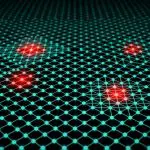
Unlike conventional computers processing bits sequentially, quantum computers utilize qubits in a superposition state, allowing for parallel computation; however, maintaining qubit stability and minimizing errors during longer calculations remains a key challenge. The Nighthawk processor addresses this challenge through improved qubit interconnectivity, employing a lattice-shaped structure that directly links each qubit to four neighbors, reducing the need for error-prone swap gates and enhancing computational efficiency.
Yonsei’s ambitions extend beyond acquiring advanced hardware; the university will simultaneously launch “Q-Bridge,” a platform designed to lower the barrier for industry to utilize quantum computing resources. Jung Jae-ho stressed that the key is to address demand from industrial sites and actively develop algorithms that will advance research, while accumulating use cases.
A collaborative research project with the University of Cambridge is also planned, establishing branch offices on each campus to focus on quantum-based drug research and stem cell/AI applications. The initiative aims to create a “Q-Library” of industry-specific algorithms and use cases, fostering a cycle of practical application and expanded expertise to realize the potential of quantum computing to solve pressing global challenges.
IBM has forecast that quantum computing will reach a ‘technological inflection point’ once large-scale, error-corrected quantum systems are built in 2029.
Q-Bridge Platform Lowers Quantum Computing Access for Industry
This expansion of quantum computing infrastructure is coupled with the launch of “Q-Bridge,” a new platform designed to broaden industry access to this complex technology. The initiative addresses a critical need for practical application beyond research settings, aiming to translate quantum capabilities into tangible solutions for industrial challenges. Central to Yonsei’s strategy is a focus on addressing demand originating from various industrial sectors and proactively developing algorithms tailored to advance research efforts. Q-Bridge functions as a quantum-classical fusion platform, integrating data, algorithms, and computing resources to facilitate problem-solving for industry partners.
Recognizing that many companies lack the internal expertise to navigate quantum computing, the platform aims to lower the research barrier by providing tailored algorithms and computational resources. The director explained that the idea is to lower the research barrier and first encourage companies to bring their industry-specific problems to the platform. The accumulated industry-specific use cases and algorithms generated through Q-Bridge will be compiled into a “Q-Library,” fostering continuous improvement and expanding the practical application of quantum computing.
To identify the biological mechanism of Leigh syndrome, using Fugaku alone would require running the computer nonstop for 48 years.
Hybrid Quantum-Supercomputer Research Accelerates Rare-Disease Solutions
This addition isn’t simply about acquiring hardware; the university is strategically integrating the Nighthawk with existing supercomputing infrastructure to tackle previously intractable problems in areas like rare disease research. A key focus is Leigh syndrome, a debilitating genetic disorder, where researchers are already collaborating with RIKEN in Japan, utilizing their “Fugaku” supercomputer. The power of this hybrid approach stems from the Nighthawk’s improved qubit connectivity.
The Nighthawk’s lattice structure, connecting each qubit to four neighbors, minimizes these errors and boosts computational efficiency by approximately 40 percent at the same error level. Jung Jae-ho added that, “Just as a string of beads becomes a treasure only when threaded, a quantum computer becomes a tool for solving humanity’s difficult problems only when it is actually used a great deal.”
Nighthawk has a lattice-shaped connection structure in which a single qubit is directly connected to four neighboring qubits, reducing unnecessary swap gates.



See today’s quantum computing news on Quantum Zeitgeist for the latest breakthroughs in qubits, hardware, algorithms, and industry deals.