
Recordings of eye movements from hundreds of participants are revealing a surprising disconnect between how easily we anticipate words while reading and the actual difficulty of understanding sentence structure. Researchers led by William Timkey of Dell, University of Illinois at Urbana-Champaign found that while language models accurately predict upcoming words, they fail to explain the increased effort, shown through backward eye movements and rereading, needed to integrate those words into context.
“Their next-word probability estimates explain the early stages of reading, but not the difficulty of integrating a word into the context,” the study reports. This dissociation highlights the challenges in building comprehensive cognitive models of human reading.
Language Model Surprisal Explains Early Reading Stages
Recordings of eye movements from n = 368 participants revealed a critical distinction between how humans initially process language and the challenges of fully integrating meaning, a finding published August 7, 2026, after acceptance on June 26, 2026. Researchers investigated the role of prediction in reading comprehension, expanding beyond smaller studies to examine a large dataset of syntactic ambiguity and its impact on eye movements.
The study focused on syntactically challenging sentences, such as “The hiker found the dog,” which presents a temporary ambiguity between two interpretations before the sentence’s full meaning becomes clear. Researchers hypothesized that the difficulty readers experience stems from the effort required to update their understanding of the sentence’s structure as new information arrives, an idea that aligns with surprisal theory, which posits that processing difficulty is directly related to the unpredictability of a word within its context.
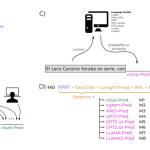
To test this, the team utilized 409 different types of surprisal estimates generated by contemporary language models, assessing how well these models could predict human reading patterns. The results showed a clear dissociation; early effects of resolving syntactic ambiguity were well-predicted by language model surprisal, but a significant additional cost remained, manifesting as increased rereading not explained by the models. This additional cost suggests that surprisal can effectively capture routine structure-building processes, but struggles to account for the effort needed to detect or correct errors in that structure, as the authors report.
The study’s scale, with data from hundreds of participants, strengthens the validity of the conclusions and provides a robust foundation for future research into the intricacies of language processing. This work underscores the challenges in building comprehensive models that accurately reflect the full spectrum of cognitive processes involved in reading and points toward the need for incorporating mechanisms that account for error detection and correction.
Syntactic Ambiguity Impacts Rereading and Processing Costs
This dissociation is particularly evident when readers encounter sentences like “The hiker found the dog…,” where initial predictions align with the more common interpretation, but subsequent context demands a shift in understanding. Researchers found a stark contrast between early and later stages of processing; however, the additional cost incurred during syntactic disambiguation, reflected in increased rereading, was not explained by these same models. This suggests that the effort required to revise initial interpretations and establish a coherent understanding represents a distinct cognitive process beyond simple prediction, as the study reports.
The acceptance of this research on June 26, 2026, followed by its publication on August 7, 2026, indicates a rigorous peer-review process, potentially reflecting the complexity and novelty of the findings. The team’s work builds upon decades of research demonstrating that sentence comprehension is a complex process, often marked by temporary ambiguity and the need for incremental adjustments to meaning; for example, the sentences “The dog found the hiker” and “The hiker found the dog” utilize the same words but convey different meanings due to syntactic structure.
Large-Scale Eye-Tracking Study Disentangles Prediction & Difficulty
The research, accepted on June 26, 2026, and published August 7, 2026, employed eye-tracking technology to monitor how individuals read syntactically complex sentences, probing the limits of current language models in replicating human cognitive processes. This large-scale approach addressed limitations of earlier studies hampered by smaller participant pools and less precise measurement techniques.
Contemporary language models were used to estimate next-word probability, providing a quantifiable measure of predictability. However, the findings revealed a crucial distinction: while these models accurately predicted the initial stages of reading, they failed to fully account for the increased rereading observed when readers encountered and resolved ambiguous sentence structures.


See today’s quantum computing news on Quantum Zeitgeist for the latest breakthroughs in qubits, hardware, algorithms, and industry deals.