Researchers are transforming inexpensive industrial diamond “dust” into advanced quantum sensors, a shift from relying on high-clarity gems for this technology. The team, a collaboration between CSIRO, the University of Melbourne, and Japan’s National Institute for Quantum Science and Technology (QST), is developing methods to create precision nanodiamonds capable of detecting signals at the scale of individual molecules. This capability promises advancements in areas like contaminant detection and disease biomarker identification, surpassing the limitations of conventional instruments. The project aims to develop a scalable, lower-cost pathway to quantum-grade diamond materials produced locally and to strengthen Australia’s capability in quantum technologies through vital international partnership.
Industrial Diamond Dust Transformed for Quantum Sensing
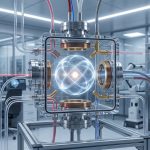
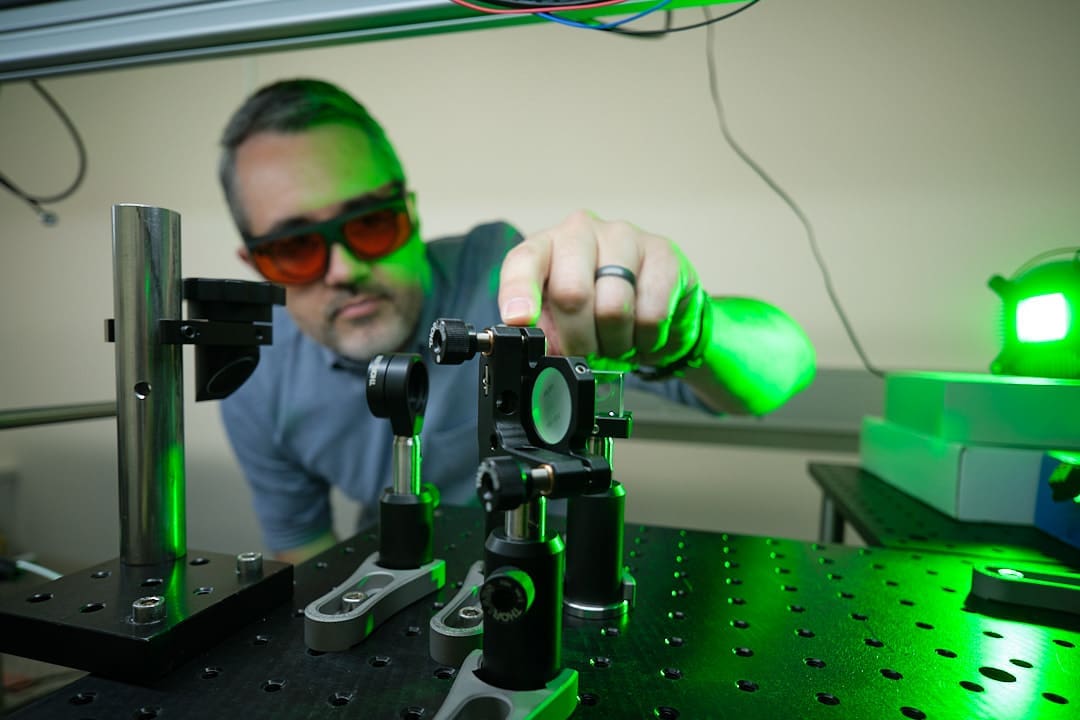
Industrial diamond “dust,” a byproduct of existing manufacturing, is now the foundation for a new generation of quantum sensors capable of detecting signals at the molecular level. This shift in sourcing materials represents a significant departure from the reliance on high-clarity, single-crystal diamonds traditionally used in quantum technologies. The team is focused on transforming these inexpensive particles into a process that promises to lower costs and increase accessibility. The core of this advancement lies in manipulating the diamond’s crystalline structure to create specific atomic-scale ‘defects’ known as nitrogen-vacancy (NV) centres. When green light illuminates these NV centres, they fluoresce red, and the brightness and behaviour of this fluorescent glow changes depending on the surrounding environment, allowing scientists to use them as nanoscale sensors. Creating effective NV centres, particularly near the diamond surface, is a complex undertaking, typically involving radiation and heating to form the necessary defects.
This technology is anticipated to accelerate innovation across multiple sectors, including medical diagnostics, environmental monitoring, and defence. NV-diamond sensors can detect the faint magnetic signals emitted by molecules, opening pathways for identifying chemicals in complex mixtures and enabling faster, more accessible biomarker detection. Previously, many diamond-based quantum systems relied on scarce and expensive single-crystal diamond materials, which were expensive and difficult to produce. The partnership with QST is crucial, as the Japanese institute hosts quantum beam facilities that are not available in Australia, providing essential tools for development and testing. Ultimately, the goal is to replicate this capability locally, bolstering Australia’s capability and securing its position in the emerging global quantum economy.
NV-diamond sensors can detect faint magnetic signals associated with molecules, creating new pathways for identifying chemicals in complex mixtures.
Nitrogen-Vacancy (NV) Centres Enable Nanoscale Detection
Researchers are no longer solely reliant on high-clarity gems; instead, they are sourcing diamond “dust”, tiny particles from inexpensive industrial processes, to create these advanced quantum sensors. This shift in material sourcing is driven by the need for scalability and cost reduction in quantum technology development. Central to this capability is the nitrogen-vacancy (NV) centre, a specific atomic-scale ‘defect’ within the diamond lattice where one carbon atom is replaced by a nitrogen atom and a neighbouring carbon atom is missing. The ultimate goal is to establish a complete, local production pathway for quantum-grade diamonds, reducing reliance on global supply chains and securing Australia’s capability in the emerging quantum economy.
QST Partnership Advances Australian Quantum Capabilities
This partnership is not merely about scientific advancement; it’s a strategic move to establish a capability in quantum technologies, addressing vulnerabilities in global supply chains and fostering regional innovation. Researchers are pioneering a process to transform inexpensive industrial diamond “dust” into precision nanodiamonds, a departure from the traditionally used, and costly, single-crystal diamonds. This shift in material sourcing is coupled with a focus on optimizing the creation of nitrogen-vacancy (NV) centres within the diamond lattice. The implications of this work reach across multiple sectors, from medical diagnostics and environmental monitoring to defence and future quantum computing systems. Researchers noted that many diamond-based quantum systems relied on scarce and expensive single-crystal diamond materials.
Quantum Diamonds Impact Medical, Environmental, and Defence Sectors
The potential of engineered diamonds extends far beyond established industrial uses; these materials are poised to significantly impact medical diagnostics, environmental monitoring, and national security applications. This sensitivity opens possibilities for faster, more accessible detection of biomarkers in biomedical diagnostics, potentially revolutionizing disease identification and treatment. The technology facilitates trace contaminant detection in environmental monitoring, enabling quicker responses to pollution and informed remediation strategies. In the realm of defence and national security, compact, room-temperature quantum sensors present opportunities for threat detection, resilient navigation systems independent of GPS, and deployable monitoring capabilities. NV-diamond sensors can detect faint magnetic signals associated with molecules, creating new avenues for chemical identification and bolstering security protocols, as explained by researchers. QST’s access to specialized quantum beam facilities, unavailable domestically, complements Australia’s strengths in nanomaterials processing and surface chemistry, strengthening Australia’s sovereign capability in quantum technologies.
See today’s quantum computing news on Quantum Zeitgeist for the latest breakthroughs in qubits, hardware, algorithms, and industry deals.