
Welcome to this week’s quantum technology digest. The past seven days brought developments across multiple facets of the field, from hardware improvements to software advances and strategic funding decisions. This collection showcases a continued push toward building practical, scalable quantum systems and preparing for a post-quantum world.
Several companies reported key technical achievements. Quantinuum demonstrated substantial gains in logical qubit performance, while Xanadu and Rigetti focused on improving chip fabrication and modular qubit design. Simultaneously, Microsoft and IQM are investing in software and error correction techniques to maximize existing and near-term hardware. Australia’s SQC secured significant funding, emphasizing the growing international competition in precision quantum manufacturing.
This week also highlighted the practical concerns surrounding quantum’s arrival. NIST proposed steps for transitioning to quantum-resistant security credentials, and reports surfaced detailing Google’s decision to prioritize development speed over substantial government funding. The deployment of Pasqal’s computer in Italy, integrated with a supercomputer, signals an increasing emphasis on hybrid classical-quantum approaches.
1. Quantinuum Demonstrates 800x Improvement in Logical Qubit Performance
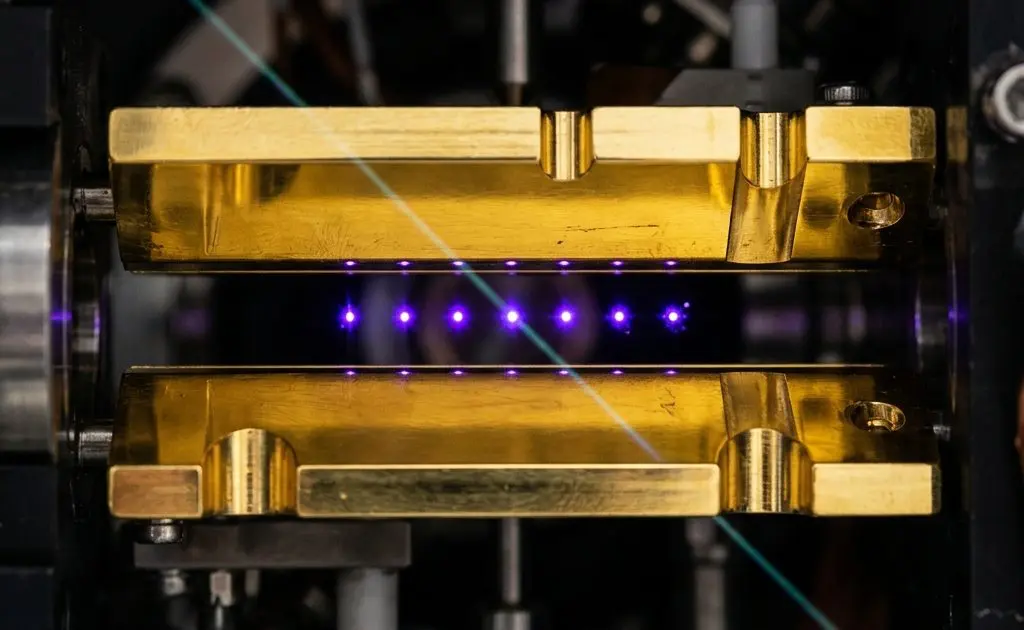
Quantinuum has demonstrated logical qubits that perform 800 times better than their physical counterparts, a result published in *Nature* in June 2026. This achievement utilized Quantinuum’s commercial hardware, differentiating their approach from research focused on prototype systems. The company also achieved logical qubit teleportation and significant error-correction milestones, supporting the development of customer-ready quantum systems with reduced resource needs. Recent computations using these logical qubits show lower error rates in materials science applications, squeezing 48 logical qubits from 98 physical qubits.
2. Microsoft Quantum Boosts Research in Fault-Tolerant Topological Computing

Microsoft Quantum is funding research across both hardware and software with its 2026 Quantum Pioneers Program. The program now includes a dedicated Software Track to support simultaneous development of both areas, essential for building a scalable quantum computer, according to Technical Fellows Matthias Troyer and Chetan Nayak. Microsoft is prioritizing topological quantum computing, an architecture designed for inherent error resilience, and seeks academic proposals focused on software foundations compatible with this approach. The company will select finalists based on technical merit and potential impact, without claiming ownership of submitted research.
3. NIST Proposes Phased Transition to Quantum-Resistant PIV Credentials

The National Institute of Standards and Technology is proposing a dual-stack model for personal identity verification (PIV) credentials to prepare for the advent of quantum computing. This approach allows existing PIV systems to function alongside new, quantum-resistant versions using the ML-DSA and ML-KEM algorithms. NIST’s plan prioritizes incremental deployment and backward compatibility, avoiding a disruptive overhaul of current infrastructure. The agency seeks feedback on draft standards SP Part 1, SP Part 2, and SP to refine implementation details.
4. Pasqal Launches 140-Qubit Quantum Computer in Italy, Integrated with Supercomputer
Pasqal has deployed a 140-qubit neutral-atom quantum computer, named SOL, at CINECA in Bologna, Italy. This marks Italy’s first quantum computer and integrates directly with the Leonardo supercomputer, a top-ranked high-performance computing system. The system uses open-source tools and aims to facilitate hybrid quantum-classical workflows for research in areas like materials science and machine learning, expanding Pasqal’s European network. This installation was co-funded by the EuroHPC Joint Undertaking and Italy’s Ministry of Research.
5. Xanadu Achieves Low-Loss Photonic Chip Packaging for Quantum Computing
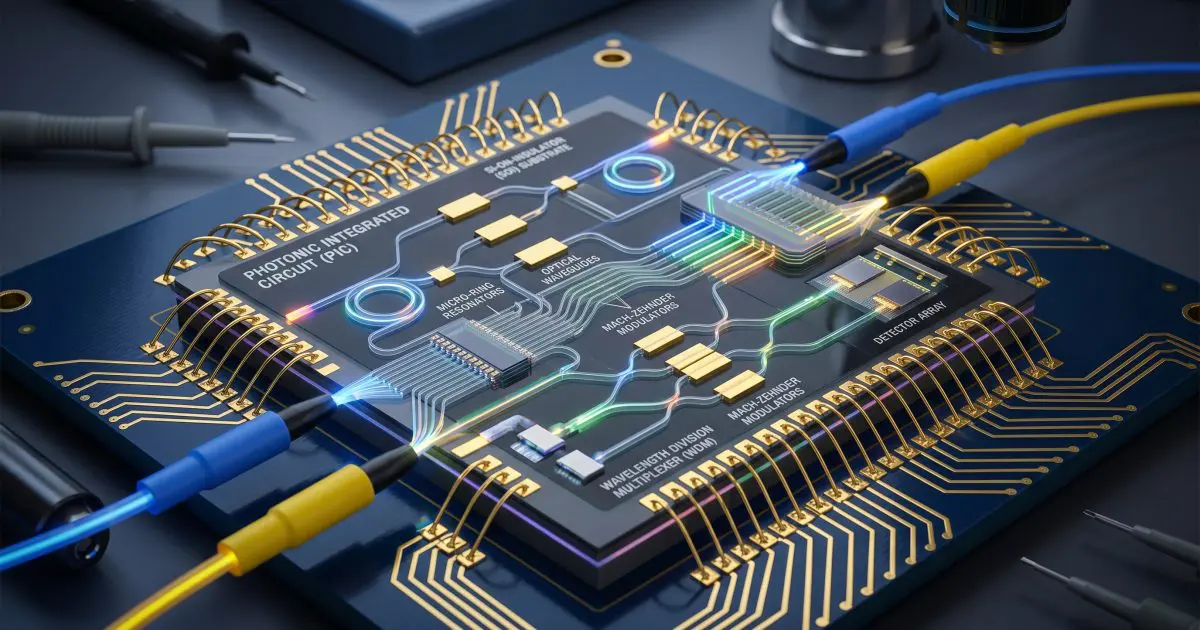
Xanadu Quantum Technologies reported a new industry benchmark of dB/facet for average loss in its photonic chips. This improvement results from Xanadu’s combined progress in chip design, fabrication, and packaging within its dedicated facility. Lower loss is critical for building efficient and scalable photonic quantum computers, and Xanadu credits collaboration with industry partners in achieving this milestone. The company intends to continue developing photonic technologies to advance practical quantum computing.
6. Quantinuum Computer Calculates Knot Theory Polynomial, Benchmarks Hardware Noise

Quantinuum researchers, led by Tuomas Laakkonen and Konstantinos Meichanetzidis, computed the Jones polynomial, a complex calculation from knot theory, on their H2-2 quantum computer with error mitigation. This work demonstrates a practical quantum application beyond simulation and establishes a benchmark using the polynomial to diagnose noise in quantum processors. The team also compared quantum and classical algorithms, identifying knot sizes where near-term quantum advantage may be achievable, and categorized the problem’s complexity as DQC1-complete and BQP-complete depending on the braid type used. This research advances efforts to quantify system requirements for practical quantum advantage.
7. Australian Quantum Chip Firm SQC Secures $40M Boost, Leads in Precision Manufacturing
Silicon Quantum Computing (SQC) in Australia received an additional AUD $40 million from the National Reconstruction Fund Corporation, adding to previous investments and reinforcing government backing. SQC manufactures quantum chips with atomic precision, reaching 0.13 nanometers, and delivers quantum-enhanced AI products to customers. The company can design, produce, and test chips within a week, and a $250 million investment from Firgun Ventures positions it as a leader in scalable quantum computing development. SQC also participates in DARPA’s Quantum Benchmarking Initiative, demonstrating its technological progress.
8. IQM’s New Codes Reduce Qubit Count for Quantum Error Correction
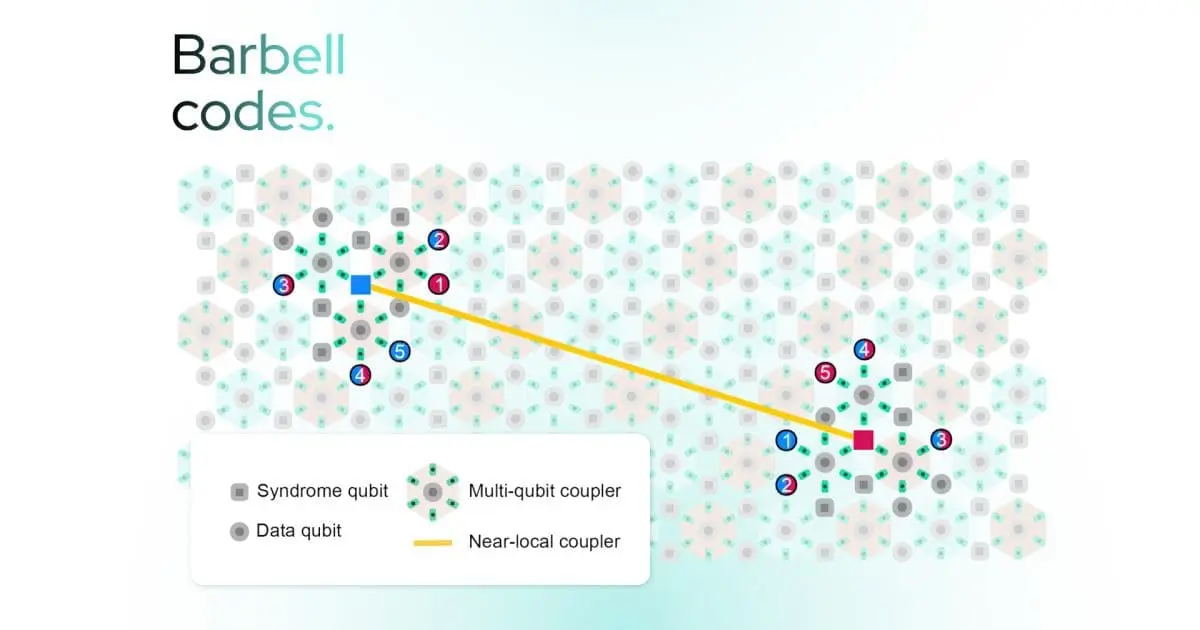
IQM Quantum Computers developed a new family of quantum low-density parity-check (QLDPC) codes, called barbell codes, that require up to eight times fewer qubits than the surface code approach. These codes achieve three orders of magnitude lower logical error rates and are specifically designed for IQM’s Constellation processor with its enhanced qubit connectivity. The design simplifies manufacturing by minimizing the need for complex couplers while maintaining performance, addressing a key challenge in scaling quantum computers. Details of the research are available on arXiv.
9. Rigetti’s Modular Qubit Design Targets Scalable, Fault-Tolerant Quantum Computing

Researchers at Rigetti Computing developed a modular architecture for superconducting qubits, scaling to potentially millions, to advance fault-tolerant quantum computing. The team created a resource estimation tool to analyze how algorithms perform on this modular hardware, quantifying physical resource needs like size and power. This framework assesses architectural trade-offs and estimates the qubit count required for practical problem-solving, considering the costs of distributing computation across multiple machines. Collaboration with Zapata AI Inc., InstituteQ, Aalto University, and the University of Technology Sydney supported the development of these tools.
10. Google Rejected $2 Billion in Quantum Funding to Maintain Speed

Google Quantum AI declined $2 billion in funding from the Trump administration because attached conditions threatened to slow its quantum computer development. While companies like IBM, Quantinuum, and PsiQuantum accepted similar funding, Google prioritized maintaining its independent research pace. This decision reflects a debate over government involvement in quantum technology, a field with national security implications and intense competition with China. Google continues to collaborate with Washington on basic research despite opting out of this specific financial offer.
See today’s quantum computing news on Quantum Zeitgeist for the latest breakthroughs in qubits, hardware, algorithms, and industry deals.